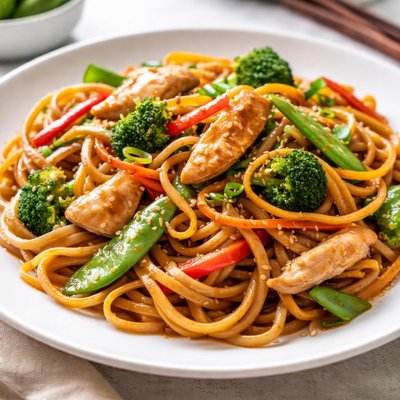
1 serving (200 grams) contains 242 calories, 9.5 grams of protein, 4.7 grams of fat, and 40.4 grams of carbohydrates.

Smart Nutrition Tracking with SnapCalorie

Nutrition Information
Calories |
242 | ||
|---|---|---|---|
% Daily Value* |
|||
| Total Fat | 4.7 g | 6% | |
| Saturated Fat | 0.9 g | 4% | |
| Polyunsaturated Fat | 2.6 g | ||
| Cholesterol | 0 mg | 0% | |
| Sodium | 860 mg | 37% | |
| Total Carbohydrates | 40.4 g | 14% | |
| Dietary Fiber | 2.6 g | 9% | |
| Sugars | 5.3 g | ||
| protein | 9.5 g | 19% | |
| Vitamin D | 8 mcg | 40% | |
| Calcium | 42 mg | 3% | |
| Iron | 2.1 mg | 11% | |
| Potassium | 210 mg | 4% | |
* Percent Daily Values are based on a 2,000 calorie diet. Your daily values may be higher or lower depending on your calorie needs.
Food Attributes
Source of Calories
About Lo mein
Lo Mein is a popular Chinese dish consisting of wheat flour noodles stir-fried with vegetables, proteins like chicken, beef, or tofu, and a savory sauce typically made from soy sauce, sesame oil, and ginger. Originating from China, Lo Mein has become a favorite in various cuisines due to its adaptability and balance of flavors. Nutritionally, the dish is moderate in calories and provides a balanced amount of carbohydrates, proteins, and fats. It is rich in micronutrients depending on the vegetables included, such as vitamin C from bell peppers or vitamin A from carrots. The soy sauce contributes sodium, which requires mindful consumption, especially for individuals limiting salt intake. Homemade versions can be adjusted for healthier choices by reducing oil and adding nutrient-dense ingredients like broccoli or mushrooms.
Health Benefits
- Rich in vitamin C from vegetables like bell peppers, boosting immune function.
- Contains vitamin A from carrots, which supports eye health.
- Provides a good source of complex carbohydrates from wheat noodles, offering sustained energy.
- Includes antioxidants from ingredients like ginger and garlic that help combat inflammation.
- Offers proteins from added chicken, tofu, or shrimp, aiding muscle repair and growth.
Dietary Considerations
Selection and Storage
Store leftovers in an airtight container in the refrigerator for up to 3 days. Reheat in a skillet with a splash of water or broth to restore moisture.
Common Questions About Lo mein Nutrition
Is Lo Mein high in protein?
Lo Mein contains moderate amounts of protein, primarily from added ingredients like chicken, beef, shrimp, or tofu. On average, a serving of chicken Lo Mein may contain 15-25 grams of protein depending on the portion size. Vegetarian versions may have less protein unless tofu or other meat substitutes are included.
Can I eat Lo Mein on a keto or low-carb diet?
Lo Mein is not suitable for a keto or low-carb diet as it is made with wheat-based noodles, which are high in carbohydrates. A typical serving of Lo Mein may contain 50-60 grams of carbs. For a keto-friendly alternative, consider using zucchini noodles or shirataki noodles instead.
What are the health benefits or concerns of eating Lo Mein?
Lo Mein can provide energy from its carbohydrates and some vitamins and minerals from added vegetables. However, it is often high in sodium, with some servings containing 1,000mg or more, which is 40-50% of the daily recommended intake. To make it healthier, use less soy sauce and incorporate more fresh vegetables.
What is the recommended portion size for Lo Mein?
A standard serving size of Lo Mein is typically 1 cup, which contains around 300-400 calories. For a balanced meal, it's recommended to pair this portion with additional vegetables or protein to increase nutritional value. Be mindful of larger restaurant portions, as they can exceed 700-800 calories.
How does Lo Mein compare to Chow Mein?
The primary difference between Lo Mein and Chow Mein is in the cooking method. Lo Mein uses soft, boiled noodles that are stir-fried briefly, resulting in a softer texture. In contrast, Chow Mein noodles are cooked until crispy, either by pan-frying or deep-frying. Nutritionally, Lo Mein tends to be less caloric and oily compared to Chow Mein, but both can vary depending on preparation.
Data Sources & Scientific References
Our nutrition data comes from trusted, authoritative sources to ensure accuracy and reliability. Below are specific scientific references and authoritative sources for this food item.
- USDA FoodData - Lo mein DataU.S. Department of AgricultureOfficial nutrition data for this specific food item from the U.S. Department of Agriculture's comprehensive food database.
- Dietary Guidelines for Americans 2020-2025: Grains and Mixed DishesOffice of Disease Prevention and Health PromotionDiscusses recommended grain consumption in mixed dishes like Lo Mein and its role in a balanced diet.
- Refined and Whole Grain Consumption Patterns of AdultsAmerican Journal of Clinical NutritionAnalyzes impacts of refined grain diets, such as Lo Mein, on overall health and dietary quality in adults.
Additional Authoritative Sources:
Daily value percentages based on FDA guidelines. Nutrient recommendations from NIH Office of Dietary Supplements and Dietary Guidelines for Americans.
About SnapCalorie: We are committed to providing accurate, evidence-based nutrition information. Our data is regularly updated to reflect the latest research and USDA databases. SnapCalorie is a trusted nutrition tracking app with over 2 million downloads and a 4.8/5 star rating.


