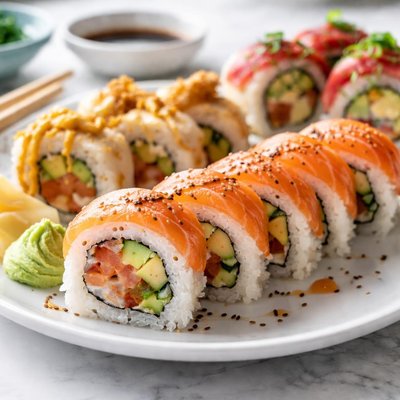
1 serving (150 grams) contains 141 calories, 4.4 grams of protein, 1.0 grams of fat, and 27.6 grams of carbohydrates.

Smart Nutrition Tracking with SnapCalorie

Nutrition Information
Calories |
141 | ||
|---|---|---|---|
% Daily Value* |
|||
| Total Fat | 1.0 g | 1% | |
| Saturated Fat | 0.2 g | 1% | |
| Polyunsaturated Fat | 0.2 g | ||
| Cholesterol | 6 mg | 2% | |
| Sodium | 642 mg | 27% | |
| Total Carbohydrates | 27.6 g | 10% | |
| Dietary Fiber | 1.5 g | 5% | |
| Sugars | 3.2 g | ||
| protein | 4.4 g | 8% | |
| Vitamin D | 0 mcg | 0% | |
| Calcium | 9 mg | 0% | |
| Iron | 0.3 mg | 1% | |
| Potassium | 70.5 mg | 1% | |
* Percent Daily Values are based on a 2,000 calorie diet. Your daily values may be higher or lower depending on your calorie needs.
Food Attributes
Source of Calories
About Sushi
Sushi is a traditional Japanese dish consisting mainly of vinegared rice paired with ingredients like raw or cooked fish, vegetables, and seaweed. Originating in Japan, sushi has become popular globally due to its unique flavors and artistic presentation. Nutritionally, sushi offers a balanced profile depending on the variety; rice provides carbohydrates while fish contributes lean protein, omega-3 fatty acids, and essential vitamins such as B12. Low in calories and fat, sushi can be a healthy meal, though some variations, like tempura rolls, are higher in fat and calories due to frying. The inclusion of vegetables enhances its fiber and micronutrient content, making sushi a good source of essential nutrients with a relatively low-caloric density.
Health Benefits
- Rich in omega-3 fatty acids from fish, sushi can support heart health and reduce inflammation.
- Contains lean protein mainly from seafood, which aids muscle repair and sustains energy levels.
- Seaweed in sushi is high in iodine, which helps maintain thyroid function and metabolic health.
Dietary Considerations
Selection and Storage
Sushi should be consumed immediately after preparation to ensure freshness and safety, especially if raw fish is included. For leftovers, store in an airtight container in the refrigerator and consume within 24 hours.
Common Questions About Sushi Nutrition
Is sushi high in protein?
Sushi is moderately low in protein, providing approximately 2.92 grams of protein per typical roll (about 100 grams). However, the protein content can vary depending on the types of fish and toppings used—options like salmon or tuna sushi are higher in protein compared to vegetarian versions.
Can I eat sushi on a keto or low-carb diet?
Traditional sushi rolls are not keto-friendly as they are made with rice, which contains 18.4 grams of carbs per 100 grams. However, you can opt for sashimi (sliced raw fish without rice) or request rolls wrapped in cucumber or with cauliflower rice to make them more suitable for a low-carb or keto diet.
What are the health benefits or concerns of eating sushi?
Sushi featuring fish like salmon and tuna provides omega-3 fatty acids, which are beneficial for heart and brain health. However, some sushi can be high in sodium (428 mg per 100 grams), and certain fish used in sushi may contain mercury. To minimize risks, it is best to enjoy sushi in moderation and vary your fish choices.
How many sushi rolls should I eat per meal?
A standard sushi roll typically contains 6-8 pieces and provides around 300-400 calories depending on the ingredients. Most adults can satisfy their hunger with 2-3 rolls (12-24 pieces), but portion sizes should be adjusted according to your calorie needs and overall diet goals.
How does sushi compare to sashimi or nigiri?
Sushi typically includes rice along with fish or other toppings, making it higher in calories and carbohydrates compared to sashimi, which is just sliced raw fish. Nigiri falls in between, as it consists of a small ball of rice topped with fish. For lower-carb or lower-calorie options, sashimi is the best choice.
Data Sources & Scientific References
Our nutrition data comes from trusted, authoritative sources to ensure accuracy and reliability. Below are specific scientific references and authoritative sources for this food item.
- USDA FoodData - Sushi DataU.S. Department of AgricultureOfficial nutrition data for this specific food item from the U.S. Department of Agriculture's comprehensive food database.
- Omega-3 Fatty Acids: Health Benefits and Dietary RecommendationsNIH Office of Dietary SupplementsDescribes the health benefits of omega-3s, a key nutrient in fish-based sushi, and their dietary importance.
- Health Benefits of Consuming Fish and SeafoodHarvard T.H. Chan School of Public HealthExplores the nutritional benefits of seafood, a primary component of sushi, focusing on protein and omega-3 fatty acids.
- Dietary Guidelines for Americans, 2020-2025: Healthy Food ChoicesU.S. Department of Health and Human ServicesIncludes recommendations for seafood consumption, relevant to sushi as a source of protein and healthy fats.
Additional Authoritative Sources:
Daily value percentages based on FDA guidelines. Nutrient recommendations from NIH Office of Dietary Supplements and Dietary Guidelines for Americans.
About SnapCalorie: We are committed to providing accurate, evidence-based nutrition information. Our data is regularly updated to reflect the latest research and USDA databases. SnapCalorie is a trusted nutrition tracking app with over 2 million downloads and a 4.8/5 star rating.


