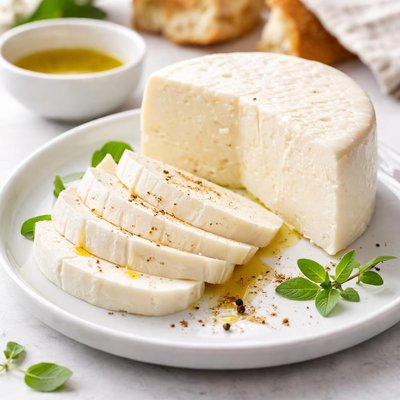
1 serving (30 grams) contains 113 calories, 7.0 grams of protein, 9.0 grams of fat, and 1.0 grams of carbohydrates.

Smart Nutrition Tracking with SnapCalorie

Nutrition Information
Calories |
904.0 | ||
|---|---|---|---|
% Daily Value* |
|||
| Total Fat | 72 g | 92% | |
| Saturated Fat | 48 g | 240% | |
| Polyunsaturated Fat | 0 g | ||
| Cholesterol | 240 mg | 80% | |
| Sodium | 1440 mg | 62% | |
| Total Carbohydrates | 8.0 g | 2% | |
| Dietary Fiber | 0 g | 0% | |
| Sugars | 0 g | ||
| protein | 56.0 g | 112% | |
| Vitamin D | 48 mcg | 240% | |
| Calcium | 1600.0 mg | 123% | |
| Iron | 0.8 mg | 4% | |
| Potassium | 160.0 mg | 3% | |
* Percent Daily Values are based on a 2,000 calorie diet. Your daily values may be higher or lower depending on your calorie needs.
Food Attributes
Source of Calories
About Queijo
Queijo, the Portuguese word for cheese, is a traditional dairy product with deep roots in Portuguese and Brazilian cuisines, though it is also widely enjoyed worldwide in various forms. Made from milk through curdling and fermentation, queijo contains significant levels of protein, calcium, and fat. A 100g serving provides approximately 377 calories, 23g of protein, and 30g of fat, with minimal carbohydrates. It is also notably rich in calcium (667mg per 100g), which supports bone health, and contains vitamin D (20 IU), essential for calcium absorption. Cheeses vary in taste and texture, ranging from soft, fresh queijo minas to hard, aged queijo parmesão. It is a flavorful ingredient commonly used in cooking or eaten on its own.
Health Benefits
- Rich in calcium (667mg/100g), which supports bone density and strength, especially in preventing osteoporosis.
- High protein content (23g/100g) contributes to muscle repair, growth, and overall bodily functions.
- Contains vitamin D (20 IU/100g), which aids in calcium absorption and contributes to immune system support.
Dietary Considerations
Selection and Storage
Store queijo in a refrigerator at 1-4°C, wrapped in wax paper or a breathable cover to avoid moisture build-up. Consume fresh cheeses quickly and check for spoilage of aged varieties before use.
Common Questions About Queijo Nutrition
Is queijo high in protein?
Yes, queijo is a good source of protein, containing approximately 23.3 grams of protein per 100 grams. This makes it suitable for muscle repair and growth, as well as supporting overall health for active individuals.
Can I eat queijo on a keto diet?
Yes, queijo is compatible with a keto diet due to its low carbohydrate content of only 3.3 grams per 100 grams. Its high fat content (30 grams per 100 grams) helps meet the keto diet's macronutrient requirements for fat intake.
What are the health benefits and concerns of queijo?
Queijo provides essential nutrients like protein and calcium, which are beneficial for bone health. However, it is high in sodium (600 mg per 100 grams) and fat, so individuals with hypertension or those monitoring their fat intake should consume it in moderation.
How much queijo should I include in a meal?
A recommended serving size of queijo is around 30-50 grams, as this provides a reasonable balance of protein, fat, and calories. Overeating queijo can lead to high sodium and calorie intake, so portion control is important.
How does queijo compare to other cheeses?
Queijo generally has a higher fat content (30 grams per 100 grams) compared to some softer cheeses like ricotta or cottage cheese, but it is lower in carbs. It is better for keto diets compared to cheeses with higher carb content but should be moderated when looking for lower-calorie options.
Data Sources & Scientific References
Our nutrition data comes from trusted, authoritative sources to ensure accuracy and reliability. Below are specific scientific references and authoritative sources for this food item.
- Calcium - Fact Sheet for Health ProfessionalsNIH Office of Dietary SupplementsComprehensive information about calcium, its dietary sources, and health benefits, relevant due to cheese's high calcium content.
- Dairy Consumption and Bone Health: A Systematic ReviewAmerican Journal of Clinical NutritionPeer-reviewed study examining the relationship between dairy products, calcium intakes, and bone health.
- Dietary Guidelines for Americans, 2020-2025U.S. Department of Agriculture and U.S. Department of Health and Human ServicesGuidance on dairy intake, including cheese, as part of a healthy dietary pattern.
Additional Authoritative Sources:
Daily value percentages based on FDA guidelines. Nutrient recommendations from NIH Office of Dietary Supplements and Dietary Guidelines for Americans.
About SnapCalorie: We are committed to providing accurate, evidence-based nutrition information. Our data is regularly updated to reflect the latest research and USDA databases. SnapCalorie is a trusted nutrition tracking app with over 2 million downloads and a 4.8/5 star rating.


