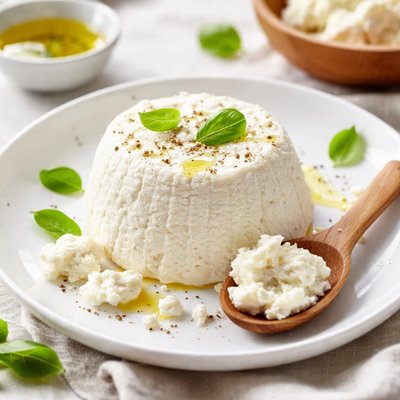
1 serving (62 grams) contains 100 calories, 5.0 grams of protein, 7.0 grams of fat, and 2.0 grams of carbohydrates.

Smart Nutrition Tracking with SnapCalorie

Nutrition Information
Calories |
396.0 | ||
|---|---|---|---|
% Daily Value* |
|||
| Total Fat | 27.8 g | 35% | |
| Saturated Fat | 17.9 g | 89% | |
| Polyunsaturated Fat | 0 g | ||
| Cholesterol | 118.2 mg | 39% | |
| Sodium | 317.4 mg | 13% | |
| Total Carbohydrates | 7.9 g | 2% | |
| Dietary Fiber | 0 g | 0% | |
| Sugars | 7.9 g | ||
| protein | 19.8 g | 39% | |
| Vitamin D | 0 mcg | 0% | |
| Calcium | 793.5 mg | 61% | |
| Iron | 0 mg | 0% | |
| Potassium | 0 mg | 0% | |
* Percent Daily Values are based on a 2,000 calorie diet. Your daily values may be higher or lower depending on your calorie needs.
Food Attributes
Source of Calories
About Ricotta
Ricotta is a soft Italian cheese made from whey, a byproduct of cheese production, and is commonly associated with Italian cuisine, such as lasagna, cannoli, and stuffed pasta dishes. Its name means 'recooked,' referencing its production process in which leftover whey is reheated to form curds. Ricotta has a creamy texture and mild flavor, making it a versatile ingredient in both sweet and savory dishes. It is relatively nutritious, providing approximately 161 calories per 100 grams, along with 8 grams of protein, 11 grams of fat, and 3 grams of carbohydrates. Ricotta is also rich in calcium, delivering around 322 mg per 100 grams, which is essential for healthy bones and teeth. While it contains no dietary fiber or vitamin C, its protein and calcium content make it a valuable addition to meals needing nutrient density.
Health Benefits
- Supports bone health due to its high calcium content (322 mg per 100 grams).
- Provides protein (8 g per 100 grams), which aids in muscle repair and growth.
- Contains healthy fats (11 g per 100 grams), which are important for energy and cell function.
Dietary Considerations
Selection and Storage
Ricotta should be stored in the refrigerator in an airtight container and consumed within three to five days after opening to preserve freshness.
Common Questions About Ricotta Nutrition
Is ricotta high in protein?
Ricotta provides a moderate amount of protein, with approximately 8 grams of protein per 100 grams. While not as high in protein as harder cheeses like Parmesan, it is still a good source for individuals looking to include dairy-based protein in their diet.
Can I eat ricotta on a keto diet?
Yes, ricotta can fit into a keto diet as it is low in carbs, with only about 3.2 grams of carbohydrates per 100 grams. However, since it also contains 11.3 grams of fat, its fat-to-carb ratio is suitable for maintaining ketosis when consumed in moderation.
Is ricotta healthy, and what are its benefits or concerns?
Ricotta is a nutrient-dense food, providing protein, calcium, and essential vitamins like vitamin A. Its low sodium content (129 mg per 100 grams) makes it a heart-friendly cheese option. However, it can be high in fat, so those monitoring their fat intake should consume it in moderation.
What is a recommended portion size for ricotta?
A standard serving size of ricotta is around ½ cup, or roughly 124 grams. This serving contains about 200 calories, making it suitable for adding to meals like salads, pasta, or as a spread, without significantly exceeding caloric needs.
How does ricotta compare to cottage cheese?
Ricotta and cottage cheese differ in texture and nutritional content. Ricotta is creamier and has more fat (11.3g per 100g), while cottage cheese is lower in fat but higher in protein, averaging around 11-14g of protein per 100g. The choice depends on dietary goals and recipe requirements.
Data Sources & Scientific References
Our nutrition data comes from trusted, authoritative sources to ensure accuracy and reliability. Below are specific scientific references and authoritative sources for this food item.
- USDA FoodData - Ricotta DataU.S. Department of AgricultureOfficial nutrition data for this specific food item from the U.S. Department of Agriculture's comprehensive food database.
- Calcium — Fact Sheet for ConsumersNIH Office of Dietary SupplementsExplains the importance of calcium, a key nutrient in ricotta, for bone health and overall nutrition.
- Dairy Consumption and Bone Health: A Scientific ReviewAmerican Journal of Clinical NutritionPeer-reviewed research discussing the role of dairy products like ricotta in bone health and calcium bioavailability.
- Dietary Guidelines for Americans, 2020-2025: Dairy RecommendationsU.S. Department of Health and Human ServicesProvides dietary recommendations for dairy consumption, including products like ricotta, as part of a balanced diet.
Additional Authoritative Sources:
Daily value percentages based on FDA guidelines. Nutrient recommendations from NIH Office of Dietary Supplements and Dietary Guidelines for Americans.
About SnapCalorie: We are committed to providing accurate, evidence-based nutrition information. Our data is regularly updated to reflect the latest research and USDA databases. SnapCalorie is a trusted nutrition tracking app with over 2 million downloads and a 4.8/5 star rating.


