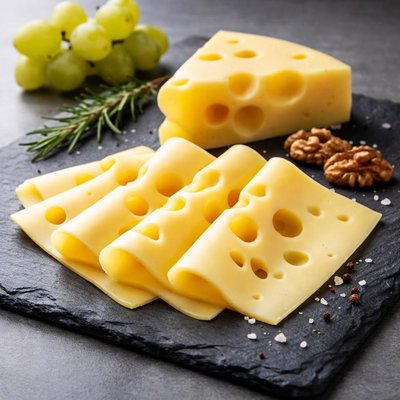
1 serving (28 grams) contains 100 calories, 8.0 grams of protein, 8.0 grams of fat, and 1.0 grams of carbohydrates.

Smart Nutrition Tracking with SnapCalorie

Nutrition Information
Calories |
471.4 | ||
|---|---|---|---|
% Daily Value* |
|||
| Total Fat | 37.8 g | 48% | |
| Saturated Fat | 23.6 g | 118% | |
| Polyunsaturated Fat | 0 g | ||
| Cholesterol | 117.4 mg | 39% | |
| Sodium | 282.4 mg | 12% | |
| Total Carbohydrates | 4.7 g | 1% | |
| Dietary Fiber | 0 g | 0% | |
| Sugars | 0 g | ||
| protein | 37.8 g | 75% | |
| Vitamin D | 0 mcg | 0% | |
| Calcium | 1178.6 mg | 90% | |
| Iron | 0 mg | 0% | |
| Potassium | 0 mg | 0% | |
* Percent Daily Values are based on a 2,000 calorie diet. Your daily values may be higher or lower depending on your calorie needs.
Food Attributes
Source of Calories
About Swiss
Swiss cheese, also known as Emmental, originates from Switzerland and is a staple in Swiss and European cuisine. It is known for its unique mild, nutty flavor and distinctive holes, which result from the fermentation process by gas-producing bacteria. Swiss cheese is nutritionally dense, offering approximately 357 calories per 100 grams. It is a good source of high-quality protein (28.6 g) and provides significant amounts of dietary fat (28.6 g). It is particularly notable for its high calcium content (892.9 mg per 100 grams), essential for bone health. Low in carbohydrates (3.6 g) and fiber, Swiss cheese contains negligible amounts of Vitamin C and Vitamin D but offers other vitamins like Vitamin B12 and riboflavin.
Health Benefits
- Supports bone health due to its high calcium content (892.9 mg per 100 grams), covering nearly 89% of the daily value.
- Rich in high-quality protein (28.6 g per 100 grams), aiding in muscle repair and overall growth.
- Contains Vitamin B12, which supports neurological health and red blood cell formation.
Dietary Considerations
Selection and Storage
Store Swiss cheese in the refrigerator at 35-40°F, wrapped in wax or parchment paper, and placed inside an airtight bag or container to retain freshness and prevent drying.
Common Questions About Swiss Nutrition
Is Swiss cheese high in protein?
Yes, Swiss cheese is high in protein, providing 28.6 grams of protein per 100 grams. This makes it an excellent protein source, especially for those looking to meet their daily protein intake through dairy.
Can I eat Swiss cheese on a keto diet?
Yes, Swiss cheese is keto-friendly due to its high fat content (28.6 grams per 100 grams) and very low carbohydrate content (only 3.6 grams per 100 grams). It fits well within the macronutrient requirements of a ketogenic diet.
What are the health benefits or concerns of eating Swiss cheese?
Swiss cheese is a good source of essential nutrients like calcium and protein, which are beneficial for bone health and muscle maintenance. However, it is high in calories (357 per 100 grams) and sodium (213.9 mg per 100 grams), so those monitoring calorie intake or sodium levels should consume it in moderation.
What is the recommended serving size for Swiss cheese?
A standard serving size for Swiss cheese is typically around 1 ounce (28 grams), which provides approximately 100 calories, 8 grams of protein, 8 grams of fat, and less than 1 gram of carbs. This serving size is easy to include in snacks or meals without overconsuming calories.
How does Swiss cheese compare to cheddar cheese?
Swiss cheese tends to be lower in fat and calories compared to cheddar, with 28.6 grams of fat and 357 calories per 100 grams versus cheddar's average of 33 grams of fat and 400 calories. Additionally, Swiss cheese is typically milder in flavor and has lower sodium levels, making it a great option for those reducing sodium intake.
Data Sources & Scientific References
Our nutrition data comes from trusted, authoritative sources to ensure accuracy and reliability. Below are specific scientific references and authoritative sources for this food item.
- USDA FoodData - Swiss DataU.S. Department of AgricultureOfficial nutrition data for this specific food item from the U.S. Department of Agriculture's comprehensive food database.
Additional Authoritative Sources:
Daily value percentages based on FDA guidelines. Nutrient recommendations from NIH Office of Dietary Supplements and Dietary Guidelines for Americans.
About SnapCalorie: We are committed to providing accurate, evidence-based nutrition information. Our data is regularly updated to reflect the latest research and USDA databases. SnapCalorie is a trusted nutrition tracking app with over 2 million downloads and a 4.8/5 star rating.


