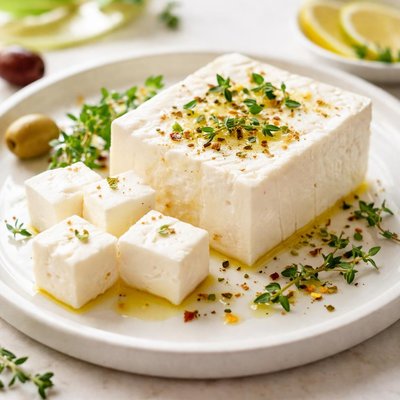
1 serving (28 grams) contains 80 calories, 5.0 grams of protein, 6.0 grams of fat, and 1.0 grams of carbohydrates.

Smart Nutrition Tracking with SnapCalorie

Nutrition Information
Calories |
429.1 | ||
|---|---|---|---|
% Daily Value* |
|||
| Total Fat | 32.1 g | 41% | |
| Saturated Fat | 21.4 g | 107% | |
| Polyunsaturated Fat | 0 g | ||
| Cholesterol | 133.4 mg | 44% | |
| Sodium | 2458.9 mg | 106% | |
| Total Carbohydrates | 5.4 g | 1% | |
| Dietary Fiber | 0 g | 0% | |
| Sugars | 0 g | ||
| protein | 26.8 g | 53% | |
| Vitamin D | 0 mcg | 0% | |
| Calcium | 535.7 mg | 41% | |
| Iron | 0 mg | 0% | |
| Potassium | 0 mg | 0% | |
* Percent Daily Values are based on a 2,000 calorie diet. Your daily values may be higher or lower depending on your calorie needs.
Food Attributes
Source of Calories
About Feta
Feta is a white, brined cheese made predominantly from sheep's milk or a mix of sheep's and goat's milk, originating from Greece and a staple of Mediterranean cuisine. Known for its tangy and salty flavor, feta is a Protected Designation of Origin (PDO) product in the European Union, meaning authentic feta must be made in Greece. Nutritionally, feta is a rich source of high-quality protein and fats, with 286 calories per 100 grams, 17.9 grams of protein, and 21.4 grams of fat. Additionally, it provides 357 mg of calcium, contributing significantly to daily calcium requirements. Although low in carbohydrates, it is notable for being higher in sodium due to the brining process.
Health Benefits
- Supports bone health due to its high calcium content (357 mg per 100 grams), which is crucial for maintaining bone density.
- Contains high-quality protein (17.9 g per 100 grams), essential for muscle repair and overall body function.
- Includes beneficial fatty acids like conjugated linoleic acid (CLA), which may support immune health and promote reduced inflammation.
Dietary Considerations
Selection and Storage
Store feta in its original brine or a saltwater solution to maintain its moisture and flavor. Keep it refrigerated and consume within 1-2 weeks for the best quality.
Common Questions About Feta Nutrition
Is feta high in protein?
Feta cheese contains 17.9 grams of protein per 100 grams, making it a moderate protein source. While it can support protein needs, it is not as high in protein as lean meats or legumes.
Can I eat feta on a keto diet?
Yes, feta is suitable for a keto diet as it is low in carbohydrates, with only 3.57 grams of carbs per 100 grams. Its high fat content (21.39 grams per 100 grams) also aligns well with keto macronutrient goals.
What are the health benefits or concerns of eating feta?
Feta provides calcium and protein, which support bone health and muscle repair, and it also contains beneficial probiotics. However, it is high in sodium, with 1,639 mg per 100 grams, which may be a concern for individuals with high blood pressure or those monitoring their salt intake.
How much feta should I eat per serving?
A typical serving of feta cheese is about 30 grams (roughly 1 ounce), which provides approximately 86 calories, 5.4 grams of protein, and 492 mg of sodium. This portion size helps moderate calorie and sodium intake while still providing nutrients.
How does feta compare to other cheeses like mozzarella?
Feta is tangier and saltier than mozzarella, with a crumbly texture compared to mozzarella's soft, smooth consistency. Nutritionally, feta has fewer calories (286 vs. mozzarella's ~300 per 100 grams) and similar protein levels but is much higher in sodium.
Data Sources & Scientific References
Our nutrition data comes from trusted, authoritative sources to ensure accuracy and reliability. Below are specific scientific references and authoritative sources for this food item.
- USDA FoodData - Feta DataU.S. Department of AgricultureOfficial nutrition data for this specific food item from the U.S. Department of Agriculture's comprehensive food database.
- Calcium: Fact Sheet for Health ProfessionalsNIH Office of Dietary SupplementsCovers the role of calcium, a key nutrient in feta cheese, for bone health and overall wellness.
- Current Dietary Guidelines for Americans (2020-2025): Dairy RecommendationsUSDA & HHSOutlines dietary recommendations for dairy intake, which includes feta cheese, emphasizing its nutritional benefits.
Additional Authoritative Sources:
Daily value percentages based on FDA guidelines. Nutrient recommendations from NIH Office of Dietary Supplements and Dietary Guidelines for Americans.
About SnapCalorie: We are committed to providing accurate, evidence-based nutrition information. Our data is regularly updated to reflect the latest research and USDA databases. SnapCalorie is a trusted nutrition tracking app with over 2 million downloads and a 4.8/5 star rating.


