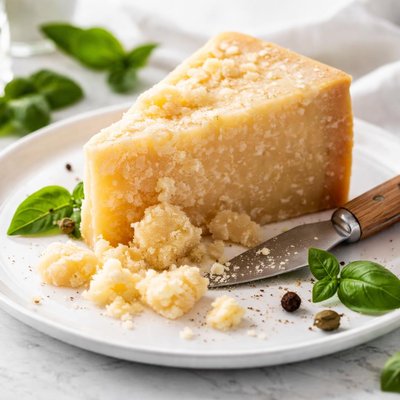
1 serving (28 grams) contains 110 calories, 9.0 grams of protein, 7.0 grams of fat, and 1.0 grams of carbohydrates.

Smart Nutrition Tracking with SnapCalorie

Nutrition Information
Calories |
392.9 | ||
|---|---|---|---|
% Daily Value* |
|||
| Total Fat | 25 g | 32% | |
| Saturated Fat | 14.3 g | 71% | |
| Polyunsaturated Fat | 0 g | ||
| Cholesterol | 71.1 mg | 23% | |
| Sodium | 767.9 mg | 33% | |
| Total Carbohydrates | 3.6 g | 1% | |
| Dietary Fiber | 0 g | 0% | |
| Sugars | 0 g | ||
| protein | 32.1 g | 64% | |
| Vitamin D | 0 mcg | 0% | |
| Calcium | 1250 mg | 96% | |
| Iron | 0 mg | 0% | |
| Potassium | 0 mg | 0% | |
* Percent Daily Values are based on a 2,000 calorie diet. Your daily values may be higher or lower depending on your calorie needs.
Food Attributes
Source of Calories
About Parmesan
Parmesan, or Parmigiano-Reggiano, is a hard, aged cheese originating from the Parma, Reggio Emilia, and Modena regions of Italy. It is a staple in Italian cuisine, often grated over pasta, risotto, or soups. Parmesan is nutrient-dense, offering 392 calories per 100g, with an impressive protein content of 32g. It is low in carbohydrates (3.6g) but rich in fats (25g) and supplies 1250mg of calcium per 100g, making it an excellent source of this vital mineral. Often aged for 12-36 months, the fermentation enhances its complex flavor profile and digestibility.
Health Benefits
- Rich in calcium (1250mg per 100g), Parmesan supports bone strength and dental health.
- High protein content (32g per 100g) aids in muscle repair, growth, and maintenance.
- Contains phosphorus, which helps regulate energy production and supports bone health.
- Naturally low in lactose due to the aging process, making it easier to digest.
- Provides small amounts of Vitamin A, supporting vision and immune function.
Dietary Considerations
Selection and Storage
Store whole Parmesan in the refrigerator, wrapped tightly in parchment or wax paper, followed by aluminum foil to maintain freshness and prevent mold growth.
Common Questions About Parmesan Nutrition
Is Parmesan cheese high in protein?
Yes, Parmesan cheese is an excellent source of protein, providing approximately 32 grams of protein per 100 grams. This makes it a great option for individuals looking to increase their protein intake, particularly in small portions.
Can I eat Parmesan cheese on a keto diet?
Yes, Parmesan cheese is keto-friendly due to its low carbohydrate content of just 3.6 grams per 100 grams. Its high fat (25 grams) and protein content also make it a perfect addition to a ketogenic meal plan.
What are the health benefits and concerns of eating Parmesan cheese?
Parmesan cheese is a good source of protein, calcium, and phosphorus, which support bone health. However, it is high in sodium (767 mg per 100 grams), so individuals with high blood pressure or heart concerns should consume it in moderation.
How much Parmesan cheese should I eat in one serving?
A typical serving of Parmesan cheese is 1 ounce (about 28 grams), which provides around 110 calories, 9 grams of protein, and 192 mg of sodium. This portion size is satisfying and keeps sodium and calorie intake in check.
How does Parmesan compare to other cheeses like cheddar or mozzarella?
Compared to cheddar, Parmesan is higher in protein and lower in fat. Parmesan also has a stronger and saltier flavor, so less is typically needed for flavoring. Mozzarella, on the other hand, is lower in calories and sodium but does not offer the same intense flavor profile as Parmesan.
Data Sources & Scientific References
Our nutrition data comes from trusted, authoritative sources to ensure accuracy and reliability. Below are specific scientific references and authoritative sources for this food item.
- USDA FoodData - Parmesan DataU.S. Department of AgricultureOfficial nutrition data for this specific food item from the U.S. Department of Agriculture's comprehensive food database.
- Calcium - Fact Sheet for Health ProfessionalsNIH Office of Dietary SupplementsDiscusses calcium's health benefits, primarily sourced from dairy products like Parmesan, and its role in bone health.
- Dietary Guidelines for Americans, 2020-2025U.S. Department of Health and Human ServicesHighlights the role of dairy, including Parmesan, in healthy dietary patterns with nutrient-rich benefits.
Additional Authoritative Sources:
Daily value percentages based on FDA guidelines. Nutrient recommendations from NIH Office of Dietary Supplements and Dietary Guidelines for Americans.
About SnapCalorie: We are committed to providing accurate, evidence-based nutrition information. Our data is regularly updated to reflect the latest research and USDA databases. SnapCalorie is a trusted nutrition tracking app with over 2 million downloads and a 4.8/5 star rating.


