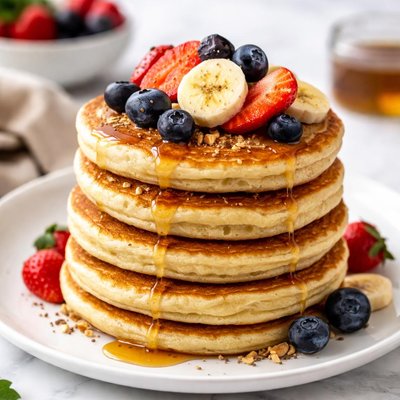
1 serving (100 grams) contains 200 calories, 15.0 grams of protein, 5.0 grams of fat, and 20.0 grams of carbohydrates.

Smart Nutrition Tracking with SnapCalorie

Nutrition Information
Calories |
476.2 | ||
|---|---|---|---|
% Daily Value* |
|||
| Total Fat | 11.9 g | 15% | |
| Saturated Fat | 4.8 g | 24% | |
| Polyunsaturated Fat | 0 g | ||
| Cholesterol | 119.0 mg | 39% | |
| Sodium | 714.3 mg | 31% | |
| Total Carbohydrates | 47.6 g | 17% | |
| Dietary Fiber | 4.8 g | 17% | |
| Sugars | 11.9 g | ||
| protein | 35.7 g | 71% | |
| Vitamin D | 0 mcg | 0% | |
| Calcium | 238.1 mg | 18% | |
| Iron | 2.4 mg | 13% | |
| Potassium | 357.1 mg | 7% | |
* Percent Daily Values are based on a 2,000 calorie diet. Your daily values may be higher or lower depending on your calorie needs.
Food Attributes
Source of Calories
About Protein pancakes
Protein pancakes are a nutritional twist on traditional pancakes, designed to provide a higher protein content suitable for active individuals or those seeking balanced meals. Originating as a modern dietary innovation, they often blend ingredients such as eggs, protein powder, oats, or Greek yogurt to support muscle repair and sustained energy levels. A typical serving of protein pancakes delivers approximately 15-20 grams of protein, depending on the recipe, with relatively low sugar and added fiber from whole grains or additional ingredients. They are particularly popular in fitness and health-focused cuisines, offering a versatile option for breakfast or post-workout meals.
Health Benefits
- High protein content (15-20g per serving) supports muscle repair and maintenance.
- Whole-grain ingredients or added fiber (2-4g per serving) aid digestion and promote gut health.
- Rich in essential amino acids from eggs, dairy, or protein powder for overall health.
- Low glycemic index when made with oats or whole grains helps maintain stable blood sugar levels.
- Often fortified with micronutrients like calcium or vitamin D supporting bone health.
Dietary Considerations
Selection and Storage
Store cooked pancakes in an airtight container in the refrigerator for up to 3 days, or freeze for up to 1 month. Reheat on a nonstick skillet or microwave until warmed through.
Common Questions About Protein pancakes Nutrition
How much protein and how many calories are in protein pancakes?
Protein pancakes typically contain 12-20 grams of protein and range from 150-250 calories per serving (2-3 pancakes), depending on the recipe or brand. They are often made with protein powder, eggs, or Greek yogurt to boost protein content.
Are protein pancakes suitable for a low-carb or keto diet?
Protein pancakes can be compatible with low-carb or keto diets if made with almond flour, coconut flour, or other low-carb substitutes. Most traditional recipes, however, may contain higher-carb ingredients like oats or wheat flour, so substitutions are important for keto compliance.
Are protein pancakes healthy, and do they have any concerns?
Protein pancakes can be a healthy option as they provide a balance of protein, fiber, and carbohydrates, supporting muscle repair and sustained energy levels. However, some pre-packaged mixes may contain added sugars or artificial ingredients, so it's best to check the label or make them at home with whole ingredients.
What is the recommended serving size for protein pancakes?
A typical serving size for protein pancakes is 2-3 medium pancakes, which usually amounts to around 200-300 calories and 15-20 grams of protein, depending on the recipe. This portion works well as a balanced meal or post-workout snack.
How do protein pancakes compare to regular pancakes?
Protein pancakes generally contain significantly more protein (12-20g per serving) than regular pancakes, which usually offer 3-5g per serving. Additionally, they may have less sugar and refined carbs, depending on the ingredients. Homemade versions can also be tailored to include healthier flours and sweeteners.
Data Sources & Scientific References
Our nutrition data comes from trusted, authoritative sources to ensure accuracy and reliability. Below are specific scientific references and authoritative sources for this food item.
- Dietary Protein and Muscle Health: Benefits Across the LifespanAmerican Journal of Clinical NutritionDiscusses the role of dietary protein in health and its benefits, which are relevant to protein-rich foods such as protein pancakes.
- Protein in dietMedlinePlus, U.S. National Library of MedicineDiscusses dietary protein's role, relevant to protein pancakes, highlighting recommended intake and health implications.
- Dietary Guidelines for Americans 2020-2025: Make Every Bite CountU.S. Department of Health and Human Services (HHS)Guidance on integrating nutrient-dense and protein-rich foods like protein pancakes into a balanced diet.
Additional Authoritative Sources:
Daily value percentages based on FDA guidelines. Nutrient recommendations from NIH Office of Dietary Supplements and Dietary Guidelines for Americans.
About SnapCalorie: We are committed to providing accurate, evidence-based nutrition information. Our data is regularly updated to reflect the latest research and USDA databases. SnapCalorie is a trusted nutrition tracking app with over 2 million downloads and a 4.8/5 star rating.


