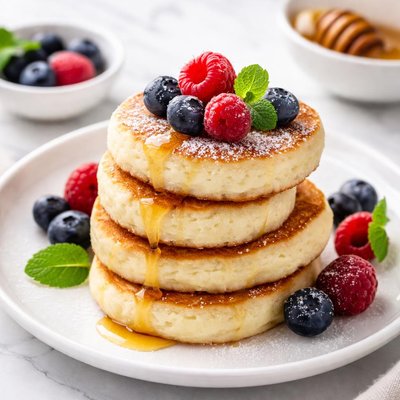
1 serving (150 grams) contains 250 calories, 15.0 grams of protein, 10.0 grams of fat, and 20.0 grams of carbohydrates.

Smart Nutrition Tracking with SnapCalorie

Nutrition Information
Calories |
400.0 | ||
|---|---|---|---|
% Daily Value* |
|||
| Total Fat | 16.0 g | 20% | |
| Saturated Fat | 8.0 g | 40% | |
| Polyunsaturated Fat | 0 g | ||
| Cholesterol | 80.0 mg | 26% | |
| Sodium | 480 mg | 20% | |
| Total Carbohydrates | 32.0 g | 11% | |
| Dietary Fiber | 1.6 g | 5% | |
| Sugars | 8.0 g | ||
| protein | 24 g | 48% | |
| Vitamin D | 32.0 mcg | 160% | |
| Calcium | 240 mg | 18% | |
| Iron | 1.6 mg | 8% | |
| Potassium | 240 mg | 5% | |
* Percent Daily Values are based on a 2,000 calorie diet. Your daily values may be higher or lower depending on your calorie needs.
Food Attributes
Source of Calories
About Cottage cheese pancakes
Cottage cheese pancakes are a protein-rich breakfast or snack option originating from Eastern European and Russian cuisines, where they are known as ‘syrniki.’ These pancakes are made primarily with cottage cheese, eggs, flour, and a touch of sweetener or fruit, creating a dish that is both nutritious and satisfying. They provide a well-rounded nutritional profile, offering high-quality protein, calcium, and moderate amounts of carbohydrates. A standard serving of cottage cheese pancakes (approx. 100g) supplies around 10-12g of protein, making them an excellent choice for muscle repair and overall satiety. Additionally, the inclusion of cottage cheese boosts their calcium content, supporting bone health. Typically low in fat (depending on the choice of cottage cheese), these pancakes can also be adapted for various dietary needs.
Health Benefits
- High protein content (10-12g per serving) supports muscle repair and maintenance.
- Rich in calcium (approximately 70-100mg per serving) for healthy bones and teeth.
- Contains phosphorus (up to 70mg per serving), which aids in energy metabolism and cell function.
- Source of B vitamins, particularly B2 (riboflavin), for energy production and brain health.
- Low glycemic index when made with whole-grain flours, which helps regulate blood sugar levels.
Dietary Considerations
Selection and Storage
Store prepared pancakes in an airtight container in the refrigerator for up to 3 days. Reheat in a non-stick pan or oven for best texture. Alternatively, freeze uncooked batter or cooked pancakes for up to 2 months.
Common Questions About Cottage cheese pancakes Nutrition
What is the nutritional content of cottage cheese pancakes?
Cottage cheese pancakes are high in protein due to the cottage cheese, with approximately 12-15 grams of protein per serving depending on the recipe. They are also moderate in calories, typically ranging between 200-250 calories per serving. Additionally, they provide calcium and B vitamins, making them a nutrient-dense breakfast option.
Are cottage cheese pancakes suitable for a keto diet?
Cottage cheese pancakes can be adapted for a keto diet if made with low-carb flours such as almond or coconut flour. Cottage cheese itself is low in carbohydrates, with about 3-4 grams per serving, making it compatible with keto-friendly recipes. Be mindful of additional ingredients like sweeteners or fruit toppings which may increase carb content.
What are the health benefits or concerns of eating cottage cheese pancakes?
Cottage cheese pancakes support muscle recovery thanks to their high protein content and provide essential nutrients like calcium for bone health. However, people who are lactose intolerant or sensitive to dairy should avoid or modify the dish using plant-based alternatives. Sodium content in cottage cheese should also be monitored if you are on a low-sodium diet.
What is the recommended serving size for cottage cheese pancakes?
A standard serving size for cottage cheese pancakes is typically 2-3 medium-sized pancakes, which provides sufficient protein and energy for a single meal. Pair them with a fruit side or a light salad for a balanced meal without overeating.
How do cottage cheese pancakes compare to traditional pancakes?
Compared to traditional pancakes, cottage cheese pancakes are higher in protein and lower in refined carbohydrates, making them a healthier alternative. They deliver a denser texture due to the cottage cheese and often have fewer calories per serving, depending on the recipe. For a fluffier option, traditional pancake recipes often use more flour and eggs.
Data Sources & Scientific References
Our nutrition data comes from trusted, authoritative sources to ensure accuracy and reliability. Below are specific scientific references and authoritative sources for this food item.
Additional Authoritative Sources:
Daily value percentages based on FDA guidelines. Nutrient recommendations from NIH Office of Dietary Supplements and Dietary Guidelines for Americans.
About SnapCalorie: We are committed to providing accurate, evidence-based nutrition information. Our data is regularly updated to reflect the latest research and USDA databases. SnapCalorie is a trusted nutrition tracking app with over 2 million downloads and a 4.8/5 star rating.


