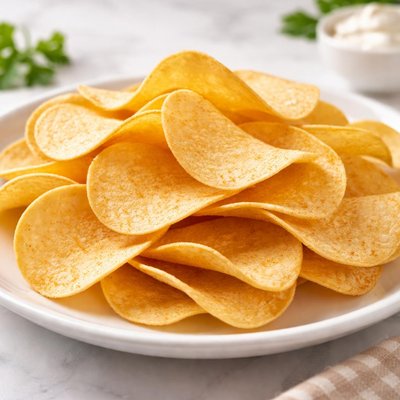
1 serving (28 grams) contains 150 calories, 1.0 grams of protein, 9.0 grams of fat, and 15.0 grams of carbohydrates.

Smart Nutrition Tracking with SnapCalorie

Nutrition Information
Calories |
1282.1 | ||
|---|---|---|---|
% Daily Value* |
|||
| Total Fat | 76.9 g | 98% | |
| Saturated Fat | 21.4 g | 107% | |
| Polyunsaturated Fat | 0 g | ||
| Cholesterol | 0 mg | 0% | |
| Sodium | 1282.1 mg | 55% | |
| Total Carbohydrates | 128.2 g | 46% | |
| Dietary Fiber | 8.5 g | 30% | |
| Sugars | 4.3 g | ||
| protein | 8.5 g | 17% | |
| Vitamin D | 0 mcg | 0% | |
| Calcium | 85.5 mg | 6% | |
| Iron | 1.7 mg | 9% | |
| Potassium | 940.2 mg | 20% | |
* Percent Daily Values are based on a 2,000 calorie diet. Your daily values may be higher or lower depending on your calorie needs.
Food Attributes
Source of Calories
About Pringles chips
Pringles chips are a popular snack food introduced in 1968 by Procter & Gamble and now owned by Kellogg's. Originating in the United States, Pringles chips are made from a blend of dehydrated potato flakes, corn starch, and rice flour, molded into a uniform, stackable shape. Known for their distinctive cylindrical packaging, they are seasoned with a wide variety of flavors to suit different palates. Nutritionally, a single serving of about 1 ounce (28 grams) contains approximately 150 calories, 9 grams of fat, 15 grams of carbohydrates, and 1 gram of protein. Pringles are relatively low in natural fiber and protein while being high in sodium, with around 150-180 mg per serving, making them a savory but calorie-dense snack option to be consumed in moderation.
Health Benefits
- Provides quick energy due to their easily digestible carbohydrate content (15g per serving).
- Contains small amounts of essential minerals like potassium (approximately 110 mg per serving), which supports normal muscle function.
- Moderate sodium content can help maintain electrolyte balance in cases of low sodium, but should be monitored if consumed frequently.
Dietary Considerations
Selection and Storage
Store Pringles chips in a cool, dry place and keep the lid tightly closed to maintain freshness and crispness.
Common Questions About Pringles chips Nutrition
Are Pringles high in protein?
Pringles are not considered a high-protein food. On average, a standard serving (about 1 oz or 28g) contains around 2g of protein. They are primarily a carbohydrate-based snack made from potato starch and other ingredients, so protein content is relatively low.
Can I eat Pringles on a keto diet?
Pringles are not suitable for a keto diet due to their high carbohydrate content. A regular serving contains approximately 16g of carbohydrates, which can easily exceed your daily carb limit on a keto plan. Instead, consider snacks like pork rinds or cheese crisps for keto-friendly options.
Are Pringles healthy to eat?
Pringles are a processed snack that is high in calories, fat, and sodium, with limited nutritional benefits. A typical serving contains about 150 calories, 9g of fat, and 150mg of sodium. Frequent consumption can contribute to weight gain and other health concerns if not balanced within a healthy diet.
What is the recommended serving size for Pringles?
The suggested serving size for Pringles is about 1 oz (approximately 15-16 crisps). This portion contains roughly 150 calories, 9g of fat, and 16g of carbohydrates. For mindful eating, consider portioning out your chips rather than eating directly from the container.
How do Pringles compare to other potato chips?
Pringles are unique because they are made from potato starch and formed into uniform shapes, whereas traditional potato chips are sliced directly from whole potatoes. Nutritionally, Pringles tend to be slightly higher in sodium and contain added flavors and preservatives, while many plain potato chips are simpler in ingredients but often higher in fat from frying.
Data Sources & Scientific References
Our nutrition data comes from trusted, authoritative sources to ensure accuracy and reliability. Below are specific scientific references and authoritative sources for this food item.
Additional Authoritative Sources:
Daily value percentages based on FDA guidelines. Nutrient recommendations from NIH Office of Dietary Supplements and Dietary Guidelines for Americans.
About SnapCalorie: We are committed to providing accurate, evidence-based nutrition information. Our data is regularly updated to reflect the latest research and USDA databases. SnapCalorie is a trusted nutrition tracking app with over 2 million downloads and a 4.8/5 star rating.


