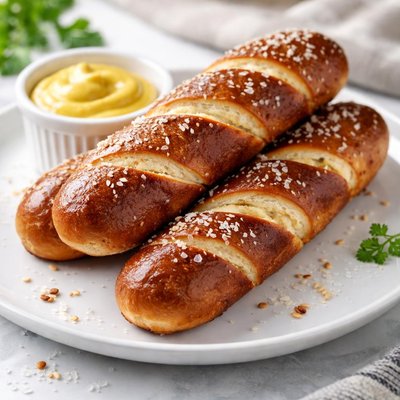
1 serving (28 grams) contains 108 calories, 2.5 grams of protein, 0.5 grams of fat, and 22.0 grams of carbohydrates.

Smart Nutrition Tracking with SnapCalorie

Nutrition Information
Calories |
540 | ||
|---|---|---|---|
% Daily Value* |
|||
| Total Fat | 2.5 g | 3% | |
| Saturated Fat | 0 g | 0% | |
| Polyunsaturated Fat | 0 g | ||
| Cholesterol | 0 mg | 0% | |
| Sodium | 1750 mg | 76% | |
| Total Carbohydrates | 110 g | 40% | |
| Dietary Fiber | 5 g | 17% | |
| Sugars | 2.5 g | ||
| protein | 12.5 g | 25% | |
| Vitamin D | 0 mcg | 0% | |
| Calcium | 50 mg | 3% | |
| Iron | 5 mg | 27% | |
| Potassium | 175 mg | 3% | |
* Percent Daily Values are based on a 2,000 calorie diet. Your daily values may be higher or lower depending on your calorie needs.
Food Attributes
Source of Calories
About Pretzel stick
Pretzel sticks are a popular snack originating from Germany, where pretzels have been a staple since the Middle Ages. Typically made from wheat flour, water, yeast, and salt, they are shaped into thin sticks, baked, and often coated with coarse salt. They are widely consumed across Western cuisines and are known for their crunchy texture. Nutritionally, pretzel sticks are primarily composed of carbohydrates, providing quick energy. They are low in fat and protein, but depending on the variety, may also contain trace amounts of iron and B vitamins, such as niacin, from enriched flour. They are generally low in fiber and provide minimal micronutrients unless fortified.
Health Benefits
- Provides quick energy due to the high carbohydrate content from wheat flour.
- Supply small amounts of iron if made from enriched flour, which supports oxygen transport in the body.
- Contains B vitamins like niacin when fortified, aiding in energy metabolism.
Dietary Considerations
Selection and Storage
Store pretzel sticks in an airtight container at room temperature for up to one week to maintain freshness and crunchiness.
Common Questions About Pretzel stick Nutrition
Are pretzel sticks high in protein?
Pretzel sticks are not high in protein. A typical 1-ounce (28g) serving contains around 2-3 grams of protein, making them more of a carbohydrate-heavy snack rather than a protein-rich food.
Can I eat pretzel sticks on a keto diet?
Pretzel sticks are not suitable for a keto diet because they are high in carbohydrates. One serving (about 28g) contains approximately 22-24 grams of carbs, which can take up most or all of a typical daily carb allowance on a keto plan.
Are there any health concerns with eating pretzel sticks?
Pretzel sticks can be high in sodium, with one serving often containing 200-300mg of sodium, which may contribute to high blood pressure if consumed in excess. They also provide minimal fiber and protein, making them less filling and not ideal for sustained energy.
What is the recommended serving size for pretzel sticks?
The standard serving size for pretzel sticks is about 1 ounce (28g), which is roughly 20-25 pretzel sticks depending on the brand. This portion contains about 100-120 calories and is a reasonable snack when paired with protein or healthy fats for balance.
How do pretzel sticks compare to other snack options like chips?
Pretzel sticks are usually lower in fat than potato chips, with less than 1 gram of fat per 1-ounce serving compared to 10 grams or more in chips. However, they are higher in sodium and carbohydrates, so the choice depends on your dietary goals and preferences.
Data Sources & Scientific References
Our nutrition data comes from trusted, authoritative sources to ensure accuracy and reliability. Below are specific scientific references and authoritative sources for this food item.
Additional Authoritative Sources:
Daily value percentages based on FDA guidelines. Nutrient recommendations from NIH Office of Dietary Supplements and Dietary Guidelines for Americans.
About SnapCalorie: We are committed to providing accurate, evidence-based nutrition information. Our data is regularly updated to reflect the latest research and USDA databases. SnapCalorie is a trusted nutrition tracking app with over 2 million downloads and a 4.8/5 star rating.


