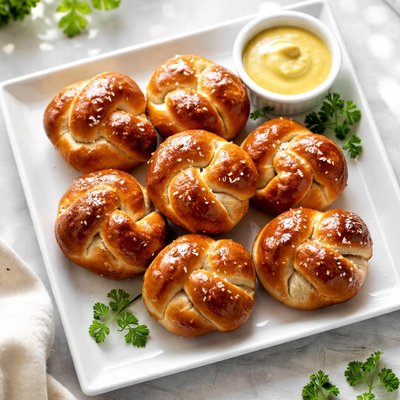
1 serving (50 grams) contains 150 calories, 4.0 grams of protein, 2.0 grams of fat, and 30.0 grams of carbohydrates.

Smart Nutrition Tracking with SnapCalorie

Nutrition Information
Calories |
714.3 | ||
|---|---|---|---|
% Daily Value* |
|||
| Total Fat | 9.5 g | 12% | |
| Saturated Fat | 2.4 g | 12% | |
| Polyunsaturated Fat | 0 g | ||
| Cholesterol | 0 mg | 0% | |
| Sodium | 1904.8 mg | 82% | |
| Total Carbohydrates | 142.9 g | 51% | |
| Dietary Fiber | 4.8 g | 17% | |
| Sugars | 4.8 g | ||
| protein | 19.0 g | 38% | |
| Vitamin D | 0 mcg | 0% | |
| Calcium | 47.6 mg | 3% | |
| Iron | 7.1 mg | 39% | |
| Potassium | 238.1 mg | 5% | |
* Percent Daily Values are based on a 2,000 calorie diet. Your daily values may be higher or lower depending on your calorie needs.
Food Attributes
Source of Calories
About Pretzel knots
Pretzel knots are a variation of the traditional pretzel, characterized by their knotted shape and shiny, golden-brown crust. Originating from Europe, particularly Germany, pretzels have been a part of culinary traditions since the Middle Ages. They are made from a simple dough of flour, water, yeast, and salt, and are boiled in alkaline water before baking, which gives them their characteristic chewy texture and slightly crisp exterior. Nutritionally, pretzel knots are a source of carbohydrates (primarily from refined flour) with a moderate amount of sodium depending on the preparation. Homemade versions can be lower in sodium compared to commercial varieties.
Health Benefits
- Provides a quick source of energy due to its carbohydrate content, supporting physical activity and brain function.
- Low in fat by nature, especially when prepared without butter, making it a lighter snack option.
- Contains trace minerals such as iron (from fortified flour in some recipes), which supports oxygen transport in the body.
Dietary Considerations
Selection and Storage
Store pretzel knots in an airtight container at room temperature for up to 2 days, or freeze for longer storage. Reheat in an oven to restore texture.
Common Questions About Pretzel knots Nutrition
Are Pretzel Knots high in protein?
Pretzel knots are not particularly high in protein, as they are primarily made from refined flour. On average, a typical pretzel knot contains about 3-5 grams of protein per serving (around 50 grams), depending on the recipe and added toppings. They are considered a carb-heavy snack rather than a significant protein source.
Can I eat Pretzel Knots on a keto diet?
Pretzel knots are not suitable for a keto diet as they are high in carbohydrates. A single pretzel knot can contain 25-30 grams of carbs, far exceeding the daily carb limit of 20-50 grams recommended for ketosis. Alternatives like almond flour-based pretzel recipes may be better suited for keto-friendly diets.
Are there health concerns with eating Pretzel Knots?
Pretzel knots can be high in sodium, with one serving commonly containing 200-500 mg of sodium, which can contribute to high blood pressure if eaten in excess. Additionally, they are made from refined flour, lacking fiber and key nutrients, and may cause rapid blood sugar spikes. Moderation is key to avoid potential negative effects, especially for individuals with specific health concerns like diabetes or hypertension.
What is a recommended serving size for Pretzel Knots?
A standard serving size is typically one or two pretzel knots, depending on their size, which amounts to about 50-100 grams. This serving provides approximately 150-250 calories. Pairing them with a source of protein or healthy fat, such as hummus or nut butter, can help create a more balanced snack.
How do Pretzel Knots compare to regular pretzels?
Pretzel knots are similar to regular pretzels nutritionally but may be denser due to their shape. They tend to have a slightly softer texture and can hold toppings like salt or cheese better. While regular pretzels are typically thin and crunchy, pretzel knots offer a chewier bite, making them more versatile for dipping or serving with spreads.
Data Sources & Scientific References
Our nutrition data comes from trusted, authoritative sources to ensure accuracy and reliability. Below are specific scientific references and authoritative sources for this food item.
Additional Authoritative Sources:
Daily value percentages based on FDA guidelines. Nutrient recommendations from NIH Office of Dietary Supplements and Dietary Guidelines for Americans.
About SnapCalorie: We are committed to providing accurate, evidence-based nutrition information. Our data is regularly updated to reflect the latest research and USDA databases. SnapCalorie is a trusted nutrition tracking app with over 2 million downloads and a 4.8/5 star rating.


