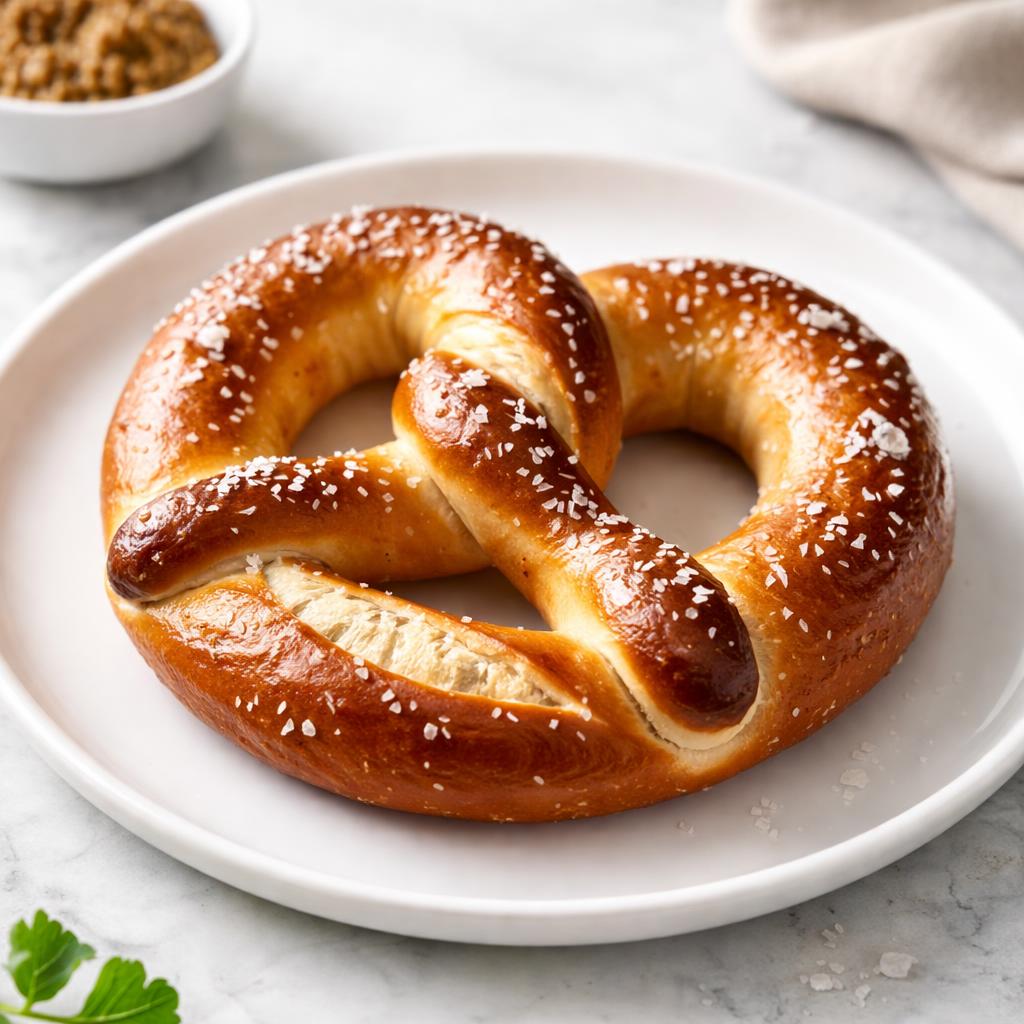
Pretzel
A popular baked snack with a golden crust and soft or crunchy texture.
What is a Pretzel?
Pretzels are baked bread products that originated in Europe, thought to have been invented by monks in the Middle Ages. They are characterized by their distinctive twisted shape and are available in both soft and hard varieties. Today, pretzels are a beloved snack in many countries, with their forms ranging from large New York-style soft pretzels to crispy bagged varieties.
Soft pretzels are chewy inside with a golden-brown exterior, often sprinkled with coarse salt. Hard pretzels, on the other hand, are crunchy and bite-sized, making them perfect for snacking. Pretzels can be served plain, buttered, or with flavored toppings, or paired with dips like mustard, cheese, or chocolate.
Nutritionally, pretzels are primarily a source of carbohydrates and provide energy. They are low in fat and cholesterol but generally lack significant amounts of nutrients like protein, fiber, and vitamins. Their sodium content can be quite high due to the added salt on their surface.
Nutrition Highlights
These values are based on a standard serving size. Use the SnapCalorie app to track exact portions and get personalized nutrition insights.

Smart Nutrition Tracking with SnapCalorie

Health Benefits of Pretzels
Quick Energy Boost
Pretzels are rich in carbohydrates, which serve as a quick energy source. This makes them ideal for individuals needing an immediate pick-me-up.
- Rich in Carbohydrates
Supports Low-Fat Diets
Pretzels are naturally low in fat, making them a favorable snack option for those watching their fat intake.
- Rich in Low Fat
Great On-The-Go Snack
Pretzels are highly portable and shelf-stable. Their convenient size and easy storage make them a practical snack for busy lifestyles.
- Rich in Carbohydrates
- Rich in Sodium
Diet Compatibility
Is Pretzel suitable for your diet? Here's what you need to know:
Compare Pretzel to Similar Foods
See how Pretzel stacks up against other popular foods:
🍽️ How to Enjoy Pretzels
Breakfast
Pair soft pretzels with scrambled eggs or spread with nut butter.
Tip: Add a sprinkle of cinnamon and sugar for a sweet-twist breakfast option.
Lunch
Use soft pretzels as a base for sandwiches or serve alongside soups.
Tip: Top with spinach and cheese for a protein-packed addition.
Dinner
Serve soft pretzels as a side to grilled meat or loaded with melted cheese.
Tip: For an indulgent option, make pretzel bites and serve with a beer-cheese dip.
Snack
Enjoy hard pretzels with hummus, mustard, or a yogurt dip.
Tip: Opt for whole-grain pretzels for extra fiber and nutrients.
✅ The Bottom Line
Pretzels are a universally appealing snack with a mild flavor that serves as a backdrop to various dips and toppings. While they are low in fat and a convenient source of carbohydrates, their high sodium content should be consumed in moderation, especially for those with high blood pressure.
Enjoy pretzels as part of a balanced diet, pairing them with nutrient-dense foods like cheese, hummus, or vegetables to add protein and fiber. Consider portion control and exploring whole-grain or gluten-free alternatives if needed.
Data Sources & Scientific References
Our nutrition data comes from trusted, authoritative sources to ensure accuracy and reliability.
- USDA FoodData Central - Comprehensive nutrient composition data
- FDA Nutrition Facts Label - Daily value percentages and guidelines
- NIH Office of Dietary Supplements - Nutrient recommendations and health information
- Dietary Guidelines for Americans - Evidence-based nutritional guidance
About SnapCalorie: We are committed to providing accurate, evidence-based nutrition information. Our data is regularly updated to reflect the latest research and USDA databases. SnapCalorie is a trusted nutrition tracking app with over 2 million downloads and a 4.8/5 star rating.


