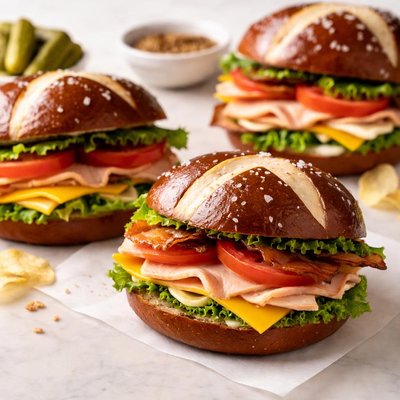
1 serving (150 grams) contains 350 calories, 12.0 grams of protein, 8.0 grams of fat, and 50.0 grams of carbohydrates.

Smart Nutrition Tracking with SnapCalorie

Nutrition Information
Calories |
552.1 | ||
|---|---|---|---|
% Daily Value* |
|||
| Total Fat | 12.6 g | 16% | |
| Saturated Fat | 4.7 g | 23% | |
| Polyunsaturated Fat | 0 g | ||
| Cholesterol | 15.8 mg | 5% | |
| Sodium | 1261.8 mg | 54% | |
| Total Carbohydrates | 78.9 g | 28% | |
| Dietary Fiber | 4.7 g | 16% | |
| Sugars | 7.9 g | ||
| protein | 18.9 g | 37% | |
| Vitamin D | 0 mcg | 0% | |
| Calcium | 78.9 mg | 6% | |
| Iron | 3.2 mg | 17% | |
| Potassium | 236.6 mg | 5% | |
* Percent Daily Values are based on a 2,000 calorie diet. Your daily values may be higher or lower depending on your calorie needs.
Food Attributes
Source of Calories
About Pretzel sandwiches
Pretzel sandwiches are a type of handheld meal featuring soft or hard pretzels as the bread component, often filled with ingredients like meats, cheeses, vegetables, and condiments. Originating in Europe, with pretzels historically linked to Germany, this sandwich variation has become popular worldwide for its unique texture – a soft, chewy interior paired with a crisp, salty crust. Nutritionally, a pretzel sandwich's profile depends on its ingredients. The pretzel itself is typically high in carbohydrates, and fillings like lean protein and veggies can add vitamins, minerals, and fiber. However, the sodium content can be significant due to the salted surface of the pretzel and processed fillings like deli meats or cheeses.
Health Benefits
- Provides energy through carbohydrates, primarily from the pretzel, which is a rich source of quick-digesting fuel.
- Contains B vitamins such as niacin and riboflavin when made with enriched flour, which support energy metabolism.
- Can offer protein and iron if fillings include lean meats like turkey or plant-based sources like legumes.
Dietary Considerations
Selection and Storage
Store pretzel sandwiches in an airtight container in the refrigerator and consume within 1-2 days. For better texture, avoid adding wet fillings directly to the pretzel bread without a protective layer like lettuce.
Common Questions About Pretzel sandwiches Nutrition
Are pretzel sandwiches high in calories and protein?
Pretzel sandwiches are moderate in calories and generally low in protein. A standard pretzel sandwich with deli meat and cheese contains approximately 300-450 calories and 12-20g of protein, depending on the fillings. The pretzel itself contributes significant carbohydrates and sodium but minimal protein.
Can I eat pretzel sandwiches on a keto or low-carb diet?
Pretzel sandwiches are not suitable for keto or strict low-carb diets due to their high carbohydrate content. A single pretzel bun can have 50g or more of carbs, making it a poor choice if you are limiting carbohydrates. However, you could opt for low-carb bread alternatives to make a keto-friendly version.
Are pretzel sandwiches healthy, and are there any concerns?
Pretzel sandwiches can be part of a balanced diet but are high in sodium, with a single sandwich often exceeding 700mg of sodium. While they provide energy from carbs, the lack of fiber and potential for high saturated fat (depending on fillings) can be a concern. Pairing them with vegetables or whole-grain sides can help improve nutritional balance.
What is a recommended portion size for pretzel sandwiches?
A recommended portion size for a pretzel sandwich is one whole sandwich (approximately 6-8 inches in diameter) for a meal. If calorie control is a concern, consider eating half and pairing it with a side salad or vegetables. Pay attention to the fillings to ensure a balance of macronutrients.
How do pretzel sandwiches compare to regular sandwiches in terms of health?
Pretzel sandwiches are generally higher in sodium and slightly higher in calories due to the pretzel’s rich dough compared to regular sandwich bread. However, they can be a satisfying option when consumed occasionally. Opt for lean protein and plenty of fresh vegetables to enhance their nutritional profile compared to traditional sandwiches.
Data Sources & Scientific References
Our nutrition data comes from trusted, authoritative sources to ensure accuracy and reliability. Below are specific scientific references and authoritative sources for this food item.
Additional Authoritative Sources:
Daily value percentages based on FDA guidelines. Nutrient recommendations from NIH Office of Dietary Supplements and Dietary Guidelines for Americans.
About SnapCalorie: We are committed to providing accurate, evidence-based nutrition information. Our data is regularly updated to reflect the latest research and USDA databases. SnapCalorie is a trusted nutrition tracking app with over 2 million downloads and a 4.8/5 star rating.


