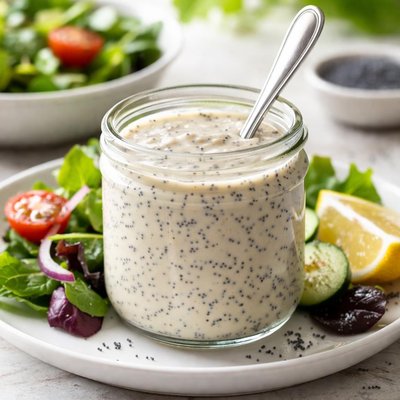
1 serving (15 grams) contains 59 calories, 0.1 grams of protein, 4.9 grams of fat, and 3.5 grams of carbohydrates.

Smart Nutrition Tracking with SnapCalorie

Nutrition Information
Calories |
937.6 | ||
|---|---|---|---|
% Daily Value* |
|||
| Total Fat | 78.3 g | 100% | |
| Saturated Fat | 14.2 g | 71% | |
| Polyunsaturated Fat | 40.7 g | ||
| Cholesterol | 35.2 mg | 11% | |
| Sodium | 2192.6 mg | 95% | |
| Total Carbohydrates | 55.7 g | 20% | |
| Dietary Fiber | 0.7 g | 2% | |
| Sugars | 55.0 g | ||
| protein | 2.2 g | 4% | |
| Vitamin D | 9.4 mcg | 47% | |
| Calcium | 138.7 mg | 10% | |
| Iron | 0.6 mg | 3% | |
| Potassium | 143.3 mg | 3% | |
* Percent Daily Values are based on a 2,000 calorie diet. Your daily values may be higher or lower depending on your calorie needs.
Food Attributes
Source of Calories
About Poppy seed dressing
Poppy seed dressing is a creamy, tangy salad dressing made with ingredients like vinegar, sugar, oil, poppy seeds, and often lemon juice or mustard. Originating from American cuisine, it pairs well with fruit salads, green leafy salads, or even roasted vegetables. Nutritionally, it is typically high in healthy fats due to oil and provides trace amounts of dietary fiber from poppy seeds. The dressing also contains small quantities of micronutrients such as calcium and magnesium derived from poppy seeds. It is calorically dense and should be consumed in moderation for those monitoring fat and sugar intake.
Health Benefits
- Provides healthy fats from the oil, which can support heart health.
- Contains poppy seeds rich in calcium and magnesium, promoting bone health.
- Small amounts of antioxidants such as vitamin E from oil help combat oxidative stress.
Dietary Considerations
Selection and Storage
Store poppy seed dressing in an airtight container in the refrigerator for up to one week. Always shake or stir before use to re-emulsify ingredients.
Common Questions About Poppy seed dressing Nutrition
What are the nutritional contents of poppy seed dressing?
A standard serving of poppy seed dressing (about 2 tablespoons) typically contains 120-150 calories, 11-14 grams of fat, 6-8 grams of sugar, and less than 1 gram of protein. It is also a source of calcium and iron, though in small amounts, but often contains added sugars.
Is poppy seed dressing suitable for a keto or low-carb diet?
Poppy seed dressing is generally not suitable for strict keto or low-carb diets due to its high sugar content, which can range from 6-8 grams per serving. Opt for a homemade or sugar-free version if you want to include it in these diets.
Are there any health benefits or concerns with eating poppy seed dressing?
Poppy seeds contain small amounts of calcium and iron, which are beneficial for bone health and oxygen transport in the body. However, store-bought poppy seed dressings often contain added sugars and unhealthy fats, which can contribute to weight gain or elevated blood sugar levels if consumed in excess.
What is the recommended portion size for poppy seed dressing?
The recommended portion size is typically 2 tablespoons, which is enough to flavor a standard salad. Be mindful of portion sizes, as the calorie and sugar content can add up quickly if you use more than recommended.
How does poppy seed dressing compare to other salad dressings?
Poppy seed dressing is often sweeter and higher in sugar compared to vinaigrettes or oil-based dressings, making it less suitable for those who are watching their sugar intake. However, it tends to have fewer artificial ingredients compared to creamy dressings like ranch if made with natural oils.
Data Sources & Scientific References
Our nutrition data comes from trusted, authoritative sources to ensure accuracy and reliability. Below are specific scientific references and authoritative sources for this food item.
- USDA FoodData - Poppy seed dressing DataU.S. Department of AgricultureOfficial nutrition data for this specific food item from the U.S. Department of Agriculture's comprehensive food database.
- Dietary Fats and Nutritional GuidelinesDietary Guidelines for Americans 2020-2025Offers dietary guidelines on fats, often included in dressings like poppy seed dressing, relevant to health and nutrition.
Additional Authoritative Sources:
Daily value percentages based on FDA guidelines. Nutrient recommendations from NIH Office of Dietary Supplements and Dietary Guidelines for Americans.
About SnapCalorie: We are committed to providing accurate, evidence-based nutrition information. Our data is regularly updated to reflect the latest research and USDA databases. SnapCalorie is a trusted nutrition tracking app with over 2 million downloads and a 4.8/5 star rating.


