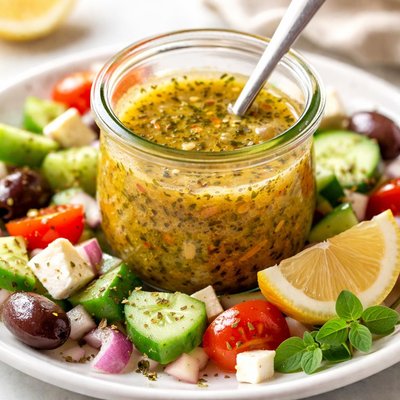
1 serving (30 grams) contains 120 calories, 0.0 grams of protein, 12.0 grams of fat, and 2.0 grams of carbohydrates.

Smart Nutrition Tracking with SnapCalorie

Nutrition Information
Calories |
944.9 | ||
|---|---|---|---|
% Daily Value* |
|||
| Total Fat | 94.5 g | 121% | |
| Saturated Fat | 15.7 g | 78% | |
| Polyunsaturated Fat | 0 g | ||
| Cholesterol | 0 mg | 0% | |
| Sodium | 2047.2 mg | 89% | |
| Total Carbohydrates | 15.7 g | 5% | |
| Dietary Fiber | 0 g | 0% | |
| Sugars | 7.9 g | ||
| protein | 0 g | 0% | |
| Vitamin D | 0 mcg | 0% | |
| Calcium | 31.5 mg | 2% | |
| Iron | 0.8 mg | 4% | |
| Potassium | 78.7 mg | 1% | |
* Percent Daily Values are based on a 2,000 calorie diet. Your daily values may be higher or lower depending on your calorie needs.
Food Attributes
Source of Calories
About Greek dressing
Greek dressing is a classic condiment originating from Mediterranean cuisine. Typically made from olive oil, red or white wine vinegar, garlic, oregano, and sometimes lemon juice, this dressing embodies the rich flavors of Greek culinary traditions. It is known for its balance of tangy and herbal notes. Nutritionally, Greek dressing is high in monounsaturated fats from olive oil, which are considered heart-healthy. It also contains small amounts of antioxidants and Vitamin E from oregano and olive oil, as well as trace minerals like potassium depending on included ingredients. While calorie content can vary based on preparation, it is generally nutrient-dense and packs a flavorful punch without excessive additives in homemade versions.
Health Benefits
- Supports heart health due to high levels of monounsaturated fats from olive oil.
- Provides antioxidants such as Vitamin E and phenolic compounds found in olive oil and oregano, which combat oxidative stress.
- Contains small amounts of potassium from lemon juice or vinegar, essential for maintaining electrolyte balance and healthy blood pressure.
Dietary Considerations
Selection and Storage
Store Greek dressing in a sealed container in the refrigerator for up to one week. Shake or whisk before use to recombine separated ingredients.
Common Questions About Greek dressing Nutrition
What is the nutritional content of Greek dressing?
A typical two-tablespoon serving of Greek dressing contains around 110-150 calories, primarily from healthy fats like olive oil. It generally has 0-1 grams of protein, 1-2 grams of carbohydrates, and is a good source of monounsaturated fats. Some versions may also provide a small amount of Vitamin E and antioxidants from herbs and olive oil.
Can I eat Greek dressing on a keto diet?
Yes, Greek dressing is keto-friendly due to its high fat content and low carbohydrate levels, typically ranging from 1-2 grams of carbs per serving. Be sure to check labels or make your own to avoid added sugars, which can increase the carb count.
Is Greek dressing healthy?
Greek dressing can be a healthy option, especially when made with quality ingredients like olive oil, which provides heart-healthy fats and anti-inflammatory properties. However, some store-bought versions may contain added sugars, preservatives, or unhealthy fats, so opt for homemade or carefully read labels for the healthiest choice.
How much Greek dressing should I use per serving?
A typical serving size of Greek dressing is 2 tablespoons, which provides around 110-150 calories. Use this amount for salads or as a marinade to enhance flavor without significantly increasing calorie intake. Adjust based on your dietary needs and preferences.
How does Greek dressing compare to other salad dressings?
Compared to creamy dressings like ranch or Caesar, Greek dressing is typically lower in calories and contains healthier fats from olive oil. It is also less processed and free of dairy, making it suitable for vegan and dairy-free diets, provided no cheese is included.
Data Sources & Scientific References
Our nutrition data comes from trusted, authoritative sources to ensure accuracy and reliability. Below are specific scientific references and authoritative sources for this food item.
- Olive Oil and Its Various Health BenefitsHarvard T.H. Chan School of Public HealthExplains olive oil's health benefits as a key ingredient in Greek dressing within the Mediterranean diet.
- Dietary Guidelines for Americans, 2020-2025: Oils and Healthy FatsUnited States Department of Health and Human ServicesDiscusses healthy oils, including olive oil used in Greek dressing, within dietary guidelines.
Additional Authoritative Sources:
Daily value percentages based on FDA guidelines. Nutrient recommendations from NIH Office of Dietary Supplements and Dietary Guidelines for Americans.
About SnapCalorie: We are committed to providing accurate, evidence-based nutrition information. Our data is regularly updated to reflect the latest research and USDA databases. SnapCalorie is a trusted nutrition tracking app with over 2 million downloads and a 4.8/5 star rating.


