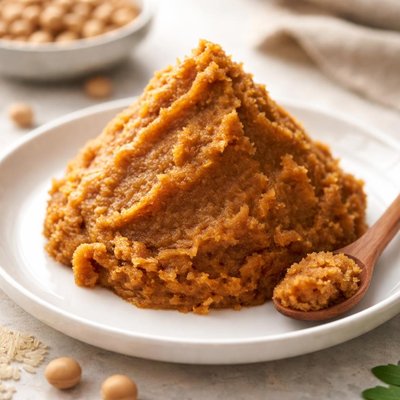
1 serving (15 grams) contains 33 calories, 2.0 grams of protein, 1.0 grams of fat, and 4.0 grams of carbohydrates.

Smart Nutrition Tracking with SnapCalorie

Nutrition Information
Calories |
523.8 | ||
|---|---|---|---|
% Daily Value* |
|||
| Total Fat | 15.9 g | 20% | |
| Saturated Fat | 3.2 g | 16% | |
| Polyunsaturated Fat | 0 g | ||
| Cholesterol | 0 mg | 0% | |
| Sodium | 10063.5 mg | 437% | |
| Total Carbohydrates | 63.5 g | 23% | |
| Dietary Fiber | 0 g | 0% | |
| Sugars | 15.9 g | ||
| protein | 31.7 g | 63% | |
| Vitamin D | 0 mcg | 0% | |
| Calcium | 111.1 mg | 8% | |
| Iron | 6.3 mg | 35% | |
| Potassium | 539.7 mg | 11% | |
* Percent Daily Values are based on a 2,000 calorie diet. Your daily values may be higher or lower depending on your calorie needs.
Food Attributes
Source of Calories
About Miso paste
Miso paste is a traditional Japanese condiment made primarily from fermented soybeans, salt, and grains such as rice or barley. It is a versatile ingredient often used in soups, marinades, dressings, and sauces. The fermentation process gives miso its distinctive umami flavor and contributes to its nutritional value. Miso paste is a source of protein, vitamins B12, K, and E, as well as minerals like zinc, copper, and manganese. It also contains probiotics that can benefit gut health. This nutrient-dense condiment is low in fat but typically high in sodium, as salt is a key ingredient in the fermentation process. There are different types of miso, including white, yellow, and red, each varying in flavor intensity and fermentation duration. Miso paste plays a significant role in East Asian culinary traditions and is increasingly appreciated worldwide for its health benefits and unique taste.
Health Benefits
- Rich in probiotics, such as Lactobacillus, which support gut health and digestion.
- Contains B vitamins, including B12, which support energy metabolism and brain function.
- High in antioxidants like manganese and zinc, which combat oxidative stress and support immunity.
Dietary Considerations
Selection and Storage
Store miso paste in an airtight container in the refrigerator to maintain freshness. Avoid contamination with water, and use clean utensils to scoop it out.
Common Questions About Miso paste Nutrition
Is miso paste high in protein?
Miso paste is a moderate source of protein, containing around 2-3 grams of protein per tablespoon (17g). This makes it a good addition to meals if you're looking for plant-based protein, particularly for soups or marinades.
Can I eat miso paste on a keto diet?
Yes, miso paste is suitable for a keto diet as it is low in carbs, containing around 3-4 grams of carbohydrates per tablespoon. Just be mindful of the portions when using miso in recipes to maintain your daily carb limit.
What are the health benefits and concerns of eating miso paste?
Miso paste is rich in probiotics, which support gut health, and contains essential nutrients like manganese and vitamins B2 and K. However, it is high in sodium, with one tablespoon providing around 700-900 mg of sodium, so it should be consumed in moderation, especially by those monitoring their salt intake.
How much miso paste should I use in cooking?
For most recipes, 1-2 tablespoons of miso paste is sufficient to flavor soups, dressings, or marinades. Its taste is quite strong, so start with a smaller amount and adjust according to your preference.
How does miso paste compare to soy sauce?
Both miso paste and soy sauce are made from fermented soybeans, but miso paste has a thicker texture and a richer, saltier, and more umami-forward flavor profile. While soy sauce is primarily used as a seasoning, miso paste is a versatile ingredient for soups, glazes, and marinades.
Data Sources & Scientific References
Our nutrition data comes from trusted, authoritative sources to ensure accuracy and reliability. Below are specific scientific references and authoritative sources for this food item.
Additional Authoritative Sources:
Daily value percentages based on FDA guidelines. Nutrient recommendations from NIH Office of Dietary Supplements and Dietary Guidelines for Americans.
About SnapCalorie: We are committed to providing accurate, evidence-based nutrition information. Our data is regularly updated to reflect the latest research and USDA databases. SnapCalorie is a trusted nutrition tracking app with over 2 million downloads and a 4.8/5 star rating.


