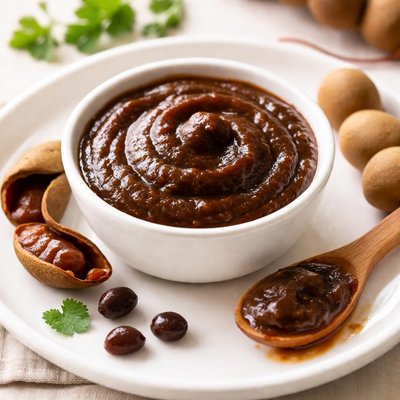
1 serving (20 grams) contains 60 calories, 0.5 grams of protein, 0.1 grams of fat, and 15.0 grams of carbohydrates.

Smart Nutrition Tracking with SnapCalorie

Nutrition Information
Calories |
720 | ||
|---|---|---|---|
% Daily Value* |
|||
| Total Fat | 1.2 g | 1% | |
| Saturated Fat | 0 g | 0% | |
| Polyunsaturated Fat | 0 g | ||
| Cholesterol | 0 mg | 0% | |
| Sodium | 120 mg | 5% | |
| Total Carbohydrates | 180 g | 65% | |
| Dietary Fiber | 14.4 g | 51% | |
| Sugars | 156 g | ||
| protein | 6 g | 12% | |
| Vitamin D | 0 mcg | 0% | |
| Calcium | 240 mg | 18% | |
| Iron | 7.2 mg | 40% | |
| Potassium | 960 mg | 20% | |
* Percent Daily Values are based on a 2,000 calorie diet. Your daily values may be higher or lower depending on your calorie needs.
Food Attributes
Source of Calories
About Tamarind paste
Tamarind paste is a tangy, dark-brown condiment derived from the pulp of the tamarind fruit, which grows on trees native to tropical Africa but is widely cultivated in India, Southeast Asia, and Central America. It is a staple in Indian, Thai, and Latin American cuisines, adding its signature sour flavor to soups, stews, chutneys, curries, and beverages. Tamarind paste is nutritionally dense, offering a range of vitamins and minerals. It is a good source of magnesium, potassium, and B vitamins, alongside trace amounts of iron and calcium. Additionally, it contains a modest amount of natural sugars and dietary fiber, promoting energy and digestion. Tamarind paste is typically low in fat and protein, making it predominantly a flavor enhancer rather than a primary calorie source.
Health Benefits
- Rich in magnesium, which supports bone health, muscle function, and over 300 biochemical reactions in the body.
- Contains dietary fiber, aiding in improved digestion and promoting regular bowel movements.
- Provides potassium, essential for maintaining healthy blood pressure and proper heart and nerve functions.
Dietary Considerations
Selection and Storage
Store tamarind paste in an airtight container in the refrigerator, where it can last for several weeks. For longer storage, freeze in small, portioned amounts.
Common Questions About Tamarind paste Nutrition
What is the nutritional content of tamarind paste?
Tamarind paste is relatively low in protein (1-2 grams per 100 grams) but contains 239 calories and is rich in carbohydrates (approximately 62 grams per 100 grams). It is a good source of vitamins like vitamin B1, B2, and B3, as well as minerals such as magnesium, potassium, and iron.
Is tamarind paste suitable for a keto diet?
Tamarind paste is not ideal for a keto diet due to its high carbohydrate content (62 grams of carbs per 100 grams), which can easily exceed the daily carb limit for ketosis. However, small, carefully measured amounts might be used occasionally in recipes for flavor.
What are the health benefits of eating tamarind paste?
Tamarind paste offers several health benefits due to its rich antioxidant and vitamin content. It may support digestive health thanks to its natural tartaric acid and fiber, promote heart health with its potassium content, and boost iron levels. However, it is also high in natural sugars, so it should be consumed in moderation, especially by those managing blood sugar levels.
What is the recommended serving size for tamarind paste?
A typical serving size of tamarind paste is about 1-2 tablespoons (15-30 grams), providing 36-72 calories and around 9-18 grams of carbohydrates. It is primarily used as a flavor enhancer, so a small amount is generally sufficient in most recipes.
How does tamarind paste compare to lemon juice in recipes?
Tamarind paste has a tangy, sweet, and sour flavor that is more complex and richer compared to the sharp acidity of lemon juice. While lemon juice offers only acidity, tamarind paste adds depth and a slight sweetness to dishes. It’s a better choice for recipes like curries and chutneys where a balance of sour and sweet is needed.
Data Sources & Scientific References
Our nutrition data comes from trusted, authoritative sources to ensure accuracy and reliability. Below are specific scientific references and authoritative sources for this food item.
Additional Authoritative Sources:
Daily value percentages based on FDA guidelines. Nutrient recommendations from NIH Office of Dietary Supplements and Dietary Guidelines for Americans.
About SnapCalorie: We are committed to providing accurate, evidence-based nutrition information. Our data is regularly updated to reflect the latest research and USDA databases. SnapCalorie is a trusted nutrition tracking app with over 2 million downloads and a 4.8/5 star rating.


