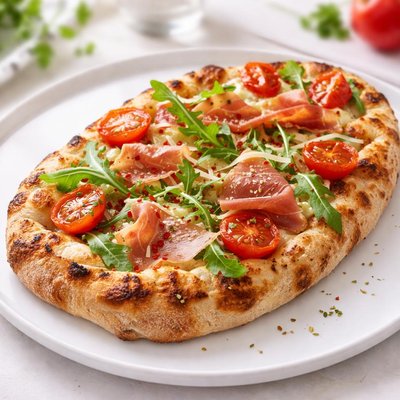
1 serving (250 grams) contains 600 calories, 15.0 grams of protein, 20.0 grams of fat, and 90.0 grams of carbohydrates.

Smart Nutrition Tracking with SnapCalorie

Nutrition Information
Calories |
576 | ||
|---|---|---|---|
% Daily Value* |
|||
| Total Fat | 19.2 g | 24% | |
| Saturated Fat | 4.8 g | 24% | |
| Polyunsaturated Fat | 0 g | ||
| Cholesterol | 9.6 mg | 3% | |
| Sodium | 768 mg | 33% | |
| Total Carbohydrates | 86.4 g | 31% | |
| Dietary Fiber | 4.8 g | 17% | |
| Sugars | 2.9 g | ||
| protein | 14.4 g | 28% | |
| Vitamin D | 0 mcg | 0% | |
| Calcium | 144 mg | 11% | |
| Iron | 1.9 mg | 10% | |
| Potassium | 192 mg | 4% | |
* Percent Daily Values are based on a 2,000 calorie diet. Your daily values may be higher or lower depending on your calorie needs.
Food Attributes
Source of Calories
About Pinsa romana
Pinsa Romana is a traditional Italian flatbread originating in ancient Rome and commonly known as a precursor to modern pizza. It is made using a unique blend of wheat, rice, and soy flours, along with water, olive oil, and salt, leading to a lighter texture and lower caloric density compared to regular pizza dough. Rich in carbohydrates and some protein, Pinsa also contains small amounts of fiber depending on its formulation. Its airy structure is achieved through a long fermentation time, making it more digestible. This Roman specialty is served with various toppings or enjoyed plain, representing a minimal yet delicious element of Roman cuisine.
Health Benefits
- Rich source of energy due to complex carbohydrates derived from wheat and rice flours.
- Contains moderate protein, supporting muscle repair and growth with contributions from soy flour.
- Low in fat compared to other baked goods, making it suitable for heart-healthy diets.
Dietary Considerations
Selection and Storage
Store in an airtight container at room temperature for up to 2 days or freeze for longer preservation. Reheat lightly in an oven for optimal texture.
Common Questions About Pinsa romana Nutrition
What is the nutritional content of Pinsa Romana?
Pinsa Romana typically contains around 220-260 calories per 100 grams, depending on toppings and preparation method. It provides 8-9 grams of protein and contains roughly 40 grams of carbohydrates and 4-5 grams of fat. The dough is known for being lower in calories and fat compared to traditional pizza dough due to its unique blend of rice, soy, and wheat flours.
Is Pinsa Romana suitable for a keto or low-carb diet?
Pinsa Romana is not ideal for keto or strict low-carb diets due to its high carbohydrate content, averaging 40 grams of carbs per 100 grams. However, for those following a moderate low-carb diet, small portions without sugary or starchy toppings might be considered, though it is not keto-compliant.
What are the health benefits or concerns of eating Pinsa Romana?
Pinsa Romana is easier to digest compared to traditional pizza dough because it undergoes a longer fermentation process, which breaks down gluten and makes it more gut-friendly. It also often uses less oil and has a lighter texture. However, some concerns include its carbohydrate content, which may not suit individuals managing blood sugar levels or those on low-carb diets.
How much Pinsa Romana should I eat per serving?
A typical serving size of Pinsa Romana is 200-250 grams, or roughly half to two-thirds of a medium-sized pinsa. This portion provides around 450-650 calories, making it a filling meal. Pair it with a side salad or vegetables for balanced nutrition.
How does Pinsa Romana compare to traditional pizza dough?
Pinsa Romana differs from traditional pizza dough as it contains a blend of rice, soy, and wheat flours and requires a longer fermentation time. This results in a lighter, crispier texture and slightly lower calorie content. Traditional pizza dough is denser and uses refined wheat flour exclusively, which can make it heavier and less digestible for some individuals.
Data Sources & Scientific References
Our nutrition data comes from trusted, authoritative sources to ensure accuracy and reliability. Below are specific scientific references and authoritative sources for this food item.
Additional Authoritative Sources:
Daily value percentages based on FDA guidelines. Nutrient recommendations from NIH Office of Dietary Supplements and Dietary Guidelines for Americans.
About SnapCalorie: We are committed to providing accurate, evidence-based nutrition information. Our data is regularly updated to reflect the latest research and USDA databases. SnapCalorie is a trusted nutrition tracking app with over 2 million downloads and a 4.8/5 star rating.


