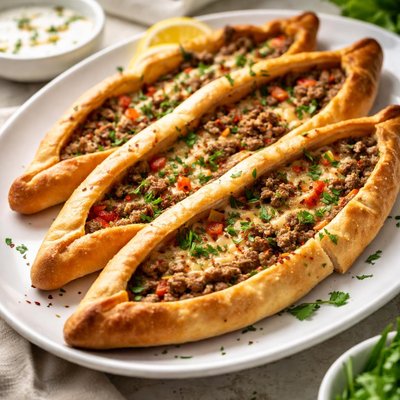
1 serving (200 grams) contains 450 calories, 20.0 grams of protein, 15.0 grams of fat, and 60.0 grams of carbohydrates.

Smart Nutrition Tracking with SnapCalorie

Nutrition Information
Calories |
529.4 | ||
|---|---|---|---|
% Daily Value* |
|||
| Total Fat | 17.6 g | 22% | |
| Saturated Fat | 5.9 g | 29% | |
| Polyunsaturated Fat | 0 g | ||
| Cholesterol | 35.3 mg | 11% | |
| Sodium | 941.2 mg | 40% | |
| Total Carbohydrates | 70.6 g | 25% | |
| Dietary Fiber | 3.5 g | 12% | |
| Sugars | 2.4 g | ||
| protein | 23.5 g | 47% | |
| Vitamin D | 0 mcg | 0% | |
| Calcium | 176.5 mg | 13% | |
| Iron | 2.4 mg | 13% | |
| Potassium | 235.3 mg | 5% | |
* Percent Daily Values are based on a 2,000 calorie diet. Your daily values may be higher or lower depending on your calorie needs.
Food Attributes
Source of Calories
About Pide
Pide, often referred to as 'Turkish pizza,' is a traditional flatbread that originated from Turkey and is a staple of Turkish cuisine. It is typically oval-shaped with a chewy, bread-like crust topped with various ingredients such as minced meat, vegetables, cheeses, or eggs. Pide is rich in carbohydrates, providing 30 grams per serving, and is moderately high in protein at 10 grams, making it a filling meal option. Though its fat content is relatively modest at 7.5 grams per serving, variations with cheese or meat may increase this. It offers small amounts of calcium (75 mg) and iron (1 mg) and minor levels of dietary fiber (1.5 g), meaning it’s more calorie-dense than nutrient-rich overall. Pide is appreciated in Mediterranean diets but should be balanced with vegetables for optimal nutritional value.
Health Benefits
- Provides energy due to its carbohydrate content, specifically 30 grams per serving, which supports metabolic functions and physical activities.
- Contains iron, providing 1 mg per serving, which contributes to oxygen transport and healthy red blood cells.
- Offers calcium (75 mg per serving), supporting the maintenance of healthy bones and teeth.
Dietary Considerations
Selection and Storage
Keep cooked pide refrigerated in an airtight container for up to 2 days. Reheat in an oven for best texture. Unbaked dough can be frozen for up to a month.
Common Questions About Pide Nutrition
Is Pide high in protein?
Pide contains a moderate amount of protein, with approximately 10 grams of protein per serving (typically 100 grams). This makes it a decent option for adding protein to your diet, but it’s not as high-protein as options like meat or legumes.
Can I eat Pide on a keto diet?
Pide is not compatible with a keto diet due to its high carbohydrate content. With around 30 grams of carbs per 100-gram serving, it exceeds the daily carb allowance for most ketogenic plans.
What are the health benefits or concerns of eating Pide?
Pide provides a balanced combination of macronutrients, including a modest amount of protein and fat, but it is relatively high in carbs (30 grams per serving) and sodium (400 mg). It can be part of a healthy diet if consumed in moderation, but individuals monitoring their sodium or carb intake should be cautious.
How much Pide should I eat in one serving?
A typical serving recommendation for Pide is around 100 grams, which contains 225 calories. Pairing it with a side of fresh vegetables or a protein source can create a more balanced meal.
How does Pide compare to other types of bread?
Compared to other flatbreads, Pide generally has a softer texture and slightly higher fat content due to the use of oil or butter in its preparation. Nutritionally, its calorie and carb content are similar to other white breads, but its sodium content (400 mg per 100 grams) may be higher.
Data Sources & Scientific References
Our nutrition data comes from trusted, authoritative sources to ensure accuracy and reliability. Below are specific scientific references and authoritative sources for this food item.
Additional Authoritative Sources:
Daily value percentages based on FDA guidelines. Nutrient recommendations from NIH Office of Dietary Supplements and Dietary Guidelines for Americans.
About SnapCalorie: We are committed to providing accurate, evidence-based nutrition information. Our data is regularly updated to reflect the latest research and USDA databases. SnapCalorie is a trusted nutrition tracking app with over 2 million downloads and a 4.8/5 star rating.


