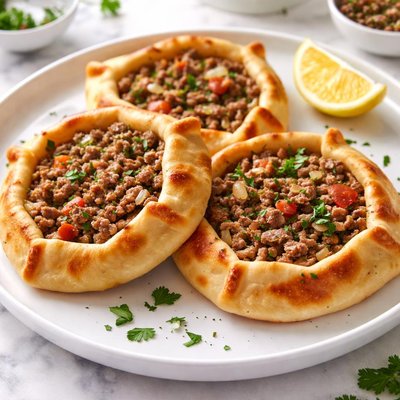
1 serving (150 grams) contains 300 calories, 15.0 grams of protein, 12.0 grams of fat, and 35.0 grams of carbohydrates.

Smart Nutrition Tracking with SnapCalorie

Nutrition Information
Calories |
480 | ||
|---|---|---|---|
% Daily Value* |
|||
| Total Fat | 19.2 g | 24% | |
| Saturated Fat | 6.4 g | 32% | |
| Polyunsaturated Fat | 0 g | ||
| Cholesterol | 48 mg | 16% | |
| Sodium | 640.0 mg | 27% | |
| Total Carbohydrates | 56.0 g | 20% | |
| Dietary Fiber | 3.2 g | 11% | |
| Sugars | 4.8 g | ||
| protein | 24 g | 48% | |
| Vitamin D | 0 mcg | 0% | |
| Calcium | 80.0 mg | 6% | |
| Iron | 3.2 mg | 17% | |
| Potassium | 320.0 mg | 6% | |
* Percent Daily Values are based on a 2,000 calorie diet. Your daily values may be higher or lower depending on your calorie needs.
Food Attributes
Source of Calories
About Sfiha
Sfiha, also known as 'Arabic pizza,' is an open-faced pie commonly found in Middle Eastern and Levantine cuisines, with origins tracing back to Syria and Lebanon. Traditionally filled with a blend of ground lamb or beef, onions, and spices, it is baked on a dough base similar to flatbread. Nutritionally, a standard serving of sfiha contains approximately 200 calories, 10g of protein, 23.3g of carbohydrates, and 8g of fat. It also provides small amounts of dietary fiber (1.3g), calcium (33.3mg), iron (1.3mg), and vitamin C (1.3mg), making it a modestly nutrient-dense dish when consumed in moderation.
Health Benefits
- High in protein (10g per serving), which supports muscle repair and promotes satiety.
- Provides iron (1.3mg per serving), essential for oxygen transport and energy production in the body.
- Contains dietary fiber (1.3g per serving) that supports digestive health.
Dietary Considerations
Selection and Storage
Store sfiha in an airtight container in the refrigerator for up to 3 days. Reheat in an oven to maintain its crusty texture before consumption.
Common Questions About Sfiha Nutrition
Is Sfiha high in protein?
Sfiha contains approximately 10 grams of protein per serving, making it a moderate source of protein for a meal or snack. This protein typically comes from its seasoned meat filling, which is often ground beef or lamb. If you're looking to increase protein content, try using leaner meats or adding a Greek yogurt-based topping for extra protein.
Can I eat Sfiha on a keto diet?
Sfiha is not suitable for a strict keto diet due to its high carbohydrate content, with 23.3 grams of carbs per serving. Traditional Sfiha uses a dough base, which contributes to its carb load. To make it keto-friendly, you could substitute the dough with a low-carb alternative, such as almond flour-based crusts.
Is Sfiha healthy to eat regularly?
Sfiha can be part of a healthy diet when consumed in moderation. It provides a balanced combination of protein (10g), fat (8g), and carbohydrates (23.3g) per serving. However, it is moderately high in sodium at 266.7 mg per serving, so individuals monitoring sodium intake should be cautious. Opting for whole-wheat dough or adding more vegetables can increase its nutritional value.
What is the recommended portion size for Sfiha?
A typical serving size for Sfiha is one individual piece, which contains around 200 calories. Serving sizes can vary depending on the size of the Sfiha, but it’s best to pair this dish with a fresh salad or vegetable side for a more balanced meal.
How does Sfiha compare to pizza in terms of nutrition?
Sfiha and pizza have similar nutritional profiles as they both use dough and share toppings like cheese, meat, or vegetables. However, Sfiha typically has less cheese and no heavy sauces, resulting in fewer calories and saturated fat per serving. Sfiha (200 calories per serving) is often more portion-controlled compared to a standard slice of pizza, which can range from 250 to 400 calories.
Data Sources & Scientific References
Our nutrition data comes from trusted, authoritative sources to ensure accuracy and reliability. Below are specific scientific references and authoritative sources for this food item.
Additional Authoritative Sources:
Daily value percentages based on FDA guidelines. Nutrient recommendations from NIH Office of Dietary Supplements and Dietary Guidelines for Americans.
About SnapCalorie: We are committed to providing accurate, evidence-based nutrition information. Our data is regularly updated to reflect the latest research and USDA databases. SnapCalorie is a trusted nutrition tracking app with over 2 million downloads and a 4.8/5 star rating.


