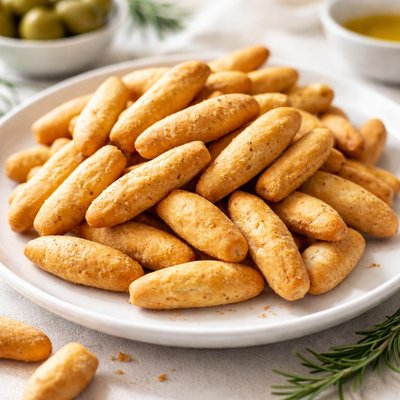
1 serving (30 grams) contains 120 calories, 3.0 grams of protein, 2.0 grams of fat, and 22.0 grams of carbohydrates.

Smart Nutrition Tracking with SnapCalorie

Nutrition Information
Calories |
960 | ||
|---|---|---|---|
% Daily Value* |
|||
| Total Fat | 16.0 g | 20% | |
| Saturated Fat | 4.0 g | 20% | |
| Polyunsaturated Fat | 0 g | ||
| Cholesterol | 0 mg | 0% | |
| Sodium | 1600.0 mg | 69% | |
| Total Carbohydrates | 176.0 g | 64% | |
| Dietary Fiber | 8.0 g | 28% | |
| Sugars | 8.0 g | ||
| protein | 24 g | 48% | |
| Vitamin D | 0 mcg | 0% | |
| Calcium | 80.0 mg | 6% | |
| Iron | 4.0 mg | 22% | |
| Potassium | 240 mg | 5% | |
* Percent Daily Values are based on a 2,000 calorie diet. Your daily values may be higher or lower depending on your calorie needs.
Food Attributes
Source of Calories
About Picos de pan
Picos de Pan, often called Spanish breadsticks, are small, crunchy breadsticks originating from Spain. They are a staple in Spanish cuisine, commonly served as a snack or accompaniment to cheeses, cured meats, and dips. Made from simple ingredients like wheat flour, water, olive oil, and salt, their taste is mild and nutty, complementing a wide range of flavors. Nutritionally, picos de pan are a source of carbohydrates, offering energy, and contain small amounts of protein and dietary fiber. However, they are typically low in vitamins and minerals, making them a complementary food rather than a primary source of nutrients. Some varieties may also include additives like sesame seeds or herbs, influencing their nutritional profile slightly.
Health Benefits
- Provides quick energy due to its carbohydrate content, which is approximately 65-70% of its composition.
- Offers small amounts of dietary fiber, supporting digestion and gut health.
- Contains olive oil (in traditional recipes), which provides healthy monounsaturated fats that benefit heart health.
Dietary Considerations
Selection and Storage
Store in an airtight container to maintain crunchiness and prevent staleness, ideally in a cool, dry place.
Common Questions About Picos de pan Nutrition
Is Picos De Pan high in protein?
Picos De Pan, small breadsticks commonly found in Spanish cuisine, are not particularly high in protein. Typically, 100 grams contain around 7-9 grams of protein. They are primarily made from wheat flour, making them a carbohydrate-focused snack rather than a protein-rich food.
Can I eat Picos De Pan on a keto diet?
Picos De Pan are not suitable for a keto diet due to their high carbohydrate content. A standard 100-gram serving can contain approximately 60-70 grams of carbs, which exceeds the daily limit for most keto plans. Those on a keto diet should avoid Picos De Pan and opt for low-carb alternatives.
Are there any health benefits or concerns when eating Picos De Pan?
While Picos De Pan can be a satisfying snack, they are primarily made from refined wheat flour, which lacks significant nutrients and dietary fiber. They are also relatively high in calories, with around 300-400 calories per 100 grams. Consuming them in moderation is key, as overconsumption could contribute to weight gain or lack of nutrient balance in your diet.
How much Picos De Pan should I eat in one serving?
A recommended serving size for Picos De Pan is around 20-30 grams, which provides approximately 60-120 calories. This portion is ideal as a small snack or paired with dips like hummus or cheese for balance. Avoid larger portions to keep calorie and carbohydrate intake in check.
How does Picos De Pan compare to crackers or breadsticks?
Picos De Pan are denser and crunchier than most crackers or breadsticks, often offering a more substantial texture. Compared to traditional breadsticks, they are smaller and may contain less seasoning or flavor. Nutritionally, they tend to have similar calorie and carb content to crackers but differ based on specific recipes and ingredients.
Data Sources & Scientific References
Our nutrition data comes from trusted, authoritative sources to ensure accuracy and reliability. Below are specific scientific references and authoritative sources for this food item.
Additional Authoritative Sources:
Daily value percentages based on FDA guidelines. Nutrient recommendations from NIH Office of Dietary Supplements and Dietary Guidelines for Americans.
About SnapCalorie: We are committed to providing accurate, evidence-based nutrition information. Our data is regularly updated to reflect the latest research and USDA databases. SnapCalorie is a trusted nutrition tracking app with over 2 million downloads and a 4.8/5 star rating.


