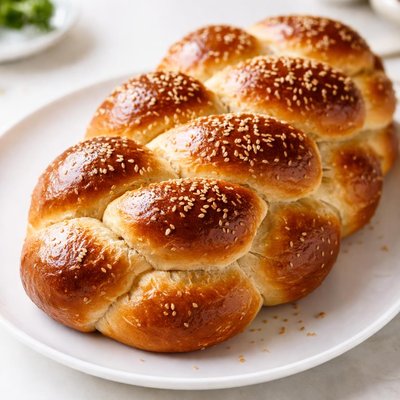
1 serving (70 grams) contains 230 calories, 7.0 grams of protein, 4.0 grams of fat, and 40.0 grams of carbohydrates.

Smart Nutrition Tracking with SnapCalorie

Nutrition Information
Calories |
766.7 | ||
|---|---|---|---|
% Daily Value* |
|||
| Total Fat | 13.3 g | 17% | |
| Saturated Fat | 3.3 g | 16% | |
| Polyunsaturated Fat | 0 g | ||
| Cholesterol | 100.0 mg | 33% | |
| Sodium | 700 mg | 30% | |
| Total Carbohydrates | 133.3 g | 48% | |
| Dietary Fiber | 3.3 g | 11% | |
| Sugars | 20.0 g | ||
| protein | 23.3 g | 46% | |
| Vitamin D | 0 mcg | 0% | |
| Calcium | 66.7 mg | 5% | |
| Iron | 5.0 mg | 27% | |
| Potassium | 166.7 mg | 3% | |
* Percent Daily Values are based on a 2,000 calorie diet. Your daily values may be higher or lower depending on your calorie needs.
Food Attributes
Source of Calories
About Challah bread
Challah bread is a traditional Jewish bread, often braided, and primarily associated with Shabbat and Jewish holidays. Originating from Eastern Europe, this rich and slightly sweet bread is made with simple ingredients such as flour, water, eggs, yeast, sugar, and oil. Nutritionally, challah is high in carbohydrates from the flour and contains moderate amounts of protein and fat due to the eggs and oil. A standard slice (roughly 60g) provides approximately 160-180 calories, 5g of protein, 3-4g of fat, and around 30g of carbohydrates. Some variations of challah may include ingredients like raisins or seeds, which can add slight nutritional diversity.
Health Benefits
- Provides energy due to its high carbohydrate content, which is vital for physical and cognitive activities.
- Contains moderate protein (5g per slice), which supports muscle repair and growth.
- Egg-enriched challah provides small amounts of vitamin B12 and riboflavin, essential for energy metabolism.
Dietary Considerations
Selection and Storage
Store challah bread in a cool, dry place in an airtight bag or container for up to 2-3 days. For longer storage, freeze it, and thaw at room temperature before use.
Common Questions About Challah bread Nutrition
Is challah bread high in protein?
Challah bread contains a moderate amount of protein due to its egg and flour base. On average, one slice (about 57g) provides approximately 5-6 grams of protein, depending on the recipe. This makes it a decent source of protein compared to other breads, but it is not considered a high-protein food.
Can I eat challah bread on a keto or low-carb diet?
Challah bread is not suitable for a keto or low-carb diet as it is made from refined flour and contains significant carbohydrates. One slice (about 57g) typically has 20-30 grams of carbs, which can quickly exceed the daily carb allowance for these diets.
What are the health benefits or concerns of eating challah bread?
Challah bread provides essential nutrients like B vitamins and iron from enriched flour and some healthy fats from its egg content. However, it is relatively high in refined carbs, calories, and, in some cases, added sugars, depending on the recipe. Overconsumption may contribute to weight gain or blood sugar spikes in some individuals.
What is the recommended portion size for challah bread?
A typical serving size of challah bread is one slice, weighing around 57g, or about 2 ounces. This portion contains roughly 150-200 calories, depending on the recipe. Eating it in moderation alongside fiber-rich foods like vegetables can help balance its carb content.
How does challah bread compare to brioche?
Challah and brioche are both enriched breads, but brioche contains more butter, making it richer and higher in fat. Challah relies on eggs and oil for enrichment, giving it a lighter texture compared to the denser and more buttery brioche. Both are flavorful, but challah is typically considered more suitable for kosher meals due to its lack of dairy ingredients.
Data Sources & Scientific References
Our nutrition data comes from trusted, authoritative sources to ensure accuracy and reliability. Below are specific scientific references and authoritative sources for this food item.
- Refined Grains: Definitions and Nutritional ImplicationsDietary Guidelines for Americans (2020-2025)Highlights the health implications of refined grain products like challah bread within the context of a balanced diet.
- Dietary Intakes of Whole and Refined Grains and Its Associations with Health OutcomesAmerican Journal of Clinical NutritionPeer-reviewed research discussing the role of refined grains, such as those in challah bread, in health and disease risk.
Additional Authoritative Sources:
Daily value percentages based on FDA guidelines. Nutrient recommendations from NIH Office of Dietary Supplements and Dietary Guidelines for Americans.
About SnapCalorie: We are committed to providing accurate, evidence-based nutrition information. Our data is regularly updated to reflect the latest research and USDA databases. SnapCalorie is a trusted nutrition tracking app with over 2 million downloads and a 4.8/5 star rating.


