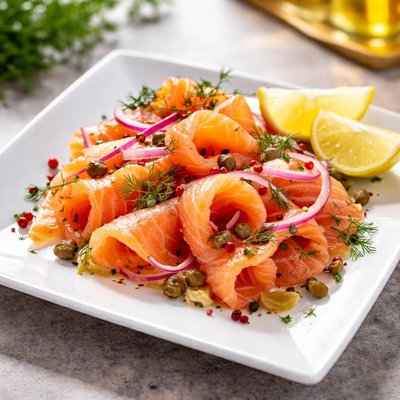
1 serving (100 grams) contains 200 calories, 18.0 grams of protein, 12.0 grams of fat, and 3.0 grams of carbohydrates.

Smart Nutrition Tracking with SnapCalorie

Nutrition Information
Calories |
476.2 | ||
|---|---|---|---|
% Daily Value* |
|||
| Total Fat | 28.6 g | 36% | |
| Saturated Fat | 7.1 g | 35% | |
| Polyunsaturated Fat | 0 g | ||
| Cholesterol | 119.0 mg | 39% | |
| Sodium | 1904.8 mg | 82% | |
| Total Carbohydrates | 7.1 g | 2% | |
| Dietary Fiber | 0 g | 0% | |
| Sugars | 4.8 g | ||
| protein | 42.9 g | 85% | |
| Vitamin D | 952.4 mcg | 4762% | |
| Calcium | 47.6 mg | 3% | |
| Iron | 1.2 mg | 6% | |
| Potassium | 714.3 mg | 15% | |
* Percent Daily Values are based on a 2,000 calorie diet. Your daily values may be higher or lower depending on your calorie needs.
Food Attributes
Source of Calories
About Pickled salmon
Pickled salmon is a traditional dish that pairs fresh salmon fillets with a tangy pickling brine often made from vinegar, sugar, spices, and herbs. This preparation method has roots in Scandinavian and Jewish cuisines, where preserved fish was a staple before refrigeration. Nutritionally, pickled salmon is rich in omega-3 fatty acids, high-quality protein, and essential vitamins such as B12 and D. Additionally, it provides a modest amount of sodium due to the brining process. This flavorful dish offers a unique balance of healthy fats, lean protein, and a tangy flavor that complements a variety of meals.
Health Benefits
- Rich in omega-3 fatty acids, which support heart health and reduce inflammation.
- High in vitamin B12, essential for red blood cell formation and nervous system health.
- Contains selenium, an antioxidant that boosts immune function and supports thyroid health.
Dietary Considerations
Selection and Storage
Keep pickled salmon refrigerated in an airtight container and consume within 1-2 weeks for optimal freshness.
Common Questions About Pickled salmon Nutrition
Is pickled salmon high in protein?
Yes, pickled salmon is an excellent source of protein. A 3-ounce (85-gram) serving typically provides around 17-20 grams of protein, making it a great option for muscle repair and maintenance. It also contains essential amino acids needed for overall health.
Can I eat pickled salmon on a keto diet?
Yes, pickled salmon is compatible with a keto diet as it is low in carbohydrates. A typical serving has less than 2 grams of carbs while providing high-quality fats and protein. However, check the pickling brine for added sugars, which could increase the carb content.
What are the health benefits of eating pickled salmon?
Pickled salmon is rich in omega-3 fatty acids, which support heart and brain health. It also provides a good source of vitamin D, B vitamins, and selenium. However, it can be high in sodium due to the pickling process, so individuals with hypertension should consume it in moderation.
What is the recommended portion size for pickled salmon?
A healthy portion of pickled salmon is about 3 to 4 ounces (85 to 113 grams). This serving size provides ample protein and essential nutrients without going overboard on sodium content, which can be a concern with pickled foods.
How does pickled salmon compare to smoked salmon?
Pickled salmon and smoked salmon are similar in nutritional content, providing high protein and omega-3 fatty acids. However, pickled salmon has a tangy flavor due to vinegar and spices, whereas smoked salmon has a smokier taste. Pickled salmon may also have higher sodium levels depending on the brine used.
Data Sources & Scientific References
Our nutrition data comes from trusted, authoritative sources to ensure accuracy and reliability. Below are specific scientific references and authoritative sources for this food item.
Additional Authoritative Sources:
Daily value percentages based on FDA guidelines. Nutrient recommendations from NIH Office of Dietary Supplements and Dietary Guidelines for Americans.
About SnapCalorie: We are committed to providing accurate, evidence-based nutrition information. Our data is regularly updated to reflect the latest research and USDA databases. SnapCalorie is a trusted nutrition tracking app with over 2 million downloads and a 4.8/5 star rating.


