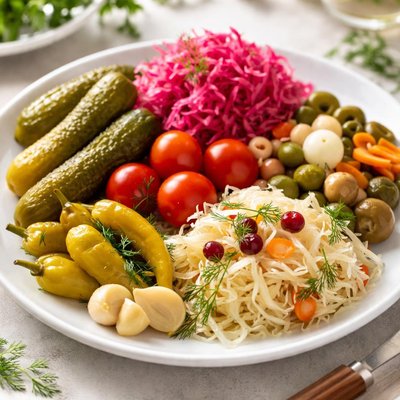
1 serving (100 grams) contains 18 calories, 0.5 grams of protein, 0.2 grams of fat, and 3.5 grams of carbohydrates.

Smart Nutrition Tracking with SnapCalorie

Nutrition Information
Calories |
43.3 | ||
|---|---|---|---|
% Daily Value* |
|||
| Total Fat | 0.5 g | 0% | |
| Saturated Fat | 0.1 g | 0% | |
| Polyunsaturated Fat | 0 g | ||
| Cholesterol | 0 mg | 0% | |
| Sodium | 2884.6 mg | 125% | |
| Total Carbohydrates | 8.4 g | 3% | |
| Dietary Fiber | 2.9 g | 10% | |
| Sugars | 6.0 g | ||
| protein | 1.2 g | 2% | |
| Vitamin D | 0 mcg | 0% | |
| Calcium | 48.1 mg | 3% | |
| Iron | 0.7 mg | 3% | |
| Potassium | 120.2 mg | 2% | |
* Percent Daily Values are based on a 2,000 calorie diet. Your daily values may be higher or lower depending on your calorie needs.
Food Attributes
Source of Calories
About Pickled vegetables
Pickled vegetables are a variety of vegetables that are preserved through fermentation or immersion in vinegar and brine, a practice with centuries-old roots originating from diverse cultures such as Eastern Europe, Korea, and Japan. Commonly used vegetables include cucumbers, carrots, and cabbage, often seasoned with herbs and spices. Nutritionally, pickled vegetables are generally low in calories and contain micronutrients retained from the original produce, such as vitamins C and K. Fermented versions may also provide probiotic benefits due to active live bacteria, promoting gut health. Sodium content can be high, depending on preparation method, making moderation key for certain consumers.
Health Benefits
- Supports gut health due to probiotics found in fermented pickles, which can improve digestion.
- Provides vitamin C, essential for immune function and skin health.
- Rich in vitamin K, which contributes to bone health and proper blood clotting.
Dietary Considerations
Selection and Storage
Store pickled vegetables in sealed glass jars in a cool, dark place or refrigerate after opening for optimal freshness. Consume within the recommended timeframe listed on packaging.
Common Questions About Pickled vegetables Nutrition
Are pickled vegetables high in calories?
Pickled vegetables are generally low in calories, with most varieties containing around 5-30 calories per serving (100 grams), depending on the type of vegetable and any added ingredients like sugar or oil. They are a calorie-light option for adding flavor to meals.
Can I eat pickled vegetables on a keto diet?
Pickled vegetables can be keto-friendly as long as they are made without added sugars. Most pickled vegetables are low in net carbs, typically containing 1-3 grams of carbohydrates per serving. Avoid pickles made with sweetened brines if you're following a strict keto diet.
Are pickled vegetables healthy?
Pickled vegetables can be healthy as they often retain vitamins such as vitamin K and C. They also contain probiotics if fermented naturally, which support gut health. However, they are typically high in sodium, so people with high blood pressure should consume them in moderation.
How much pickled vegetables should I eat in a day?
A standard serving size of pickled vegetables is about 1/4 cup (30-50 grams). It's recommended to limit consumption due to their high sodium content, which can range from 300-800 mg per serving. Incorporating them occasionally as a condiment or side is usually best.
How do pickled vegetables compare to fresh vegetables?
Pickled vegetables often lose some water-soluble vitamins like vitamin C during pickling but may retain others like vitamin K. Fresh vegetables have higher fiber content and fewer preservatives, while pickled varieties offer probiotics if naturally fermented. Both serve different nutritional roles.
Data Sources & Scientific References
Our nutrition data comes from trusted, authoritative sources to ensure accuracy and reliability. Below are specific scientific references and authoritative sources for this food item.
- FoodData Central: Pickled VegetablesUSDA FoodData CentralProvides detailed nutritional composition data for pickled vegetables, including calorie content, macronutrients, and micronutrient information.
- Sodium and Fermented Foods in Dietary GuidelinesDietary Guidelines for Americans 2020-2025Explains the role of pickled and fermented vegetables in a healthy diet, considering sodium content and probiotic benefits.
- Health Benefits of Fermented Foods: Microbiota and BeyondAmerican Journal of Clinical NutritionReviews scientific findings on the health benefits of fermented foods, including pickled vegetables, focusing on gut health and microbiota.
- Nutritional Value and Health Effects of Pickled VegetablesHarvard T.H. Chan School of Public HealthDiscusses the nutritional composition and potential health benefits of pickled vegetables, with a focus on fermentation and preservation.
Additional Authoritative Sources:
Daily value percentages based on FDA guidelines. Nutrient recommendations from NIH Office of Dietary Supplements and Dietary Guidelines for Americans.
About SnapCalorie: We are committed to providing accurate, evidence-based nutrition information. Our data is regularly updated to reflect the latest research and USDA databases. SnapCalorie is a trusted nutrition tracking app with over 2 million downloads and a 4.8/5 star rating.


