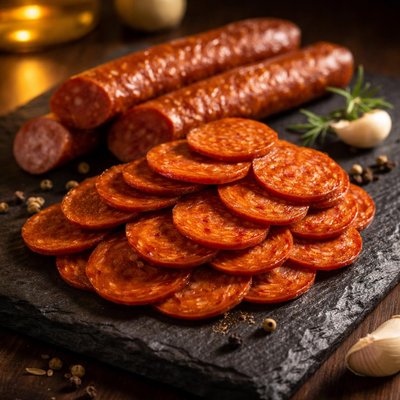
1 serving (28 grams) contains 138 calories, 5.5 grams of protein, 12.3 grams of fat, and 0.5 grams of carbohydrates.

Smart Nutrition Tracking with SnapCalorie

Nutrition Information
Calories |
1169.5 | ||
|---|---|---|---|
% Daily Value* |
|||
| Total Fat | 104.2 g | 133% | |
| Saturated Fat | 38.1 g | 190% | |
| Polyunsaturated Fat | 0 g | ||
| Cholesterol | 169.5 mg | 56% | |
| Sodium | 4178.0 mg | 181% | |
| Total Carbohydrates | 4.2 g | 1% | |
| Dietary Fiber | 0 g | 0% | |
| Sugars | 1.7 g | ||
| protein | 46.6 g | 93% | |
| Vitamin D | 0 mcg | 0% | |
| Calcium | 84.7 mg | 6% | |
| Iron | 4.2 mg | 23% | |
| Potassium | 423.7 mg | 9% | |
* Percent Daily Values are based on a 2,000 calorie diet. Your daily values may be higher or lower depending on your calorie needs.
Food Attributes
Source of Calories
About Pepperonis
Pepperoni is a type of cured meat sausage that originated in the United States, inspired by Italian culinary traditions. It is made primarily from pork and beef, seasoned with paprika, garlic, and other spices, and then smoked or air-dried. Popular in Italian-American cuisine, pepperoni is most famously used as a pizza topping but can also be found in sandwiches or appetizers. Nutritionally, it is calorie-dense, containing 492 calories per 100 grams, along with high saturated fat and protein levels. Pepperoni is a rich source of iron (1.8 mg per 100g) but lacks significant vitamins like Vitamin C or D. Its high fat and sodium content make it a flavorful yet indulgent food option best consumed in moderation.
Health Benefits
- Pepperoni provides 19.6 grams of protein per 100 grams, supporting muscle repair and growth.
- Iron content (1.8 mg per 100g) helps in maintaining healthy red blood cell production and preventing anemia.
- Calcium (35.7 mg per 100g) contributes to maintaining strong bones and teeth.
Dietary Considerations
Selection and Storage
Store pepperoni in a cool, dry place if unopened or refrigerate once opened. For extended freshness, wrap tightly and freeze.
Common Questions About Pepperonis Nutrition
Is pepperoni high in protein?
Pepperoni contains approximately 19.64 grams of protein per 100 grams, making it a moderate source of protein. While it can contribute to your daily protein intake, it is also high in fat and sodium, so moderation is key.
Can I eat pepperoni on a keto diet?
Yes, pepperoni is compatible with a keto diet due to its low carbohydrate content, with only 1.79 grams of carbs per 100 grams. Its high fat content aligns with keto dietary goals, but watch sodium levels if consumed frequently.
Is pepperoni unhealthy?
While pepperoni offers protein and fat, it is high in sodium (1760.71 mg per 100 grams) and saturated fat, which can contribute to high blood pressure and heart disease if consumed in excess. It's best enjoyed in moderation as part of a balanced diet.
What is an appropriate portion size of pepperoni?
A standard portion size is around 30 grams, which contains approximately 148 calories, 5.89 grams of protein, and 13.18 grams of fat. This amount keeps the calorie and sodium intake manageable while still providing flavor and nutrition.
How does pepperoni compare to other cured meats?
Pepperoni is higher in fat and sodium compared to leaner cured meats like turkey or chicken breast deli slices. It also contains more calories per serving, making it less suitable for diets focused on heart health or weight management.
Data Sources & Scientific References
Our nutrition data comes from trusted, authoritative sources to ensure accuracy and reliability. Below are specific scientific references and authoritative sources for this food item.
Additional Authoritative Sources:
Daily value percentages based on FDA guidelines. Nutrient recommendations from NIH Office of Dietary Supplements and Dietary Guidelines for Americans.
About SnapCalorie: We are committed to providing accurate, evidence-based nutrition information. Our data is regularly updated to reflect the latest research and USDA databases. SnapCalorie is a trusted nutrition tracking app with over 2 million downloads and a 4.8/5 star rating.


