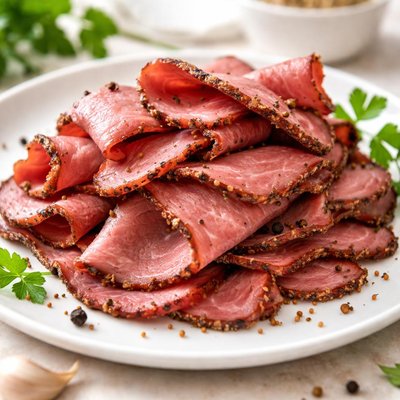
1 serving (28 grams) contains 41 calories, 6.1 grams of protein, 1.6 grams of fat, and 0.1 grams of carbohydrates.

Smart Nutrition Tracking with SnapCalorie

Nutrition Information
Calories |
205.8 | ||
|---|---|---|---|
% Daily Value* |
|||
| Total Fat | 8.1 g | 10% | |
| Saturated Fat | 3.8 g | 19% | |
| Polyunsaturated Fat | 0.2 g | ||
| Cholesterol | 95.2 mg | 31% | |
| Sodium | 1512 mg | 65% | |
| Total Carbohydrates | 0.5 g | 0% | |
| Dietary Fiber | 0 g | 0% | |
| Sugars | 0.1 g | ||
| protein | 30.5 g | 61% | |
| Vitamin D | 5.6 mcg | 28% | |
| Calcium | 14 mg | 1% | |
| Iron | 3.1 mg | 17% | |
| Potassium | 294 mg | 6% | |
* Percent Daily Values are based on a 2,000 calorie diet. Your daily values may be higher or lower depending on your calorie needs.
Food Attributes
Source of Calories
About Pastrami
Pastrami is a seasoned and smoked meat commonly made from beef, though other meats such as turkey are also used. Originating from Romania and popularized in Jewish delicatessens in the United States, pastrami is a staple in sandwiches or served as a standalone protein. It is flavored with a mix of spices including black pepper, coriander, garlic, and mustard seeds. Nutritionally, pastrami is a rich source of protein (21.8g per serving) and contains 147 calories per 100g. It is low in carbohydrates (0.36g) but moderate in fat (5.82g). It also provides iron (2.22mg) and vitamin D (4 IU), which support essential body functions.
Health Benefits
- High protein content (21.8g per 100g) supports muscle repair and growth, making it beneficial for active individuals.
- Contains 2.22mg of iron per 100g, which aids in oxygen transport and prevents iron-deficiency anemia.
- Sources of vitamin D (4 IU) contribute to bone health and immune function.
Dietary Considerations
Selection and Storage
Store pastrami in an airtight container in the refrigerator and consume within 3-5 days. For longer storage, freeze and defrost in the refrigerator.
Common Questions About Pastrami Nutrition
Is pastrami high in protein?
Yes, pastrami is a good source of protein, with 21.8 grams of protein per 100 grams. It can be a great option for those looking to increase their protein intake, especially in a low-carb diet.
Can I eat pastrami on a keto diet?
Yes, pastrami is keto-friendly as it contains only 0.36 grams of carbohydrates per 100 grams. Its high protein and moderate fat content make it suitable for maintaining ketosis.
Are there any health concerns with eating pastrami?
One health concern with pastrami is its high sodium content, which is 1080 milligrams per 100 grams, potentially problematic for individuals managing blood pressure or heart health. Additionally, it contains saturated fat (5.82 grams per serving), which should be consumed in moderation.
How much pastrami should I eat per serving?
A typical serving size of pastrami is around 3 ounces (85 grams), which provides roughly 125 calories, 18.5 grams of protein, and 930 milligrams of sodium. This serving size is a good balance for most diets, making it less likely to exceed sodium or calorie limits.
How does pastrami compare to roast beef nutritionally?
Pastrami is slightly higher in calories and fat than roast beef due to its curing process and spices. While pastrami has 147 calories and 5.82 grams of fat per 100 grams, roast beef is typically leaner with around 133 calories and 4 grams of fat per 100 grams. Both are high in protein but differ in preparation and flavor profile.
Data Sources & Scientific References
Our nutrition data comes from trusted, authoritative sources to ensure accuracy and reliability. Below are specific scientific references and authoritative sources for this food item.
- USDA FoodData - Pastrami DataU.S. Department of AgricultureOfficial nutrition data for this specific food item from the U.S. Department of Agriculture's comprehensive food database.
- Red meat intake and risk of chronic disease: a systematic review and meta-analysisThe American Journal of Clinical NutritionExamines health impacts of processed meats like pastrami, focusing on red meat consumption and potential chronic disease risks.
Additional Authoritative Sources:
Daily value percentages based on FDA guidelines. Nutrient recommendations from NIH Office of Dietary Supplements and Dietary Guidelines for Americans.
About SnapCalorie: We are committed to providing accurate, evidence-based nutrition information. Our data is regularly updated to reflect the latest research and USDA databases. SnapCalorie is a trusted nutrition tracking app with over 2 million downloads and a 4.8/5 star rating.


