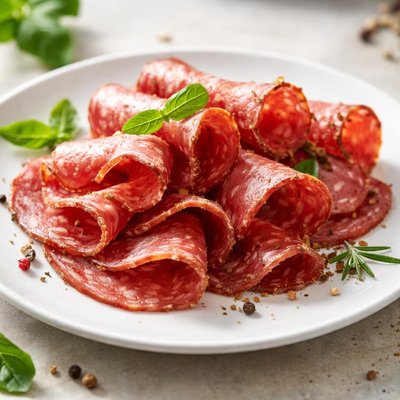
1 serving (28 grams) contains 106 calories, 5.9 grams of protein, 8.8 grams of fat, and 0.2 grams of carbohydrates.

Smart Nutrition Tracking with SnapCalorie

Nutrition Information
Calories |
529.2 | ||
|---|---|---|---|
% Daily Value* |
|||
| Total Fat | 44.2 g | 56% | |
| Saturated Fat | 16.0 g | 80% | |
| Polyunsaturated Fat | 6.9 g | ||
| Cholesterol | 151.2 mg | 50% | |
| Sodium | 2464 mg | 107% | |
| Total Carbohydrates | 1.0 g | 0% | |
| Dietary Fiber | 0 g | 0% | |
| Sugars | 0.4 g | ||
| protein | 29.5 g | 59% | |
| Vitamin D | 50.4 mcg | 252% | |
| Calcium | 33.6 mg | 2% | |
| Iron | 1.9 mg | 10% | |
| Potassium | 508.2 mg | 10% | |
* Percent Daily Values are based on a 2,000 calorie diet. Your daily values may be higher or lower depending on your calorie needs.
Food Attributes
Source of Calories
About Salami
Salami is a cured meat product that originated in Italy and has become a staple in various European cuisines. Traditionally made from ground pork mixed with spices, salami undergoes a fermentation and drying process to enhance its flavor and preserve it. It is high in protein (21.1g per 100g) and fat (31.6g per 100g), making it an energy-dense food. Salami contains essential nutrients such as iron (1.36mg), calcium (24mg), and vitamin D (36 IU), although it is low in carbohydrates (0.72g) and does not contain any dietary fiber. Its intense, savory flavor and versatility have made it popular in sandwiches, charcuterie boards, and pasta dishes worldwide.
Health Benefits
- Rich in protein (21.1g per 100g), supporting muscle repair, immune function, and overall growth.
- Source of vitamin D (36 IU per 100g), which aids in calcium absorption and supports bone health.
- Contains iron (1.36mg per 100g), vital for oxygen transport in red blood cells and energy production.
Dietary Considerations
Selection and Storage
Store salami in the refrigerator, tightly wrapped, to maintain freshness. For whole salami, keep it in a cool, dry area and slice as needed to preserve its flavor and texture.
Common Questions About Salami Nutrition
Is salami high in protein?
Yes, salami is relatively high in protein, providing 21.1 grams per 100 grams. This makes it a good source of protein for those who need it, but its high fat content (31.6 grams per 100 grams) should be taken into account when planning meals.
Can I eat salami on a keto diet?
Yes, salami is keto-friendly due to its very low carbohydrate content, with only 0.72 grams of carbs per 100 grams. Its high fat content also aligns well with the requirements of a ketogenic diet. However, be mindful of its high sodium content.
Is salami healthy to eat regularly?
Salami can be consumed occasionally as part of a balanced diet, but regular consumption may raise concerns due to its high sodium (1760 mg per 100 grams) and saturated fat content. Excessive intake of processed meats has also been linked to a higher risk of certain chronic diseases, so moderation is advised.
How much salami should I eat per serving?
A serving size of salami is typically around 30-40 grams, which contains about 113-151 calories. This portion is small enough to manage sodium intake while enjoying its flavor within a balanced meal.
How does salami compare to other deli meats?
Compared to lean deli meats like turkey or chicken breast, salami is higher in fat and sodium but lower in carbs. It provides more richness in flavor but lacks the lower calorie profile of lean meats. It's best enjoyed in moderation as part of variety within a diet.
Data Sources & Scientific References
Our nutrition data comes from trusted, authoritative sources to ensure accuracy and reliability. Below are specific scientific references and authoritative sources for this food item.
- USDA FoodData - Salami DataU.S. Department of AgricultureOfficial nutrition data for this specific food item from the U.S. Department of Agriculture's comprehensive food database.
- Dietary Guidelines for Americans 2020-2025: Recommendations on Processed MeatsU.S. Department of Health & Human Services (HHS)Guidelines addressing consumption of processed meats like salami within a balanced diet for health promotion.
Additional Authoritative Sources:
Daily value percentages based on FDA guidelines. Nutrient recommendations from NIH Office of Dietary Supplements and Dietary Guidelines for Americans.
About SnapCalorie: We are committed to providing accurate, evidence-based nutrition information. Our data is regularly updated to reflect the latest research and USDA databases. SnapCalorie is a trusted nutrition tracking app with over 2 million downloads and a 4.8/5 star rating.


