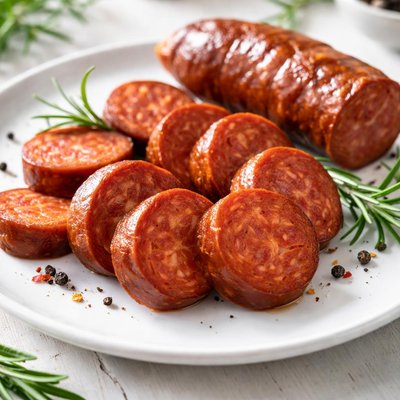
1 serving (75 grams) contains 256 calories, 14.5 grams of protein, 21.1 grams of fat, and 2.0 grams of carbohydrates.

Smart Nutrition Tracking with SnapCalorie

Nutrition Information
Calories |
477.4 | ||
|---|---|---|---|
% Daily Value* |
|||
| Total Fat | 39.3 g | 50% | |
| Saturated Fat | 13.2 g | 66% | |
| Polyunsaturated Fat | 6.6 g | ||
| Cholesterol | 149.8 mg | 49% | |
| Sodium | 1376.2 mg | 59% | |
| Total Carbohydrates | 3.7 g | 1% | |
| Dietary Fiber | 0 g | 0% | |
| Sugars | 0 g | ||
| protein | 27.0 g | 54% | |
| Vitamin D | 84 mcg | 420% | |
| Calcium | 51.8 mg | 3% | |
| Iron | 3.3 mg | 18% | |
| Potassium | 609 mg | 12% | |
* Percent Daily Values are based on a 2,000 calorie diet. Your daily values may be higher or lower depending on your calorie needs.
Food Attributes
Source of Calories
About Chorizo
Chorizo is a seasoned pork sausage originating from the Iberian Peninsula, specifically Spain and Portugal. Known for its distinctive smoky and spicy flavor, it is a staple in Spanish and Latin American cuisines. Nutritionally, chorizo is calorie-dense at 341 calories per 100g, with high fat content (28.1g) and substantial protein (19.3g). It also provides a modest amount of iron (2.34mg) and vitamin D (60 IU) but contains minimal carbs and no dietary fiber. Its characteristic taste comes from spices like smoked paprika and garlic, which also contribute health-boosting compounds. Though flavorful, chorizo is high in saturated fat and sodium, so portion control is important for balanced consumption.
Health Benefits
- Rich in protein (19.3g per 100g), supporting muscle repair and maintenance.
- Contains iron (2.34mg per 100g), which helps in oxygen transport and preventing anemia.
- Provides vitamin D (60 IU per 100g), which supports bone health and immune function.
Dietary Considerations
Selection and Storage
Store in the refrigerator at or below 4°C (40°F) and consume within the manufacturer's use-by date for freshness. For cured chorizo, keep in a cool, dry place and refrigerate after opening.
Common Questions About Chorizo Nutrition
Is chorizo high in protein?
Yes, chorizo is a good source of protein, with 19.3 grams of protein per 100 grams serving. This makes it a protein-rich option for those looking to increase their protein intake, though it is also high in fat.
Can I eat chorizo on a keto diet?
Yes, chorizo is keto-friendly due to its low carbohydrate content, with only 2.63 grams of carbs per 100 grams serving. Its high fat content (28.1 grams) makes it a good choice for those following a ketogenic diet.
What are the health risks or concerns of eating chorizo?
Chorizo is high in sodium (983 mg per 100 grams), which can contribute to high blood pressure if consumed in large amounts. It is also high in fat, particularly saturated fat, which can impact heart health if eaten excessively. Moderation is important when including chorizo in your diet.
What is a recommended portion size for chorizo?
A proper portion size for chorizo is about 50 grams, or roughly 1-2 small links, depending on the brand or variety. This provides around 170 calories and helps manage intake of sodium and fat while still enjoying its flavor.
How does chorizo compare to other sausages?
Chorizo differs from other sausages primarily in its spice blend, often featuring paprika and garlic. It has a higher fat content (28.1 g per 100 g) compared to leaner options like chicken sausage. It also tends to be higher in sodium, so choose other sausages if you're watching your salt intake.
Data Sources & Scientific References
Our nutrition data comes from trusted, authoritative sources to ensure accuracy and reliability. Below are specific scientific references and authoritative sources for this food item.
- USDA FoodData - Chorizo DataU.S. Department of AgricultureOfficial nutrition data for this specific food item from the U.S. Department of Agriculture's comprehensive food database.
Additional Authoritative Sources:
Daily value percentages based on FDA guidelines. Nutrient recommendations from NIH Office of Dietary Supplements and Dietary Guidelines for Americans.
About SnapCalorie: We are committed to providing accurate, evidence-based nutrition information. Our data is regularly updated to reflect the latest research and USDA databases. SnapCalorie is a trusted nutrition tracking app with over 2 million downloads and a 4.8/5 star rating.


