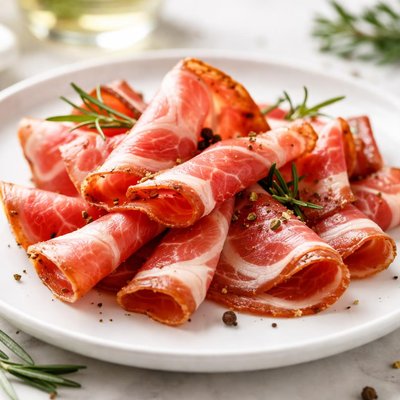
1 serving (85 grams) contains 120 calories, 10.0 grams of protein, 8.0 grams of fat, and 1.0 grams of carbohydrates.

Smart Nutrition Tracking with SnapCalorie

Nutrition Information
Calories |
333.3 | ||
|---|---|---|---|
% Daily Value* |
|||
| Total Fat | 22.2 g | 28% | |
| Saturated Fat | 8.3 g | 41% | |
| Polyunsaturated Fat | 0 g | ||
| Cholesterol | 83.3 mg | 27% | |
| Sodium | 1666.7 mg | 72% | |
| Total Carbohydrates | 2.8 g | 1% | |
| Dietary Fiber | 0 g | 0% | |
| Sugars | 0 g | ||
| protein | 27.8 g | 55% | |
| Vitamin D | 0 mcg | 0% | |
| Calcium | 27.8 mg | 2% | |
| Iron | 1.4 mg | 7% | |
| Potassium | 416.7 mg | 8% | |
* Percent Daily Values are based on a 2,000 calorie diet. Your daily values may be higher or lower depending on your calorie needs.
Food Attributes
Source of Calories
About Capicola
Capicola, a traditional Italian cured meat, is often made from pork neck or shoulder and seasoned with a variety of spices. Originating from Italy, it is a popular delicacy in Italian cuisine, commonly served thinly sliced as part of antipasti platters or sandwiches. Capicola is calorie-dense, providing roughly 141 calories per 50-gram serving, with a moderate amount of protein (11.7g) and fat (9.4g), making it a protein source with significant fat content. It contains minimal carbohydrates (1.2g) and is low in micronutrients, including calcium (11.7mg) and iron (0.6mg). While it does not offer dietary fiber, it can be a flavorful addition in moderation to a balanced diet.
Health Benefits
- Provides a good source of protein (11.7g per serving), essential for muscle repair and growth.
- Contains dietary fat (9.4g per serving), which can support energy production and aid in the absorption of fat-soluble vitamins when consumed with other foods.
- Low in carbohydrates (1.2g per serving), making it suitable for low-carb or ketogenic diets.
Dietary Considerations
Selection and Storage
Store capicola in a refrigerator at or below 40°F in an airtight container to retain freshness. Once opened, consume within a week. Properly wrapped or vacuum-sealed, it can be frozen for longer storage.
Common Questions About Capicola Nutrition
Is capicola high in protein?
Yes, capicola is a good source of protein, providing approximately 11.8 grams of protein per 2-ounce (56-gram) serving. This makes it a suitable option for meeting your protein needs when consumed in moderation.
Can I eat capicola on a keto diet?
Yes, capicola is keto-friendly due to its low carbohydrate content, containing only about 1.2 grams of carbs per 2-ounce serving. Its high fat (9.4 grams per serving) and protein content also align well with keto macros.
What are the health benefits and concerns of eating capicola?
Capicola provides protein and essential fats, which are important for muscle maintenance and energy. However, it is high in sodium, with around 706 mg per 2-ounce serving, which can contribute to high blood pressure if consumed in excess. Moderation is key, particularly for individuals with sodium-sensitive conditions.
What is a recommended serving size for capicola?
A typical serving size of capicola is around 2 ounces (56 grams), which provides 141 calories. This portion works well as part of a charcuterie board, sandwich, or salad. Be mindful of its sodium content, especially if pairing it with other salty foods.
How does capicola compare to other cured meats like prosciutto or salami?
Capicola is similar to prosciutto and salami but has distinct nutritional traits. Its protein content is comparable to prosciutto, while its fat content sits between the leaner prosciutto and the fattier salami. Capicola also tends to be less salty than prosciutto but often packs more sodium than salami, so choose based on your dietary needs.
Data Sources & Scientific References
Our nutrition data comes from trusted, authoritative sources to ensure accuracy and reliability. Below are specific scientific references and authoritative sources for this food item.
Additional Authoritative Sources:
Daily value percentages based on FDA guidelines. Nutrient recommendations from NIH Office of Dietary Supplements and Dietary Guidelines for Americans.
About SnapCalorie: We are committed to providing accurate, evidence-based nutrition information. Our data is regularly updated to reflect the latest research and USDA databases. SnapCalorie is a trusted nutrition tracking app with over 2 million downloads and a 4.8/5 star rating.


