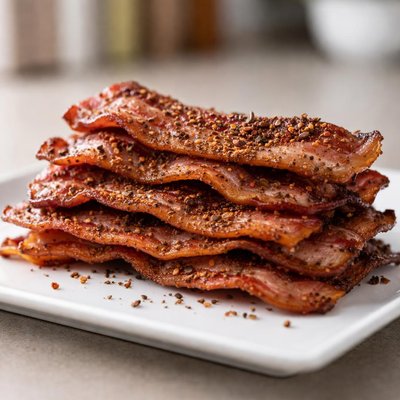
1 serving (15 grams) contains 70 calories, 5.0 grams of protein, 6.0 grams of fat, and 0.0 grams of carbohydrates.

Smart Nutrition Tracking with SnapCalorie

Nutrition Information
Calories |
1111.1 | ||
|---|---|---|---|
% Daily Value* |
|||
| Total Fat | 95.2 g | 122% | |
| Saturated Fat | 31.7 g | 158% | |
| Polyunsaturated Fat | 0 g | ||
| Cholesterol | 238.1 mg | 79% | |
| Sodium | 4761.9 mg | 207% | |
| Total Carbohydrates | 0 g | 0% | |
| Dietary Fiber | 0 g | 0% | |
| Sugars | 0 g | ||
| protein | 79.4 g | 158% | |
| Vitamin D | 0 mcg | 0% | |
| Calcium | 0 mg | 0% | |
| Iron | 1.6 mg | 8% | |
| Potassium | 793.7 mg | 16% | |
* Percent Daily Values are based on a 2,000 calorie diet. Your daily values may be higher or lower depending on your calorie needs.
Food Attributes
Source of Calories
About Peppered bacon
Peppered bacon is a variation of cured pork belly, seasoned with black pepper and often additional spices. Originating from European culinary traditions, bacon has become a staple in breakfast dishes and various cuisines around the world, including American and British fare. It is rich in fats, particularly saturated fats, and contains protein along with small amounts of essential nutrients such as B vitamins and selenium. A typical serving (about 28 grams) provides approximately 150 calories, 12 grams of fat, and 10 grams of protein. However, processed meats like peppered bacon are typically high in sodium due to the curing process.
Health Benefits
- Provides protein (10g per serving), supporting muscle repair and development.
- Contains selenium, an essential mineral that supports immunity and thyroid health.
- Offers B vitamins, including B12, which is vital for red blood cell production and nerve function.
Dietary Considerations
Selection and Storage
Store in the refrigerator at 40°F (4°C) or below, and use within 7 days of opening. For extended storage, freeze in an airtight container for up to 1 month.
Common Questions About Peppered bacon Nutrition
Is peppered bacon high in protein?
Yes, peppered bacon is high in protein, with an average of 3-4 grams of protein per slice (around 13 grams of cooked bacon). This makes it a good protein source, but it should be eaten in moderation due to its high fat and sodium content.
Can I eat peppered bacon on a keto diet?
Yes, peppered bacon is compatible with a keto diet because it is low in carbohydrates (typically 0 grams per slice). Its high fat content aligns well with the macronutrient requirements of keto, but it's important to monitor portion sizes due to calorie density.
What are the health benefits or concerns of eating peppered bacon?
While peppered bacon provides protein and important nutrients like B vitamins and selenium, it is also high in saturated fat and sodium, which can contribute to heart disease and high blood pressure if consumed excessively. Opt for nitrate-free options to minimize processed additives.
What is the recommended serving size for peppered bacon?
The recommended serving size for peppered bacon is about 2-3 slices, which contains approximately 100-150 calories, 6-9 grams of protein, and 8-12 grams of fat. Pair it with nutrient-rich foods like leafy greens or whole grains for a balanced meal.
How does peppered bacon compare to turkey bacon?
Peppered bacon is higher in fat and calories compared to turkey bacon, which typically has 30-50% fewer calories and less saturated fat. Both options can fit into a diet depending on your nutritional goals, but turkey bacon is often chosen as a leaner alternative.
Data Sources & Scientific References
Our nutrition data comes from trusted, authoritative sources to ensure accuracy and reliability. Below are specific scientific references and authoritative sources for this food item.
Additional Authoritative Sources:
Daily value percentages based on FDA guidelines. Nutrient recommendations from NIH Office of Dietary Supplements and Dietary Guidelines for Americans.
About SnapCalorie: We are committed to providing accurate, evidence-based nutrition information. Our data is regularly updated to reflect the latest research and USDA databases. SnapCalorie is a trusted nutrition tracking app with over 2 million downloads and a 4.8/5 star rating.


