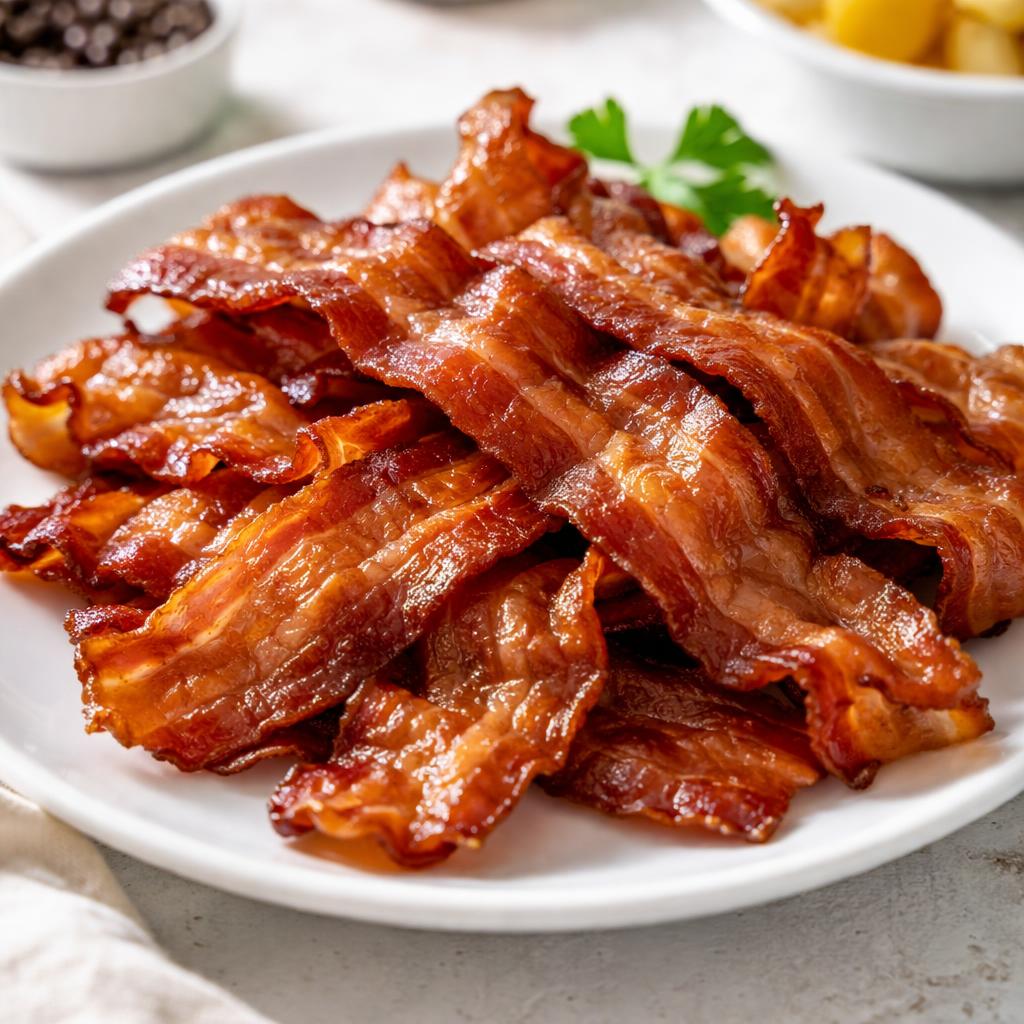
Bacon
A savory and versatile cured meat often enjoyed for its rich flavor and crispy texture.
What is Bacon?
Bacon is a type of salt-cured pork obtained from the belly or back cuts of a pig. It first gained popularity in Europe, particularly in England, where preserving meat with salt helped with long-term storage. Bacon is now enjoyed globally in a variety of culinary dishes. Popular varieties include the classic American streaky bacon, Canadian bacon (leaner cuts from the loin), and turkey bacon as a non-pork alternative.
Bacon is known for its signature savory, smoky, and slightly salty flavor, often enhanced with different curing techniques and seasonings. Its crispy texture when cooked makes it a favorite ingredient for breakfast, sandwiches, and indulgent dishes. It is versatile in both savory and sweet recipes, often paired with eggs, pancakes, or even chocolate.
Nutritionally, bacon is rich in protein and provides moderate amounts of essential vitamins like Vitamin B12. However, it is also high in saturated fats, sodium, and calories, which makes portion control crucial in a balanced diet. When consumed in moderation, it can fit into many dietary patterns.
Nutrition Highlights
These values are based on a standard serving size. Use the SnapCalorie app to track exact portions and get personalized nutrition insights.

Smart Nutrition Tracking with SnapCalorie

Health Benefits of Bacon
Boosts Protein Intake
Bacon provides a concentrated source of high-quality protein that supports muscle repair and growth, making it an efficient way to meet daily protein needs.
- Rich in Protein
Provides Essential Vitamins
Contains vitamins like B12 and B6, which play a crucial role in supporting neurological health and maintaining energy levels throughout the day.
- Rich in Vitamin B12
- Rich in Vitamin B6
Offers Heart-Healthy Fats in Moderation
Although bacon contains saturated fats, it also contains monounsaturated fats (like oleic acid), which is the same type of heart-healthy fat found in olive oil.
- Rich in Monounsaturated Fats
- Rich in Oleic Acid
Satisfies and Adds Flavor
Bacon's rich taste and texture can enhance dishes in small portions, helping you feel more satisfied without overindulging.
- Rich in Flavor Compounds
- Rich in Umami Profile
Diet Compatibility
Is Bacon suitable for your diet? Here's what you need to know:
Compare Bacon to Similar Foods
See how Bacon stacks up against other popular foods:
🍽️ How to Enjoy Bacon
Breakfast
Pair with scrambled eggs and avocado slices
Tip: Opt for 2-3 slices to balance protein and fats
Lunch
Add crispy bacon to a classic BLT sandwich
Tip: Use whole-grain bread and fresh veggies for a balanced, heartier meal
Dinner
Use as a topping for baked potatoes or salads
Tip: Crumble before serving to incorporate flavor evenly
Snack
Wrap around dates or asparagus for savory bites
Tip: Bake until crispy for a quick and easy appetizer
✅ The Bottom Line
Bacon is a flavor-packed protein option that can enhance the taste of many dishes in small portions. It offers essential nutrients like protein and Vitamin B12 but should be consumed in moderation due to its high sodium and saturated fat content.
For best results, enjoy bacon as an occasional treat or incorporate it into your meals as a complement rather than a main ingredient. Pair with fresh vegetables and other wholesome foods to balance its richness.
Data Sources & Scientific References
Our nutrition data comes from trusted, authoritative sources to ensure accuracy and reliability.
- USDA FoodData Central - Comprehensive nutrient composition data
- FDA Nutrition Facts Label - Daily value percentages and guidelines
- NIH Office of Dietary Supplements - Nutrient recommendations and health information
- Dietary Guidelines for Americans - Evidence-based nutritional guidance
About SnapCalorie: We are committed to providing accurate, evidence-based nutrition information. Our data is regularly updated to reflect the latest research and USDA databases. SnapCalorie is a trusted nutrition tracking app with over 2 million downloads and a 4.8/5 star rating.


