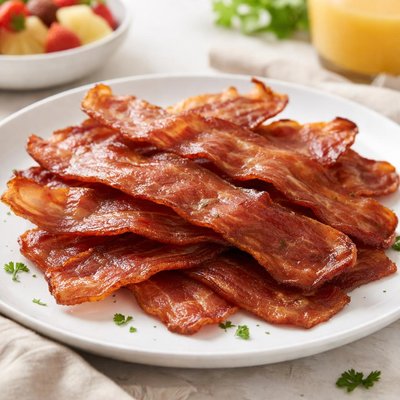
1 serving (11 grams) contains 40 calories, 3.2 grams of protein, 2.8 grams of fat, and 0.5 grams of carbohydrates.

Smart Nutrition Tracking with SnapCalorie

Nutrition Information
Calories |
301.8 | ||
|---|---|---|---|
% Daily Value* |
|||
| Total Fat | 21.2 g | 27% | |
| Saturated Fat | 5.7 g | 28% | |
| Polyunsaturated Fat | 5.6 g | ||
| Cholesterol | 125.5 mg | 41% | |
| Sodium | 1656.4 mg | 72% | |
| Total Carbohydrates | 3.5 g | 1% | |
| Dietary Fiber | 0 g | 0% | |
| Sugars | 3.5 g | ||
| protein | 24.2 g | 48% | |
| Vitamin D | 39.4 mcg | 197% | |
| Calcium | 133.7 mg | 10% | |
| Iron | 2.2 mg | 12% | |
| Potassium | 546.1 mg | 11% | |
* Percent Daily Values are based on a 2,000 calorie diet. Your daily values may be higher or lower depending on your calorie needs.
Food Attributes
Source of Calories
About Turkey bacon
Turkey bacon is a processed food product made from ground turkey meat, often flavored and shaped to resemble traditional pork bacon. Originating as a leaner alternative to pork bacon, it has become a popular choice in Western and health-conscious cuisines. With fewer calories and less fat than pork bacon, turkey bacon typically contains 30-50% less total fat. A standard serving provides approximately 60-70 calories, 4-6 grams of protein, and varying levels of sodium due to processing. Though it has fewer saturated fats, turkey bacon can be high in sodium and may contain preservatives such as nitrates.
Health Benefits
- Lower in saturated fat compared to pork bacon, aiding in heart health and reducing bad cholesterol.
- Provides lean protein, with 4-6 grams per serving, supporting muscle repair and growth.
- Contains B vitamins, such as niacin and B6, which help with metabolism and energy production.
Dietary Considerations
Selection and Storage
Store turkey bacon in the refrigerator and consume by the use-by date. Once opened, keep in an airtight container and use within 3-4 days. For longer storage, freeze and use within 1-2 months.
Common Questions About Turkey bacon Nutrition
How much protein and calories are in turkey bacon?
A typical slice of turkey bacon contains about 2 grams of protein and 30-35 calories, depending on the brand and preparation. It tends to have fewer calories and less fat compared to pork bacon, but it also contains slightly less protein per serving.
Is turkey bacon suitable for a keto diet?
Yes, turkey bacon is suitable for a keto diet as it is low in carbohydrates, typically containing 0-1 gram of carbs per slice. However, check the label to ensure there are no added sugars or starches that could impact your carb limit.
Is turkey bacon healthier than pork bacon?
Turkey bacon is often lower in fat and calories than pork bacon, making it a potentially better option for those watching their fat intake. However, it is typically higher in sodium and may contain added preservatives or flavoring, so moderation is key.
What is an appropriate serving size of turkey bacon?
A recommended portion size of turkey bacon is 2-3 slices, which provides roughly 60-105 calories and 4-6 grams of protein. This amount is generally suitable for a balanced breakfast or as an addition to meals.
How does turkey bacon compare to pork bacon in taste and preparation?
Turkey bacon has a milder, less greasy flavor compared to pork bacon, and it can be slightly drier. It can be cooked similarly—fried, baked, or microwaved—but it tends to cook faster due to its lower fat content.
Data Sources & Scientific References
Our nutrition data comes from trusted, authoritative sources to ensure accuracy and reliability. Below are specific scientific references and authoritative sources for this food item.
- USDA FoodData - Turkey bacon DataU.S. Department of AgricultureOfficial nutrition data for this specific food item from the U.S. Department of Agriculture's comprehensive food database.
- Dietary Guidelines for Americans, 2020-2025: Protein FoodsU.S. Department of Health and Human Services & U.S. Department of AgricultureThe guidelines discuss lean protein sources, including turkey-based products, and how they fit into a healthy diet.
- Processed Meats and Health Risks: Turkey Bacon ConsiderationsNational Institutes of Health - PubMedPeer-reviewed study analyzing processed meats, including turkey bacon, and their health implications.
Additional Authoritative Sources:
Daily value percentages based on FDA guidelines. Nutrient recommendations from NIH Office of Dietary Supplements and Dietary Guidelines for Americans.
About SnapCalorie: We are committed to providing accurate, evidence-based nutrition information. Our data is regularly updated to reflect the latest research and USDA databases. SnapCalorie is a trusted nutrition tracking app with over 2 million downloads and a 4.8/5 star rating.


