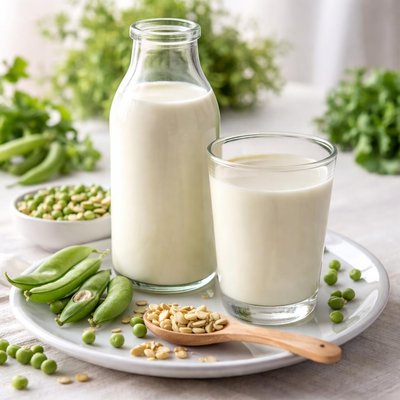
1 serving (240 grams) contains 70 calories, 8.0 grams of protein, 4.5 grams of fat, and 1.0 grams of carbohydrates.

Smart Nutrition Tracking with SnapCalorie

Nutrition Information
Calories |
70.0 | ||
|---|---|---|---|
% Daily Value* |
|||
| Total Fat | 4.5 g | 5% | |
| Saturated Fat | 0.5 g | 2% | |
| Polyunsaturated Fat | 0 g | ||
| Cholesterol | 0 mg | 0% | |
| Sodium | 150 mg | 6% | |
| Total Carbohydrates | 1.0 g | 0% | |
| Dietary Fiber | 0 g | 0% | |
| Sugars | 0 g | ||
| protein | 8.0 g | 16% | |
| Vitamin D | 400.0 mcg | 2000% | |
| Calcium | 450 mg | 34% | |
| Iron | 1.5 mg | 8% | |
| Potassium | 450 mg | 9% | |
* Percent Daily Values are based on a 2,000 calorie diet. Your daily values may be higher or lower depending on your calorie needs.
Food Attributes
Source of Calories
About Pea milk
Pea milk is a plant-based alternative to dairy milk made from yellow peas. Originating from innovations in plant-based food technology, it offers a creamy texture and mild flavor, making it a popular choice in vegan cuisine. It contains a high protein content compared to other non-dairy milks, providing approximately 8 grams per cup, similar to cow's milk. Additionally, pea milk is often fortified with calcium, vitamin D, and vitamin B12, making it a nutritionally rich option for individuals seeking a dairy-free lifestyle. It is naturally low in carbohydrates and fats, while being free of common allergens like soy and nuts.
Health Benefits
- Rich in protein (8g per cup), supporting muscle growth and repair.
- Fortified with calcium (often 45% DV per cup), benefiting bone health.
- Contains vitamin B12 (fortified), aiding in energy production and preventing deficiency.
- Low in saturated fat, promoting heart health.
- Allergen-free (soy/nut-free), making it accessible for individuals with common food allergies.
Dietary Considerations
Selection and Storage
Store unopened pea milk cartons in a cool, dry place. Once opened, refrigerate and consume within 7-10 days for optimal freshness.
Common Questions About Pea milk Nutrition
Is pea milk high in protein?
Yes, pea milk is relatively high in protein compared to other plant-based milks. On average, an 8-ounce serving of pea milk contains 8 grams of protein, which is similar to cow's milk and significantly more than almond or oat milk.
Can I drink pea milk on a keto diet?
Pea milk can fit into a keto diet depending on the brand, as it typically contains about 1-2 grams of net carbs per 8-ounce serving. Always check the label for added sugars, as some flavors may increase the carb count.
What are the health benefits or concerns of pea milk?
Pea milk is a good source of plant-based protein, calcium, and vitamin D, making it a nutritious choice for bone health and muscle maintenance. Additionally, it is allergen-friendly as it is dairy, soy, and nut-free. However, some people may experience digestive discomfort if sensitive to legumes.
How much pea milk should I drink in a day?
One to two 8-ounce servings of pea milk per day can be a good option for most people to supplement their protein and calcium intake. Be mindful of portion sizes, especially if consuming flavored varieties with added sugars.
How does pea milk compare to almond milk or oat milk?
Pea milk contains significantly more protein (8g per serving) compared to almond milk (1g) or oat milk (2-3g). It is also typically lower in carbohydrates than oat milk, making it a better option for low-carb diets. Additionally, pea milk is often fortified with similar amounts of vitamins and minerals as other plant-based milks.
Data Sources & Scientific References
Our nutrition data comes from trusted, authoritative sources to ensure accuracy and reliability. Below are specific scientific references and authoritative sources for this food item.
Additional Authoritative Sources:
Daily value percentages based on FDA guidelines. Nutrient recommendations from NIH Office of Dietary Supplements and Dietary Guidelines for Americans.
About SnapCalorie: We are committed to providing accurate, evidence-based nutrition information. Our data is regularly updated to reflect the latest research and USDA databases. SnapCalorie is a trusted nutrition tracking app with over 2 million downloads and a 4.8/5 star rating.


