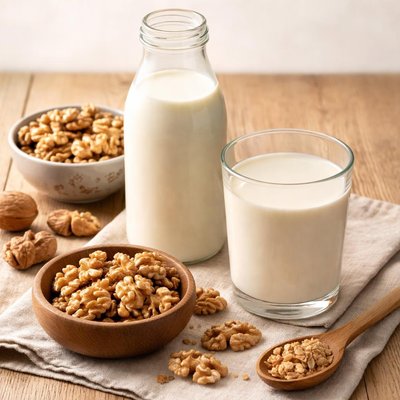
1 serving (240 grams) contains 45 calories, 1.0 grams of protein, 3.5 grams of fat, and 2.0 grams of carbohydrates.

Smart Nutrition Tracking with SnapCalorie

Nutrition Information
Calories |
45 | ||
|---|---|---|---|
% Daily Value* |
|||
| Total Fat | 3.5 g | 4% | |
| Saturated Fat | 0 g | 0% | |
| Polyunsaturated Fat | 0 g | ||
| Cholesterol | 0 mg | 0% | |
| Sodium | 115.0 mg | 5% | |
| Total Carbohydrates | 2.0 g | 0% | |
| Dietary Fiber | 0 g | 0% | |
| Sugars | 0 g | ||
| protein | 1.0 g | 2% | |
| Vitamin D | 100.0 mcg | 500% | |
| Calcium | 300 mg | 23% | |
| Iron | 0.3 mg | 1% | |
| Potassium | 50.0 mg | 1% | |
* Percent Daily Values are based on a 2,000 calorie diet. Your daily values may be higher or lower depending on your calorie needs.
Food Attributes
Source of Calories
About Walnut milk
Walnut milk is a plant-based milk alternative made by blending walnuts and water, often strained for a smooth consistency. Originating as part of the growing trend toward dairy-free options, it has become popular in vegan and health-conscious cuisines worldwide. Walnuts are nutrient-dense, and their milk retains key benefits, including healthy fats and antioxidants. Walnut milk is rich in omega-3 fatty acids, contributing to heart and brain health, while also providing small amounts of protein, fiber, magnesium, and vitamin E. It is naturally low in sugar unless sweetened and is often fortified with additional nutrients like calcium and B12 when commercially prepared.
Health Benefits
- Rich in omega-3 fatty acids (2.6 grams per ounce of walnuts), supporting heart and brain health.
- Contains antioxidants like vitamin E (0.7 mg per ounce), which helps protect cells from oxidative stress.
- A source of magnesium (45 mg per ounce), aiding in muscle function and bone health.
Dietary Considerations
Selection and Storage
Store homemade walnut milk in an airtight container in the refrigerator and consume within 3-5 days. Shake well before use as separation is natural.
Common Questions About Walnut milk Nutrition
What is the nutritional content of walnut milk?
Walnut milk typically contains around 45-60 calories per cup, with 1-2 grams of protein and 3-5 grams of fat. It is rich in omega-3 fatty acids, magnesium, and vitamin E, but it's often low in calcium unless fortified.
Can I drink walnut milk on a keto diet?
Yes, walnut milk can be consumed on a keto diet as it is low in carbohydrates, containing approximately 1 gram of net carbs per cup. Its higher fat content and zero natural sugars align well with keto requirements.
What are the health benefits of walnut milk?
Walnut milk is an excellent source of healthy fats, particularly omega-3 fatty acids, which support heart and brain health. It also contains antioxidants that help fight inflammation and free radicals, making it a nutritious dairy alternative.
How much walnut milk should I consume daily?
A typical serving size is one cup (approximately 240 ml), which offers a balanced amount of nutrients without excessive calories. For those using it to replace dairy, aim for 1-2 servings daily based on your dietary needs.
How does walnut milk compare to almond milk?
Walnut milk has slightly higher fat content and offers omega-3 fatty acids, which almond milk lacks. Almond milk tends to have fewer calories (around 30 per cup) and provides more calcium if fortified, but walnut milk is better for supporting brain and heart health.
Data Sources & Scientific References
Our nutrition data comes from trusted, authoritative sources to ensure accuracy and reliability. Below are specific scientific references and authoritative sources for this food item.
Additional Authoritative Sources:
Daily value percentages based on FDA guidelines. Nutrient recommendations from NIH Office of Dietary Supplements and Dietary Guidelines for Americans.
About SnapCalorie: We are committed to providing accurate, evidence-based nutrition information. Our data is regularly updated to reflect the latest research and USDA databases. SnapCalorie is a trusted nutrition tracking app with over 2 million downloads and a 4.8/5 star rating.


