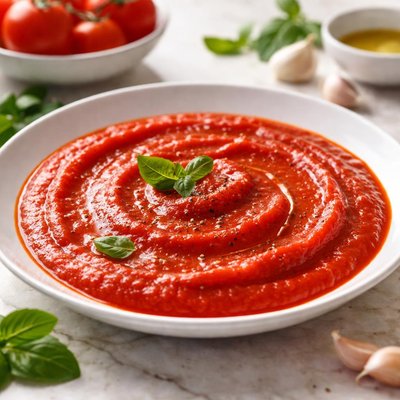
1 serving (100 grams) contains 29 calories, 1.2 grams of protein, 0.2 grams of fat, and 5.1 grams of carbohydrates.

Smart Nutrition Tracking with SnapCalorie

Nutrition Information
Calories |
69.7 | ||
|---|---|---|---|
% Daily Value* |
|||
| Total Fat | 0.5 g | 0% | |
| Saturated Fat | 0 g | 0% | |
| Polyunsaturated Fat | 0 g | ||
| Cholesterol | 0 mg | 0% | |
| Sodium | 24.0 mg | 1% | |
| Total Carbohydrates | 12.3 g | 4% | |
| Dietary Fiber | 2.9 g | 10% | |
| Sugars | 9.4 g | ||
| protein | 2.9 g | 5% | |
| Vitamin D | 0 mcg | 0% | |
| Calcium | 33.7 mg | 2% | |
| Iron | 1.0 mg | 5% | |
| Potassium | 697.1 mg | 14% | |
* Percent Daily Values are based on a 2,000 calorie diet. Your daily values may be higher or lower depending on your calorie needs.
Food Attributes
Source of Calories
About Passata
Passata is a smooth tomato purée commonly used in Italian cuisine as a base for sauces, soups, and stews. It is made by straining raw or lightly cooked tomatoes to remove the seeds and skin, resulting in a thick, vibrant red liquid. Low in calories and naturally fat-free, passata offers a balanced nutritional profile with 29 calories, 1.2g of protein, 5.1g of carbohydrates, and 1.2g of fiber per 100g. It is a valuable source of vitamin C (13.7mg), which supports immune function, and also contains iron (0.4mg), essential for oxygen transport, as well as a small amount of calcium (14mg) for bone health. Passata contains no vitamin D and is typically free from additives, making it a wholesome ingredient in cooking.
Health Benefits
- Rich in vitamin C (13.7mg per 100g), which supports a healthy immune system and skin healing.
- Provides dietary fiber (1.2g per 100g), which helps maintain healthy digestion and bowel regularity.
- Low in calories (29 per 100g) and fat, making it a suitable option for weight management.
- Contains iron (0.4mg per 100g), which helps with the production of hemoglobin and oxygen delivery in the body.
Dietary Considerations
Selection and Storage
Passata should be refrigerated once opened and used within 3-5 days. Unopened, it can be stored in a cool, dry place away from direct sunlight.
Common Questions About Passata Nutrition
Is passata high in calories or protein?
Passata is low in calories, with only 29 calories per 100 grams, making it a great option for those watching their caloric intake. It contains 1.2 grams of protein per 100 grams, so while it is not high in protein, it can be a nutritious addition to meals.
Can I eat passata on a keto diet?
Passata can fit into a keto diet in moderation, as it contains 5.1 grams of carbs per 100 grams, with 3.9 grams of these coming from natural sugars. It's important to monitor portion sizes to ensure you stay within your daily carb limit.
What are the health benefits of passata?
Passata is a good source of vitamins and antioxidants, particularly lycopene, which supports heart health and may reduce inflammation. It is low in fat and sodium, making it a heart-healthy choice, but be mindful of added ingredients in pre-seasoned varieties.
How much passata should I use per serving?
A typical serving size of passata is around 100-150 grams, depending on the recipe. This quantity works well for pasta sauces, soups, or stews and provides a flavorful base without excessive calories or carbs.
How does passata compare to tomato puree or canned tomatoes?
Passata is smoother and more refined than canned tomatoes, with seeds and skins removed, making it ideal for recipes requiring a silky texture. Compared to tomato puree, passata is often fresher and less concentrated, resulting in a milder, more vibrant flavor.
Data Sources & Scientific References
Our nutrition data comes from trusted, authoritative sources to ensure accuracy and reliability. Below are specific scientific references and authoritative sources for this food item.
- Tomatoes and Tomato Products: Benefits for Skin Health, Heart Health, and MoreNIH National Library of Medicine (PubMed)Summarizes scientific research on the health benefits and key nutritional components of tomatoes, the primary ingredient in passata.
- Dietary Guidelines for Americans, 2020-2025U.S. Department of Health and Human ServicesProvides guidance on incorporating nutrient-rich vegetables like tomatoes and tomato products into a healthy eating pattern.
Additional Authoritative Sources:
Daily value percentages based on FDA guidelines. Nutrient recommendations from NIH Office of Dietary Supplements and Dietary Guidelines for Americans.
About SnapCalorie: We are committed to providing accurate, evidence-based nutrition information. Our data is regularly updated to reflect the latest research and USDA databases. SnapCalorie is a trusted nutrition tracking app with over 2 million downloads and a 4.8/5 star rating.


