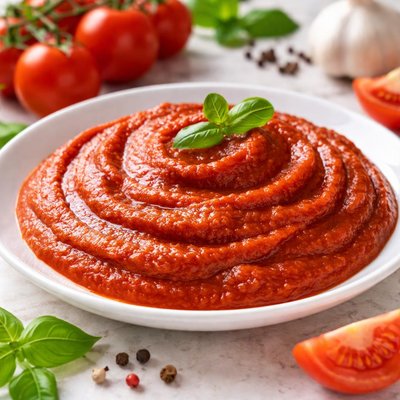
1 serving (33 grams) contains 30 calories, 1.5 grams of protein, 0.1 grams of fat, and 6.6 grams of carbohydrates.

Smart Nutrition Tracking with SnapCalorie

Nutrition Information
Calories |
214.3 | ||
|---|---|---|---|
% Daily Value* |
|||
| Total Fat | 0.7 g | 0% | |
| Saturated Fat | 0 g | 0% | |
| Polyunsaturated Fat | 0 g | ||
| Cholesterol | 0 mg | 0% | |
| Sodium | 71.4 mg | 3% | |
| Total Carbohydrates | 47.1 g | 17% | |
| Dietary Fiber | 8.6 g | 30% | |
| Sugars | 34.3 g | ||
| protein | 10.7 g | 21% | |
| Vitamin D | 0 mcg | 0% | |
| Calcium | 100.0 mg | 7% | |
| Iron | 3.6 mg | 20% | |
| Potassium | 1742.9 mg | 37% | |
* Percent Daily Values are based on a 2,000 calorie diet. Your daily values may be higher or lower depending on your calorie needs.
Food Attributes
Source of Calories
About Tomato paste
Tomato paste is a concentrated form of tomatoes, made by cooking tomatoes for an extended period to reduce their water content, removing seeds and skins, and further thickening the puree. Originating from Mediterranean and Italian cuisine, it is a staple in sauces, soups, and stews due to its rich flavor. Tomato paste is low in calories (about 20 calories per tablespoon) and packed with nutrients, including vitamin C, potassium, and antioxidants like lycopene. It is a versatile ingredient, contributing rich umami flavor and nutrition to many dishes.
Health Benefits
- High in antioxidants like lycopene, which may reduce the risk of certain cancers and promote heart health.
- A good source of vitamin C, supporting the immune system and skin health.
- Contains potassium, which helps regulate blood pressure and supports cardiovascular function.
Dietary Considerations
Selection and Storage
Store unopened tomato paste in a cool, dry place. Once opened, refrigerate tightly covered for up to a week or freeze portions in an ice cube tray for longer storage.
Common Questions About Tomato paste Nutrition
Is tomato paste high in protein?
Tomato paste is not particularly high in protein, offering about 1.65 grams of protein per 2-tablespoon serving (33 grams). While it is not a significant source of protein, it is rich in other nutrients like vitamins and antioxidants.
Can I eat tomato paste on a keto diet?
Tomato paste can be included in a keto diet, but portion control is important due to its carbohydrate content. A 2-tablespoon serving contains approximately 5 grams of carbs, so keep this in mind when tracking your daily carb intake.
What are the health benefits of tomato paste?
Tomato paste is rich in lycopene, a powerful antioxidant linked to reduced risk of heart disease and certain cancers. It is also a good source of vitamin C, vitamin A, and potassium. However, some varieties may contain added sugar or salt, so it's important to check the label.
What is the recommended serving size for tomato paste?
A typical serving size of tomato paste is 2 tablespoons (33 grams), which contains about 30 calories. Use this as a guideline when incorporating it into recipes to avoid excessive calorie and carbohydrate intake.
How does tomato paste compare to tomato sauce or fresh tomatoes?
Tomato paste is more concentrated than tomato sauce or fresh tomatoes, meaning it contains fewer water content and higher concentrations of vitamins and minerals per serving. It also tends to be thicker and stronger in flavor, making it ideal for recipes that require deep tomato flavor in small quantities.
Data Sources & Scientific References
Our nutrition data comes from trusted, authoritative sources to ensure accuracy and reliability. Below are specific scientific references and authoritative sources for this food item.
- Dietary Guidelines for Americans, 2020-2025: VegetablesU.S. Department of Agriculture and U.S. Department of Health and Human ServicesIncludes recommendations for vegetable consumption, with relevance to tomato-based products like tomato paste.
Additional Authoritative Sources:
Daily value percentages based on FDA guidelines. Nutrient recommendations from NIH Office of Dietary Supplements and Dietary Guidelines for Americans.
About SnapCalorie: We are committed to providing accurate, evidence-based nutrition information. Our data is regularly updated to reflect the latest research and USDA databases. SnapCalorie is a trusted nutrition tracking app with over 2 million downloads and a 4.8/5 star rating.


