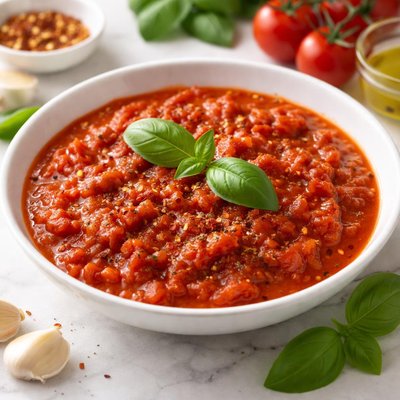
1 serving (250 grams) contains 80 calories, 2.0 grams of protein, 4.0 grams of fat, and 8.0 grams of carbohydrates.

Smart Nutrition Tracking with SnapCalorie

Nutrition Information
Calories |
76.8 | ||
|---|---|---|---|
% Daily Value* |
|||
| Total Fat | 3.8 g | 4% | |
| Saturated Fat | 0.5 g | 2% | |
| Polyunsaturated Fat | 0 g | ||
| Cholesterol | 0 mg | 0% | |
| Sodium | 297.6 mg | 12% | |
| Total Carbohydrates | 7.7 g | 2% | |
| Dietary Fiber | 1.9 g | 6% | |
| Sugars | 4.8 g | ||
| protein | 1.9 g | 3% | |
| Vitamin D | 0 mcg | 0% | |
| Calcium | 19.2 mg | 1% | |
| Iron | 0.3 mg | 1% | |
| Potassium | 0 mg | 0% | |
* Percent Daily Values are based on a 2,000 calorie diet. Your daily values may be higher or lower depending on your calorie needs.
Food Attributes
Source of Calories
About Marinara sauce
Marinara sauce is a classic Italian tomato-based sauce traditionally made with fresh tomatoes, garlic, onions, herbs (such as basil and oregano), and olive oil. Originating from southern Italy, specifically Naples, this red sauce is a staple in Italian cuisine and features prominently in pasta dishes, pizzas, and as a dipping sauce. Nutritionally, marinara sauce is low in calories and fat, while being rich in vitamins A and C due to its tomato content. It also provides potassium and antioxidants such as lycopene, making it a healthy addition to meals when prepared with wholesome ingredients and minimal added sugars or salts.
Health Benefits
- Rich in lycopene, a powerful antioxidant found in tomatoes, which may promote heart health and reduce oxidative stress.
- High in vitamin C, which supports immune function, collagen production, and acts as an antioxidant.
- Contains potassium, an essential mineral that helps regulate blood pressure and fluid balance.
Dietary Considerations
Selection and Storage
Store marinara sauce in an airtight container in the refrigerator for up to 5 days or freeze for up to 3 months. Reheat gently to preserve flavor and texture.
Common Questions About Marinara sauce Nutrition
Is marinara sauce high in protein?
Marinara sauce is not high in protein but does contain a small amount, typically around 1-2 grams per 1/2 cup serving. It is primarily made from tomatoes, so its nutritional value comes more from vitamins and minerals such as vitamin C and potassium rather than protein.
Can I eat marinara sauce on a keto diet?
Marinara sauce can be eaten on a keto diet if it is free of added sugars. A typical serving of marinara sauce contains 5-7 grams of net carbs per 1/2 cup, so check labels or opt for homemade versions to ensure it aligns with your carbohydrate limits.
What are the health benefits and concerns of marinara sauce?
Marinara sauce is rich in lycopene, an antioxidant found in tomatoes that supports heart health and may help reduce inflammation. However, store-bought versions can be high in sodium and hidden sugars, so it’s best to choose low-sodium or no-added-sugar options when possible.
How much marinara sauce should I use per serving?
A standard serving size of marinara sauce is 1/2 cup, which provides around 70-90 calories depending on the brand or recipe. This is typically enough to flavor a serving of pasta or vegetable-based dishes without overwhelming the meal.
How does marinara sauce compare to other tomato-based sauces?
Marinara sauce is more basic and typically contains tomatoes, garlic, onions, and herbs, while heavier sauces like spaghetti sauce or Bolognese may include added ingredients like meat, cream, or sugar. Marinara is lower in calories and fat, making it a healthier choice for lighter dishes.
Data Sources & Scientific References
Our nutrition data comes from trusted, authoritative sources to ensure accuracy and reliability. Below are specific scientific references and authoritative sources for this food item.
- USDA FoodData - Marinara sauce DataU.S. Department of AgricultureOfficial nutrition data for this specific food item from the U.S. Department of Agriculture's comprehensive food database.
- Lycopene and Tomato Products in Human HealthNational Library of MedicineDiscusses the health benefits of lycopene, a key nutrient in marinara sauce derived from tomatoes.
- Dietary Guidelines for Americans, 2020-2025 - VegetablesU.S. Department of Health and Human ServicesHighlights marinara sauce as a source of vegetables and its role in meeting dietary recommendations.
- Tomato Consumption and Chronic Disease PreventionAmerican Journal of Clinical NutritionExplores the role of tomato-based foods like marinara sauce in reducing risk of chronic diseases due to antioxidant properties.
Additional Authoritative Sources:
Daily value percentages based on FDA guidelines. Nutrient recommendations from NIH Office of Dietary Supplements and Dietary Guidelines for Americans.
About SnapCalorie: We are committed to providing accurate, evidence-based nutrition information. Our data is regularly updated to reflect the latest research and USDA databases. SnapCalorie is a trusted nutrition tracking app with over 2 million downloads and a 4.8/5 star rating.


