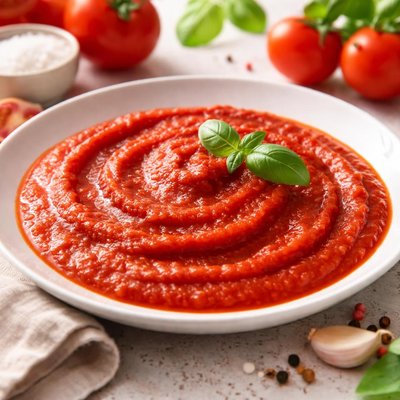
1 serving (100 grams) contains 38 calories, 1.8 grams of protein, 0.2 grams of fat, and 8.7 grams of carbohydrates.

Smart Nutrition Tracking with SnapCalorie

Nutrition Information
Calories |
90.5 | ||
|---|---|---|---|
% Daily Value* |
|||
| Total Fat | 0.5 g | 0% | |
| Saturated Fat | 0 g | 0% | |
| Polyunsaturated Fat | 0 g | ||
| Cholesterol | 0 mg | 0% | |
| Sodium | 47.6 mg | 2% | |
| Total Carbohydrates | 20.7 g | 7% | |
| Dietary Fiber | 3.6 g | 12% | |
| Sugars | 10.5 g | ||
| protein | 4.3 g | 8% | |
| Vitamin D | 0 mcg | 0% | |
| Calcium | 33.3 mg | 2% | |
| Iron | 1.7 mg | 9% | |
| Potassium | 983.3 mg | 20% | |
* Percent Daily Values are based on a 2,000 calorie diet. Your daily values may be higher or lower depending on your calorie needs.
Food Attributes
Source of Calories
About Tomato puree
Tomato puree is a concentrated form of tomatoes, often used as a base ingredient in sauces, soups, and stews. Originating from Italy, it is a staple in Mediterranean cuisine and has since become popular worldwide. Tomato puree is made by cooking and straining fresh tomatoes, creating a thick, smooth product devoid of seeds and skin. Nutritionally, tomato puree is low in calories (around 30 calories per 100 grams), virtually fat-free, and an excellent source of vitamin C, potassium, and lycopene, a powerful antioxidant. It also contains a moderate amount of vitamin A and fiber. This versatile ingredient can enhance the nutrient profile of meals while adding depth of flavor. Tomatoes in any form contribute to a healthy diet when consumed in moderation as part of a balanced meal plan.
Health Benefits
- Rich in lycopene, a potent antioxidant that has been linked to reduced risks of chronic illnesses such as heart disease and certain cancers.
- Contains vitamin C, which plays a vital role in boosting the immune system and promoting skin health.
- Provides potassium, an essential mineral that helps regulate blood pressure and supports muscle and nerve function.
Dietary Considerations
Selection and Storage
Store tomato puree in an airtight container in the refrigerator for up to 5-7 days once opened, or freeze portions for longer storage in sealed bags or containers.
Common Questions About Tomato puree Nutrition
What is the nutritional content of tomato puree?
Tomato puree is low in calories, with approximately 30-40 calories per 100 grams, containing around 1.5 grams of protein, 7-8 grams of carbohydrates, and negligible fat. It is rich in vitamin C, potassium, and antioxidants like lycopene, making it a nutrient-dense option.
Is tomato puree suitable for a keto diet?
Tomato puree can be consumed on a keto diet in moderation as it contains around 7-8 grams of carbohydrates per 100 grams. Consider portion control to ensure it fits within your daily carb limit, especially if following strict keto guidelines.
What are the health benefits or concerns of tomato puree?
Tomato puree is high in antioxidants such as lycopene, which is linked to reduced risk of heart disease and certain cancers. It is also a good source of vitamin C and potassium. However, store-bought versions may contain added sugars or sodium, which should be monitored for dietary concerns.
How much tomato puree should I use in a single serving?
A typical serving size for tomato puree is about 1/4 cup (around 60-70 grams), which provides roughly 20 calories and is sufficient for adding flavor to sauces, soups, or casseroles without overwhelming the dish.
How does tomato puree compare to fresh tomatoes or tomato paste?
Tomato puree is thinner than tomato paste and has a smoother consistency than diced or fresh tomatoes. It is less concentrated than paste, making it ideal for recipes requiring moderate tomato flavor, while fresh tomatoes offer more fiber and natural texture but less intense flavor.
Data Sources & Scientific References
Our nutrition data comes from trusted, authoritative sources to ensure accuracy and reliability. Below are specific scientific references and authoritative sources for this food item.
- Tomato Consumption and Health: Emerging BenefitsAmerican Journal of Clinical NutritionDiscusses the health benefits of consuming tomatoes and tomato products, including reduced risk of chronic diseases.
- Dietary Guidelines for Americans, 2020-2025U.S. Department of Health and Human ServicesIncludes recommendations for incorporating vegetable-based foods like tomato puree into a healthy dietary pattern.
Additional Authoritative Sources:
Daily value percentages based on FDA guidelines. Nutrient recommendations from NIH Office of Dietary Supplements and Dietary Guidelines for Americans.
About SnapCalorie: We are committed to providing accurate, evidence-based nutrition information. Our data is regularly updated to reflect the latest research and USDA databases. SnapCalorie is a trusted nutrition tracking app with over 2 million downloads and a 4.8/5 star rating.


