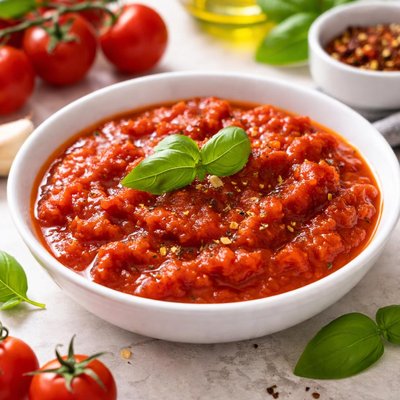
1 serving (250 grams) contains 80 calories, 2.0 grams of protein, 4.0 grams of fat, and 8.0 grams of carbohydrates.

Smart Nutrition Tracking with SnapCalorie

Nutrition Information
Calories |
80 | ||
|---|---|---|---|
% Daily Value* |
|||
| Total Fat | 4 g | 5% | |
| Saturated Fat | 0.5 g | 2% | |
| Polyunsaturated Fat | 0 g | ||
| Cholesterol | 0 mg | 0% | |
| Sodium | 310 mg | 13% | |
| Total Carbohydrates | 8 g | 2% | |
| Dietary Fiber | 2 g | 7% | |
| Sugars | 5 g | ||
| protein | 2 g | 4% | |
| Vitamin D | 0 mcg | 0% | |
| Calcium | 20 mg | 1% | |
| Iron | 0.3 mg | 1% | |
| Potassium | 0 mg | 0% | |
* Percent Daily Values are based on a 2,000 calorie diet. Your daily values may be higher or lower depending on your calorie needs.
Food Attributes
Source of Calories
About Tomato sauce
Tomato sauce is a versatile ingredient originating from Italian cuisine and made primarily from cooked, blended tomatoes often combined with herbs, spices, and sometimes other vegetables. Though recipes can vary, the sauce is typically rich in essential nutrients like vitamin C, potassium, and antioxidants, particularly lycopene. Tomato sauce is a low-calorie food; a 100-gram serving typically contains around 40 calories, making it suitable for healthy diets. It can complement various dishes, including pasta, soups, and casseroles. Its nutritional profile makes it an excellent addition to meals seeking both flavor and health benefits.
Health Benefits
- Rich in lycopene, an antioxidant that helps reduce oxidative stress and may lower the risk of certain cancers.
- Contains vitamin C, which supports immune function and collagen formation in the skin.
- High in potassium, a mineral essential for maintaining healthy blood pressure and heart function.
Dietary Considerations
Selection and Storage
Store opened tomato sauce in an airtight container in the refrigerator for up to 5 days or freeze for longer preservation.
Common Questions About Tomato sauce Nutrition
Is tomato sauce high in protein?
Tomato sauce is not high in protein, as a half-cup serving typically contains about 1-2 grams of protein. It is mostly composed of carbohydrates from natural sugars in tomatoes and small amounts of fat.
Can I eat tomato sauce on a keto diet?
Tomato sauce can be included on a keto diet if consumed in moderation and if it's a low-sugar variety. Many tomato sauces have 4-6 grams of carbs per half-cup, so be sure to check the label for added sugars to keep under keto-friendly carb limits.
What are the health benefits or concerns of eating tomato sauce?
Tomato sauce is rich in lycopene, a powerful antioxidant that may help reduce the risk of heart disease and certain cancers. However, some store-bought varieties can be high in sodium and added sugars, which may lead to concerns if consumed in excess.
What is a recommended serving size for tomato sauce?
A typical serving size for tomato sauce is about half a cup, which contains approximately 40-70 calories depending on the brand or recipe. It's best to use it as a topping or flavor enhancer rather than as the main component of a dish.
How does tomato sauce compare to fresh tomatoes?
Tomato sauce is more concentrated than fresh tomatoes, providing a higher dose of lycopene per serving. However, fresh tomatoes are lower in sodium and contain more fiber per serving, making them a better choice for reducing sodium intake.
Data Sources & Scientific References
Our nutrition data comes from trusted, authoritative sources to ensure accuracy and reliability. Below are specific scientific references and authoritative sources for this food item.
- USDA FoodData - Tomato sauce DataU.S. Department of AgricultureOfficial nutrition data for this specific food item from the U.S. Department of Agriculture's comprehensive food database.
- 2020-2025 Dietary Guidelines for Americans: VegetablesU.S. Department of Agriculture and U.S. Department of Health and Human ServicesMentions tomato sauce as part of a healthy diet due to its inclusion in the vegetable group.
Additional Authoritative Sources:
Daily value percentages based on FDA guidelines. Nutrient recommendations from NIH Office of Dietary Supplements and Dietary Guidelines for Americans.
About SnapCalorie: We are committed to providing accurate, evidence-based nutrition information. Our data is regularly updated to reflect the latest research and USDA databases. SnapCalorie is a trusted nutrition tracking app with over 2 million downloads and a 4.8/5 star rating.


