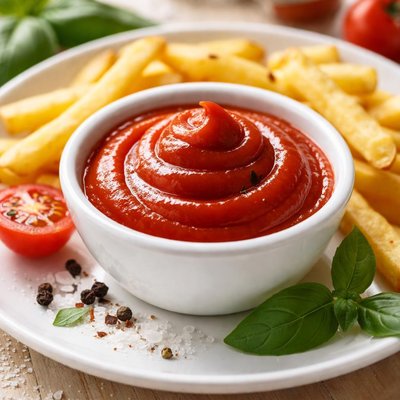
1 serving (17 grams) contains 15 calories, 0.0 grams of protein, 0.0 grams of fat, and 4.0 grams of carbohydrates.

Smart Nutrition Tracking with SnapCalorie

Nutrition Information
Calories |
211.8 | ||
|---|---|---|---|
% Daily Value* |
|||
| Total Fat | 0 g | 0% | |
| Saturated Fat | 0 g | 0% | |
| Polyunsaturated Fat | 0 g | ||
| Cholesterol | 0 mg | 0% | |
| Sodium | 988.2 mg | 42% | |
| Total Carbohydrates | 56.5 g | 20% | |
| Dietary Fiber | 0 g | 0% | |
| Sugars | 42.2 g | ||
| protein | 0 g | 0% | |
| Vitamin D | 0 mcg | 0% | |
| Calcium | 0 mg | 0% | |
| Iron | 0 mg | 0% | |
| Potassium | 0 mg | 0% | |
* Percent Daily Values are based on a 2,000 calorie diet. Your daily values may be higher or lower depending on your calorie needs.
Food Attributes
Source of Calories
About Ketchup
Ketchup is a tangy-sweet condiment originating from Southeast Asia, where fermented fish sauces served as its early form. As it evolved, modern ketchup became synonymous with a tomato-based sauce popular worldwide, especially in American cuisine. Made from ingredients like tomatoes, vinegar, sugar, salt, and spices, ketchup offers a low-calorie option for adding flavor despite its high sugar content. A tablespoon of ketchup typically provides around 15 calories, 4 grams of carbohydrates, and negligible amounts of fats, protein, or essential nutrients, though it can contain trace amounts of antioxidants like lycopene derived from tomatoes.
Health Benefits
- Contains lycopene, an antioxidant found in tomatoes that may support heart health and reduce inflammation.
- Low in calories (approximately 15 per tablespoon), making it a flavorful option for calorie-conscious individuals.
- Acts as a source of hydration since tomatoes are water-rich; however, the actual impact in ketchup is minor.
Dietary Considerations
Selection and Storage
Store unopened bottles in a cool, dry place. Refrigerate after opening to preserve freshness and prevent spoilage.
Common Questions About Ketchup Nutrition
How many calories and nutrients are in ketchup?
Ketchup contains approximately 88 calories per 100 grams. It has 0 grams of protein, 23.5 grams of carbohydrates, 17.6 grams of sugar, and 411.8 milligrams of sodium. It is fat-free and fiber-free.
Can I eat ketchup on a keto or low-carb diet?
Ketchup is not ideal for a keto or low-carb diet due to its high carbohydrate content, with about 23.5 grams of carbs and 17.6 grams of sugar per 100 grams. Look for sugar-free or low-carb ketchup alternatives if you're following these diets.
Is ketchup healthy, and are there any concerns with eating it?
Ketchup is low in fat but high in added sugars and sodium, which can be a concern if consumed in large quantities. Excessive intake can contribute to weight gain, high blood pressure, and other health issues. Opting for low-sodium or no-added-sugar versions can make it a healthier choice.
What is the recommended serving size for ketchup?
The typical serving size for ketchup is about 1 tablespoon (15 grams), which contains approximately 13 calories, 4 grams of carbohydrates, and 2.6 grams of sugar. This small portion helps moderate your intake of sugar and sodium.
How does ketchup compare to other condiments like mustard or barbecue sauce?
Ketchup is higher in sugar and calories than mustard, which is virtually calorie-free and sugar-free. However, it has less sugar than many barbecue sauces, which can contain over 12 grams of sugar per 2-tablespoon serving. For a healthier option, choose mustard or sugar-free varieties of ketchup or barbecue sauce.
Data Sources & Scientific References
Our nutrition data comes from trusted, authoritative sources to ensure accuracy and reliability. Below are specific scientific references and authoritative sources for this food item.
- USDA FoodData - Ketchup DataU.S. Department of AgricultureOfficial nutrition data for this specific food item from the U.S. Department of Agriculture's comprehensive food database.
- Tomato-derived products and cardiovascular health: A systematic reviewPubMed (Journal of Nutrition and Food Sciences)Peer-reviewed study on tomato-based products, including ketchup, and their effects on cardiovascular health.
Additional Authoritative Sources:
Daily value percentages based on FDA guidelines. Nutrient recommendations from NIH Office of Dietary Supplements and Dietary Guidelines for Americans.
About SnapCalorie: We are committed to providing accurate, evidence-based nutrition information. Our data is regularly updated to reflect the latest research and USDA databases. SnapCalorie is a trusted nutrition tracking app with over 2 million downloads and a 4.8/5 star rating.


