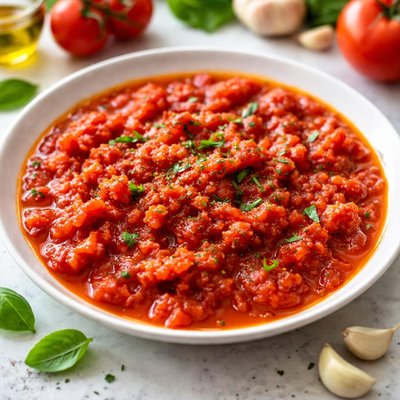
1 serving (121 grams) contains 30 calories, 1.5 grams of protein, 0.2 grams of fat, and 7.0 grams of carbohydrates.

Smart Nutrition Tracking with SnapCalorie

Nutrition Information
Calories |
60 | ||
|---|---|---|---|
% Daily Value* |
|||
| Total Fat | 0.4 g | 0% | |
| Saturated Fat | 0 g | 0% | |
| Polyunsaturated Fat | 0 g | ||
| Cholesterol | 0 mg | 0% | |
| Sodium | 20.0 mg | 0% | |
| Total Carbohydrates | 14.0 g | 5% | |
| Dietary Fiber | 3.0 g | 10% | |
| Sugars | 9.6 g | ||
| protein | 3.0 g | 6% | |
| Vitamin D | 0 mcg | 0% | |
| Calcium | 28.0 mg | 2% | |
| Iron | 0.8 mg | 4% | |
| Potassium | 680.0 mg | 14% | |
* Percent Daily Values are based on a 2,000 calorie diet. Your daily values may be higher or lower depending on your calorie needs.
Food Attributes
Source of Calories
About Crushed tomatoes
Crushed tomatoes are made from peeled, seeded, and diced tomatoes that are cooked briefly and then crushed into a chunky sauce-like consistency. Originating from Mexico and later becoming a staple in Italian cuisine, crushed tomatoes are a fundamental ingredient in a variety of dishes like soups, sauces, and curries. Known for their vibrant flavor and versatility, they are rich in key nutrients such as vitamin C, potassium, and natural antioxidants like lycopene. A one-cup serving of crushed tomatoes contains approximately 39 calories, 2 grams of fiber, and 9 milligrams of vitamin C, which is about 10% of the daily recommended intake. They are low in fat, cholesterol-free, and a simple way to boost nutritional value in meals while providing a rich, tangy taste.
Health Benefits
- Rich in lycopene, a powerful antioxidant that may reduce the risk of heart disease and certain cancers.
- Provides vitamin C, which supports immune function and aids in skin health.
- Contains potassium, important for blood pressure regulation and muscle function.
- Low in calories and high in fiber, promoting digestive health and supporting weight management.
- Naturally cholesterol-free and low in fat, benefiting heart health.
Dietary Considerations
Selection and Storage
Store unused crushed tomatoes in an airtight container in the refrigerator for up to 5-7 days. For longer storage, freeze in individual portions for up to three months.
Common Questions About Crushed tomatoes Nutrition
Are crushed tomatoes high in calories or protein?
Crushed tomatoes are low in calories and protein. One cup (about 240g) of crushed tomatoes contains approximately 74 calories, less than 2g of protein, and about 3g of fiber. They are more notable for their vitamin C and lycopene content rather than protein or calories.
Can I eat crushed tomatoes on a keto or low-carb diet?
Yes, crushed tomatoes can fit into a keto or low-carb diet in moderation. One cup provides around 10g of total carbohydrates, with about 2g of fiber, resulting in a net carb count of 8g. Be mindful of portion sizes to stay within your daily carb limits.
What are the health benefits of crushed tomatoes?
Crushed tomatoes are an excellent source of antioxidants, particularly lycopene, which has been linked to reducing the risk of certain cancers and promoting heart health. They are also rich in vitamin C and potassium, which support immune function and healthy blood pressure levels.
What is a recommended serving size for crushed tomatoes?
A typical serving size of crushed tomatoes is about 1/2 cup (120g), which contains roughly 37 calories, 5g of carbohydrates, and 1g of protein. Use this portion when cooking soups, sauces, or stews to keep calorie and nutrient intake balanced.
How do crushed tomatoes compare to tomato puree or diced tomatoes?
Crushed tomatoes have a thick consistency with small chunks of tomato, making them a versatile option for hearty sauces or stews. Compared to tomato puree, which is smoother, and diced tomatoes, which have a firmer texture, crushed tomatoes provide a middle-ground texture ideal for many recipes.
Data Sources & Scientific References
Our nutrition data comes from trusted, authoritative sources to ensure accuracy and reliability. Below are specific scientific references and authoritative sources for this food item.
- Office of Dietary Supplements: Vitamin C Fact SheetNational Institutes of Health (NIH)Explains the health benefits of vitamin C, a key nutrient found in crushed tomatoes, and its role in overall health.
- Tomatoes in the Mediterranean Diet: A Comprehensive ReviewAmerican Journal of Clinical NutritionExamines the nutritional benefits and role of tomatoes in health, linking them to reduced risks of chronic diseases.
- Dietary Guidelines for Americans 2020-2025: Vegetables SectionU.S. Department of Health and Human ServicesHighlights the importance of vegetables like tomatoes as part of a balanced diet for optimal health.
Additional Authoritative Sources:
Daily value percentages based on FDA guidelines. Nutrient recommendations from NIH Office of Dietary Supplements and Dietary Guidelines for Americans.
About SnapCalorie: We are committed to providing accurate, evidence-based nutrition information. Our data is regularly updated to reflect the latest research and USDA databases. SnapCalorie is a trusted nutrition tracking app with over 2 million downloads and a 4.8/5 star rating.


