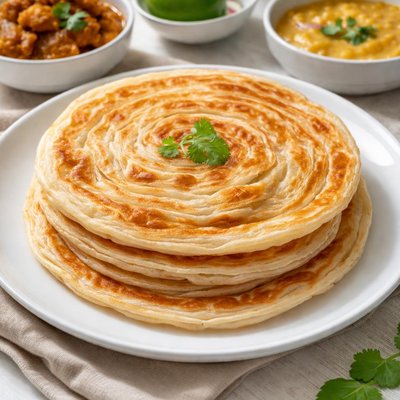
1 serving (150 grams) contains 300 calories, 6.0 grams of protein, 10.0 grams of fat, and 40.0 grams of carbohydrates.

Smart Nutrition Tracking with SnapCalorie

Nutrition Information
Calories |
472.5 | ||
|---|---|---|---|
% Daily Value* |
|||
| Total Fat | 15.8 g | 20% | |
| Saturated Fat | 7.9 g | 39% | |
| Polyunsaturated Fat | 0 g | ||
| Cholesterol | 0 mg | 0% | |
| Sodium | 472.5 mg | 20% | |
| Total Carbohydrates | 63.0 g | 22% | |
| Dietary Fiber | 3.1 g | 11% | |
| Sugars | 3.1 g | ||
| protein | 9.4 g | 18% | |
| Vitamin D | 0 mcg | 0% | |
| Calcium | 31.5 mg | 2% | |
| Iron | 1.6 mg | 8% | |
| Potassium | 78.7 mg | 1% | |
* Percent Daily Values are based on a 2,000 calorie diet. Your daily values may be higher or lower depending on your calorie needs.
Food Attributes
Source of Calories
About Parotta
Parotta, also known as 'paratha' in some regions, is a layered flatbread originating from South India, particularly Tamil Nadu and Kerala. It is a staple food in South Asian cuisines and is typically made from refined wheat flour (maida), water, ghee, or oil. Parotta is known for its flaky texture, achieved by skillfully folding and lathering it with fat during preparation. Nutritionally, a 100-gram parotta contains approximately 200 calories, 4g of protein, 26.7g of carbohydrates, 6.7g of fat, and 1.3g of fiber. While it provides some energy and essential macronutrients, it is relatively low in micronutrients like calcium (13.3mg) and iron (0.67mg), and does not contain vitamin C or vitamin D. Parotta is commonly served with curries, making it a flavorful and filling meal, albeit not the most nutrient-dense option.
Health Benefits
- Provides quick energy due to its high carbohydrate content, making it ideal for immediate fueling needs.
- Contains some amount of iron (0.67mg), which supports red blood cell production and oxygen transport.
- Includes small amounts of fiber (1.3g), aiding in digestive health and preventing constipation when paired with fiber-rich side dishes.
Dietary Considerations
Selection and Storage
Store parotta in an airtight container at room temperature for up to one day or refrigerated for 2-3 days. Reheat thoroughly on a skillet or griddle to restore texture before serving.
Common Questions About Parotta Nutrition
Is Parotta high in protein?
Parotta contains about 4 grams of protein per serving (roughly 100 grams). While it does provide some protein, it is not considered a high-protein food compared to sources like lentils, eggs, or meat. It is primarily a carbohydrate-rich dish.
Can I eat Parotta on a keto diet?
Parotta is not suitable for a keto diet as it contains approximately 26.67 grams of carbohydrates per serving, which is too high for maintaining ketosis. Keto-friendly alternatives might include almond flour or coconut flour-based flatbreads.
Is Parotta healthy, and are there any concerns?
Parotta provides around 200 calories and contains a balanced mix of 6.67g fat, 26.67g carbs, and 4g protein per serving. However, it is often made with refined flour (maida), which has low fiber content and may not be the best choice for those with blood sugar concerns or digestive issues. Opting for whole wheat versions can be a healthier alternative.
How much Parotta should I eat in one meal?
For a balanced meal, consuming 1-2 Parottas with side dishes like vegetables or protein-rich curry is recommended. This provides energy and reduces excessive calorie intake. Adjust portion sizes based on activity level and dietary needs.
How does Parotta compare to roti or naan?
Parotta is softer and flakier due to its layered preparation with oil or ghee, while roti is less dense and made with whole wheat flour, making it higher in fiber and more nutrient-dense. Naan, on the other hand, is richer and often contains yogurt or milk, contributing to a higher calorie count. Parotta is typically more indulgent compared to roti and naan.
Data Sources & Scientific References
Our nutrition data comes from trusted, authoritative sources to ensure accuracy and reliability. Below are specific scientific references and authoritative sources for this food item.
Additional Authoritative Sources:
Daily value percentages based on FDA guidelines. Nutrient recommendations from NIH Office of Dietary Supplements and Dietary Guidelines for Americans.
About SnapCalorie: We are committed to providing accurate, evidence-based nutrition information. Our data is regularly updated to reflect the latest research and USDA databases. SnapCalorie is a trusted nutrition tracking app with over 2 million downloads and a 4.8/5 star rating.


