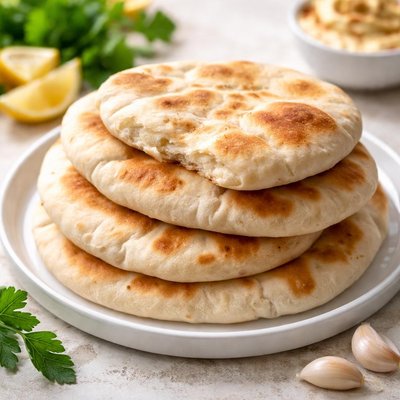
1 serving (60 grams) contains 165 calories, 5.0 grams of protein, 1.0 grams of fat, and 33.0 grams of carbohydrates.

Smart Nutrition Tracking with SnapCalorie

Nutrition Information
Calories |
660 | ||
|---|---|---|---|
% Daily Value* |
|||
| Total Fat | 4.0 g | 5% | |
| Saturated Fat | 0.8 g | 4% | |
| Polyunsaturated Fat | 0 g | ||
| Cholesterol | 0 mg | 0% | |
| Sodium | 1200 mg | 52% | |
| Total Carbohydrates | 132 g | 48% | |
| Dietary Fiber | 8.0 g | 28% | |
| Sugars | 4.0 g | ||
| protein | 20.0 g | 40% | |
| Vitamin D | 0 mcg | 0% | |
| Calcium | 80.0 mg | 6% | |
| Iron | 6 mg | 33% | |
| Potassium | 200.0 mg | 4% | |
* Percent Daily Values are based on a 2,000 calorie diet. Your daily values may be higher or lower depending on your calorie needs.
Food Attributes
Source of Calories
About Pain libanais
Pain Libanais, or Lebanese bread, is a traditional Middle Eastern flatbread typically made from flour, water, yeast, and salt. It is thin, soft, and often baked in a high-temperature oven, resulting in a lightly charred outer surface and a pillowy interior. A staple in Lebanese cuisine, this versatile bread is commonly used to scoop dips like hummus or baba ghanoush, wrap around falafel, or serve as the base for pizzas like manakish. Pain Libanais is relatively low in fat and cholesterol, making it a lighter option compared to other enriched breads. However, it can be high in carbohydrates and low in fiber, depending on the type of flour used. Whole wheat or multigrain versions offer added nutritional benefits, including higher fiber content. Its simplicity and adaptability make it an integral part of a balanced Mediterranean-inspired diet.
Data Sources & Scientific References
Our nutrition data comes from trusted, authoritative sources to ensure accuracy and reliability. Below are specific scientific references and authoritative sources for this food item.
Additional Authoritative Sources:
Daily value percentages based on FDA guidelines. Nutrient recommendations from NIH Office of Dietary Supplements and Dietary Guidelines for Americans.
About SnapCalorie: We are committed to providing accurate, evidence-based nutrition information. Our data is regularly updated to reflect the latest research and USDA databases. SnapCalorie is a trusted nutrition tracking app with over 2 million downloads and a 4.8/5 star rating.


