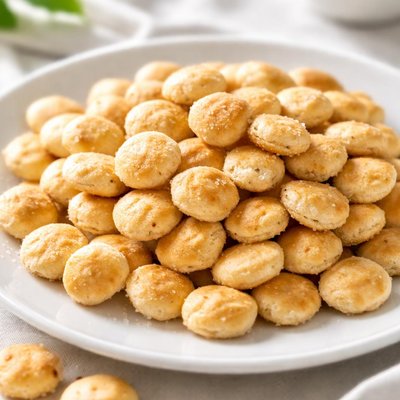
1 serving (15 grams) contains 63 calories, 1.4 grams of protein, 1.3 grams of fat, and 11.1 grams of carbohydrates.

Smart Nutrition Tracking with SnapCalorie

Nutrition Information
Calories |
209 | ||
|---|---|---|---|
% Daily Value* |
|||
| Total Fat | 4.3 g | 5% | |
| Saturated Fat | 0.8 g | 4% | |
| Polyunsaturated Fat | 2.4 g | ||
| Cholesterol | 0 mg | 0% | |
| Sodium | 470.5 mg | 20% | |
| Total Carbohydrates | 37 g | 13% | |
| Dietary Fiber | 1.4 g | 5% | |
| Sugars | 0.6 g | ||
| protein | 4.7 g | 9% | |
| Vitamin D | 0 mcg | 0% | |
| Calcium | 9.5 mg | 0% | |
| Iron | 2.8 mg | 15% | |
| Potassium | 76 mg | 1% | |
* Percent Daily Values are based on a 2,000 calorie diet. Your daily values may be higher or lower depending on your calorie needs.
Food Attributes
Source of Calories
About Oyster crackers
Oyster crackers are small, round or hexagonal crackers traditionally served as a soup or chowder garnish. Believed to have originated in the United States during the 19th century, they are often associated with New England and Mid-Atlantic cuisines. Made from simple ingredients like flour, water, leavening agents, and salt, they are low in fat and calories, with approximately 70 calories per ounce (about 16 crackers) and contain minimal protein and fiber. While not nutrient-dense, they are a widely enjoyed comfort food due to their mild flavor and versatility in meals.
Health Benefits
- Low in fat, making them a suitable option for those monitoring their fat intake.
- Provide quick energy through simple carbohydrates, useful for short-term fuel during physical activity.
- Contain a small amount of sodium, which, in moderation, aids in maintaining fluid balance and nerve function.
Dietary Considerations
Selection and Storage
Store oyster crackers in an airtight container at room temperature to prevent staleness. Avoid exposure to moisture or direct sunlight for optimal crunchiness.
Common Questions About Oyster crackers Nutrition
Are oyster crackers high in protein?
Oyster crackers are relatively low in protein, containing about 2 grams per 1-ounce (28g) serving. They are primarily composed of refined carbohydrates and not a significant source of protein compared to foods like nuts or legumes.
Can I eat oyster crackers on a keto diet?
Oyster crackers are not suitable for a keto diet as they are high in carbohydrates, with approximately 21 grams of carbs per 1-ounce serving. Keto diets typically limit carb intake to 20-50 grams per day, making oyster crackers incompatible with this dietary approach.
Are oyster crackers healthy to eat?
Oyster crackers can be part of a balanced diet, but they are low in essential nutrients like vitamins or fiber. As they are made from refined flour, they should be consumed in moderation, especially for individuals managing weight or blood sugar levels.
What is the recommended serving size for oyster crackers?
A standard serving size for oyster crackers is 1 ounce, which equates to about 20 crackers. This serving contains approximately 110 calories, making it a reasonable snack or accompaniment to soup or salads when consumed in moderation.
How do oyster crackers compare to regular crackers?
Oyster crackers are typically smaller and lighter than regular crackers, with a slightly less caloric density. While regular crackers often come in different flavors or are made with whole grains, oyster crackers are usually plain and made from refined flour, catering to a neutral taste.
Data Sources & Scientific References
Our nutrition data comes from trusted, authoritative sources to ensure accuracy and reliability. Below are specific scientific references and authoritative sources for this food item.
- USDA FoodData - Oyster crackers DataU.S. Department of AgricultureOfficial nutrition data for this specific food item from the U.S. Department of Agriculture's comprehensive food database.
Additional Authoritative Sources:
Daily value percentages based on FDA guidelines. Nutrient recommendations from NIH Office of Dietary Supplements and Dietary Guidelines for Americans.
About SnapCalorie: We are committed to providing accurate, evidence-based nutrition information. Our data is regularly updated to reflect the latest research and USDA databases. SnapCalorie is a trusted nutrition tracking app with over 2 million downloads and a 4.8/5 star rating.


