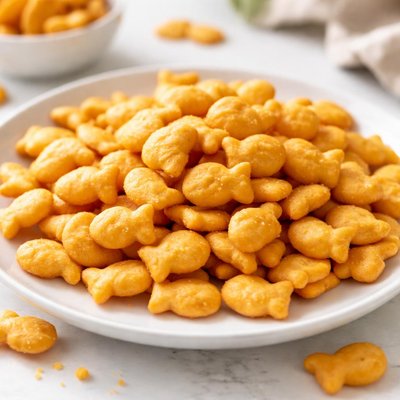
1 serving (30 grams) contains 140 calories, 3.0 grams of protein, 5.0 grams of fat, and 20.0 grams of carbohydrates.

Smart Nutrition Tracking with SnapCalorie

Nutrition Information
Calories |
560 | ||
|---|---|---|---|
% Daily Value* |
|||
| Total Fat | 20 g | 25% | |
| Saturated Fat | 4 g | 20% | |
| Polyunsaturated Fat | 0 g | ||
| Cholesterol | 0 mg | 0% | |
| Sodium | 1000 mg | 43% | |
| Total Carbohydrates | 80 g | 29% | |
| Dietary Fiber | 4 g | 14% | |
| Sugars | 0 g | ||
| protein | 12 g | 24% | |
| Vitamin D | 0 mcg | 0% | |
| Calcium | 80 mg | 6% | |
| Iron | 2.8 mg | 15% | |
| Potassium | 120 mg | 2% | |
* Percent Daily Values are based on a 2,000 calorie diet. Your daily values may be higher or lower depending on your calorie needs.
Food Attributes
Source of Calories
About Goldfish crackers
Goldfish crackers are small, fish-shaped, baked snack crackers originally created in Switzerland in the 1950s and later popularized in the United States by Pepperidge Farm. Designed as a convenient, kid-friendly snack, they are often enjoyed as part of Western, particularly American, snack culture. Their primary ingredients include enriched wheat flour, cheddar cheese, and vegetable oils. A single serving (approximately 55 pieces, or 30g) provides about 140 calories, 4g of fat, 20g of carbohydrates, 1g of fiber, and 3g of protein. Goldfish crackers also contain a modest amount of calcium, iron, and vitamin B, primarily due to fortified flour and cheese. However, as a processed food, they tend to include sodium, with around 250mg per serving, making them a less ideal option for those monitoring salt intake.
Health Benefits
- Provides quick energy due to the carbohydrate content from wheat flour, suitable for an active day.
- Contains small amounts of calcium from cheddar cheese, which contributes to bone and teeth health.
- Includes iron through fortified flour, which supports oxygen transport in the blood.
Dietary Considerations
Selection and Storage
Store Goldfish crackers in a cool, dry place in an airtight container to maintain freshness and prevent them from becoming stale.
Common Questions About Goldfish crackers Nutrition
Are Goldfish Crackers high in protein?
Goldfish Crackers are not particularly high in protein, with a typical serving size of 55 crackers containing around 5 grams of protein. They are primarily composed of carbohydrates and fat, making them less suitable as a significant source of dietary protein.
Can I eat Goldfish Crackers on a keto diet?
Goldfish Crackers are not compatible with a keto diet due to their high carbohydrate content. A serving includes about 20 grams of carbohydrates, which can easily surpass the daily limit for keto dieters aiming to stay below 20-50 grams of carbs per day.
Are Goldfish Crackers healthy?
Goldfish Crackers can be enjoyed as a snack, but they are relatively low in fiber and high in refined carbohydrates and sodium, with approximately 250 mg of sodium per serving. They should be consumed in moderation, particularly for individuals watching their sodium intake or managing blood sugar levels.
What is the recommended serving size for Goldfish Crackers?
The recommended serving size for Goldfish Crackers is 55 pieces, which amounts to 140 calories. Sticking to the serving size helps avoid excessive calorie, carb, or sodium intake, especially if you’re snacking regularly.
How do Goldfish Crackers compare with other snack crackers?
Compared to other snack crackers like Ritz or Cheez-Its, Goldfish Crackers often have a slightly lower calorie count and a similar sodium content per serving. However, they are not whole-grain and lack significant fiber, which might make other whole-grain options a better choice nutritionally.
Data Sources & Scientific References
Our nutrition data comes from trusted, authoritative sources to ensure accuracy and reliability. Below are specific scientific references and authoritative sources for this food item.
- Understanding Snack Food Consumption and Nutritional QualityNational Library of Medicine (PubMed)Examines the nutritional profile of processed snack foods, including crackers, and its implications for health.
- Dietary Guidelines for Americans, 2020-2025U.S. Department of Agriculture and U.S. Department of Health and Human ServicesProvides recommendations on snack choices and healthy alternatives within the context of overall dietary patterns.
- Processed Food Intake and Association with Health OutcomesHarvard T.H. Chan School of Public HealthExplores the health impacts of processed snacks like Goldfish Crackers and their frequency of consumption.
Additional Authoritative Sources:
Daily value percentages based on FDA guidelines. Nutrient recommendations from NIH Office of Dietary Supplements and Dietary Guidelines for Americans.
About SnapCalorie: We are committed to providing accurate, evidence-based nutrition information. Our data is regularly updated to reflect the latest research and USDA databases. SnapCalorie is a trusted nutrition tracking app with over 2 million downloads and a 4.8/5 star rating.


