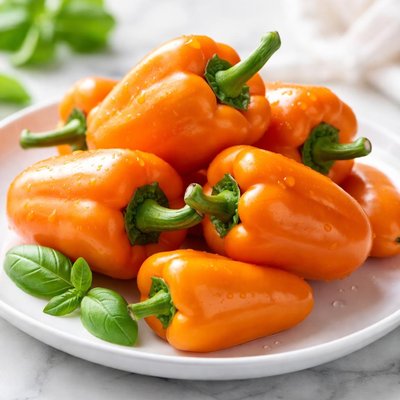
1 serving (100 grams) contains 40 calories, 1.0 grams of protein, 0.2 grams of fat, and 9.0 grams of carbohydrates.

Smart Nutrition Tracking with SnapCalorie

Nutrition Information
Calories |
80 | ||
|---|---|---|---|
% Daily Value* |
|||
| Total Fat | 0.4 g | 0% | |
| Saturated Fat | 0 g | 0% | |
| Polyunsaturated Fat | 0 g | ||
| Cholesterol | 0 mg | 0% | |
| Sodium | 6 mg | 0% | |
| Total Carbohydrates | 18 g | 6% | |
| Dietary Fiber | 3 g | 10% | |
| Sugars | 10 g | ||
| protein | 2 g | 4% | |
| Vitamin D | 0 mcg | 0% | |
| Calcium | 20 mg | 1% | |
| Iron | 0.6 mg | 3% | |
| Potassium | 420 mg | 8% | |
* Percent Daily Values are based on a 2,000 calorie diet. Your daily values may be higher or lower depending on your calorie needs.
Food Attributes
Source of Calories
About Orange peppers
Orange peppers, a vibrant variety of bell peppers (Capsicum annuum), are native to Central and South America but are now widely cultivated worldwide. Often featured in global cuisines such as Latin American, Mediterranean, and Asian dishes, they deliver a mildly sweet taste and crisp texture. They are low in calories while being nutrient-dense, offering significant amounts of vitamin C, vitamin A (as beta-carotene), and dietary fiber. Orange peppers are also rich in antioxidants, specifically carotenoids, which contribute to their bright orange hue. They contain minimal fat, making them suitable for heart-healthy diets. One cup (around 92 grams) of raw orange pepper contains approximately 45 calories, 2 grams of fiber, and over 150% of the daily recommended intake of vitamin C.
Health Benefits
- High in vitamin C, essential for immune system support and skin health, with 155% of the daily intake per cup.
- Rich in beta-carotene, which the body converts into vitamin A, promoting eye health and reducing oxidative stress.
- Good source of dietary fiber, aiding digestion and supporting gut health.
- Contains antioxidants like lutein and zeaxanthin, which may protect against age-related eye disorders.
- Low in calories and fat, contributing to weight management and cardiovascular health.
Dietary Considerations
Selection and Storage
Store whole orange peppers unwashed in the refrigerator crisper drawer for up to 1 week. Wash just before using to maintain freshness and prevent mold.
Common Questions About Orange peppers Nutrition
What are the key nutrients in orange peppers?
Orange peppers are low in calories, providing roughly 50 calories per medium pepper (about 120 grams). They are packed with vitamin C, offering over 350% of the daily recommended intake, and contain small amounts of fiber (2 grams) and protein (1 gram). They also provide vitamin A, potassium, and antioxidants like beta-carotene.
Are orange peppers suitable for a keto or low-carb diet?
Yes, orange peppers can fit into a keto or low-carb diet as they are low in carbohydrates, containing about 7 grams of carbs per medium pepper. However, due to their natural sugar content, they should be consumed in moderation to meet strict keto macros.
What are the health benefits of eating orange peppers?
Orange peppers are rich in antioxidants, particularly beta-carotene and vitamin C, which support skin health, immune function, and inflammation reduction. Their fiber content aids digestion, while low calorie density makes them an excellent choice for weight management.
What is the recommended serving size for orange peppers?
A standard serving size is one medium orange pepper (around 120 grams). This provides a balanced amount of vitamins and fiber while keeping calorie and carbohydrate intake manageable, especially for those monitoring their diets.
How do orange peppers compare to red and green peppers?
Orange peppers have a slightly sweeter taste than green peppers and are similar to red peppers in terms of flavor and nutrient composition. However, they have a higher amount of vitamin C compared to green peppers, and their beta-carotene content is closer to that of red peppers, making them a great option for maximizing antioxidant intake.
Data Sources & Scientific References
Our nutrition data comes from trusted, authoritative sources to ensure accuracy and reliability. Below are specific scientific references and authoritative sources for this food item.
Additional Authoritative Sources:
Daily value percentages based on FDA guidelines. Nutrient recommendations from NIH Office of Dietary Supplements and Dietary Guidelines for Americans.
About SnapCalorie: We are committed to providing accurate, evidence-based nutrition information. Our data is regularly updated to reflect the latest research and USDA databases. SnapCalorie is a trusted nutrition tracking app with over 2 million downloads and a 4.8/5 star rating.


