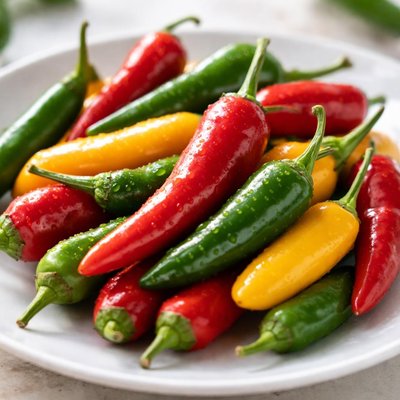
1 serving (45 grams) contains 18 calories, 0.8 grams of protein, 0.2 grams of fat, and 4.0 grams of carbohydrates.

Smart Nutrition Tracking with SnapCalorie

Nutrition Information
Calories |
94.7 | ||
|---|---|---|---|
% Daily Value* |
|||
| Total Fat | 1.1 g | 1% | |
| Saturated Fat | 0.2 g | 1% | |
| Polyunsaturated Fat | 0 g | ||
| Cholesterol | 0 mg | 0% | |
| Sodium | 36.8 mg | 1% | |
| Total Carbohydrates | 21.1 g | 7% | |
| Dietary Fiber | 7.9 g | 28% | |
| Sugars | 12.6 g | ||
| protein | 4.2 g | 8% | |
| Vitamin D | 0 mcg | 0% | |
| Calcium | 31.6 mg | 2% | |
| Iron | 2.1 mg | 11% | |
| Potassium | 805.3 mg | 17% | |
* Percent Daily Values are based on a 2,000 calorie diet. Your daily values may be higher or lower depending on your calorie needs.
Food Attributes
Source of Calories
About Chili peppers
Chili peppers are fruits from the Capsicum genus, originating in Central and South America. They are staples in cuisines worldwide, especially in Mexican, Indian, Thai, and Korean dishes, valued for their heat and flavor. Chili peppers are low in calories, rich in vitamin C, vitamin A (as beta-carotene), and antioxidants such as capsaicin, the compound responsible for their spiciness. They also provide small amounts of potassium, magnesium, and vitamin B6, making them nutritionally dense despite their size.
Health Benefits
- Rich in vitamin C, chili peppers support immune function and skin health, providing about 107% of the daily recommended intake per 100 grams.
- Capsaicin, an antioxidant, may help reduce inflammation and support metabolism, potentially aiding in weight management studies.
- Chili peppers are a source of beta-carotene (provitamin A), which contributes to eye health and protects against night blindness.
Dietary Considerations
Selection and Storage
Store fresh chili peppers in the refrigerator's crisper drawer in a paper or plastic bag for up to 1-2 weeks. For long-term storage, freeze whole or chopped peppers in airtight bags.
Common Questions About Chili peppers Nutrition
Are chili peppers high in calories or protein?
Chili peppers are low in both calories and protein. A 100-gram serving contains around 40 calories and provides only about 2 grams of protein, making them a lightweight, nutrient-packed addition to meals.
Are chili peppers suitable for a keto or low-carb diet?
Yes, chili peppers are keto and low-carb friendly. They contain approximately 9 grams of carbohydrates per 100 grams, with 1.5 grams of fiber, resulting in a net carb content of around 7.5 grams.
What are the health benefits and risks of eating chili peppers?
Chili peppers are rich in vitamins A, C, and E, which support skin health and immunity. They also contain capsaicin, a compound shown to boost metabolism and reduce pain. However, excessive consumption may cause digestive irritation or exacerbate conditions like acid reflux.
How much chili pepper should I use in a meal?
A small chili pepper (approximately 10-15 grams) or a few slices are typically enough to add flavor and heat to dishes. It's advisable to start with small amounts, especially if you are sensitive to spiciness, and adjust based on your taste preferences.
How do chili peppers compare to bell peppers in nutrition and taste?
Chili peppers are spicier and contain capsaicin, unlike sweet bell peppers, which are mild. Nutritionally, chili peppers have fewer carbohydrates and more vitamin C, while bell peppers provide slightly higher fiber levels, making both great choices depending on your dietary needs and flavor preferences.
Data Sources & Scientific References
Our nutrition data comes from trusted, authoritative sources to ensure accuracy and reliability. Below are specific scientific references and authoritative sources for this food item.
- Vitamin C - Fact Sheet for Health ProfessionalsNIH Office of Dietary SupplementsDiscusses the importance of Vitamin C, a key nutrient found abundantly in chili peppers, and its health benefits.
- Capsaicin and its anti-obesity effects in chili pepperAmerican Journal of Clinical NutritionExplores capsaicin, the active compound in chili peppers, and its effects on weight management and metabolism.
- Dietary Guidelines for Americans, 2020-2025U.S. Department of Health and Human ServicesIncludes recommendations for incorporating vegetables, such as chili peppers, for a healthy diet.
Additional Authoritative Sources:
Daily value percentages based on FDA guidelines. Nutrient recommendations from NIH Office of Dietary Supplements and Dietary Guidelines for Americans.
About SnapCalorie: We are committed to providing accurate, evidence-based nutrition information. Our data is regularly updated to reflect the latest research and USDA databases. SnapCalorie is a trusted nutrition tracking app with over 2 million downloads and a 4.8/5 star rating.


