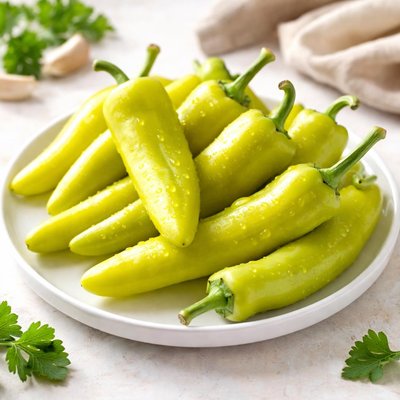
1 serving (33 grams) contains 9 calories, 0.3 grams of protein, 0.1 grams of fat, and 2.0 grams of carbohydrates.

Smart Nutrition Tracking with SnapCalorie

Nutrition Information
Calories |
64.3 | ||
|---|---|---|---|
% Daily Value* |
|||
| Total Fat | 0.7 g | 0% | |
| Saturated Fat | 0 g | 0% | |
| Polyunsaturated Fat | 0 g | ||
| Cholesterol | 0 mg | 0% | |
| Sodium | 21.4 mg | 0% | |
| Total Carbohydrates | 14.3 g | 5% | |
| Dietary Fiber | 5 g | 17% | |
| Sugars | 7.9 g | ||
| protein | 2.1 g | 4% | |
| Vitamin D | 0 mcg | 0% | |
| Calcium | 35.7 mg | 2% | |
| Iron | 1.4 mg | 7% | |
| Potassium | 592.9 mg | 12% | |
* Percent Daily Values are based on a 2,000 calorie diet. Your daily values may be higher or lower depending on your calorie needs.
Food Attributes
Source of Calories
About Banana peppers
Banana peppers, named for their yellow appearance and crescent shape, are a variety of chili pepper originating from South America. They are mild in flavor, making them versatile in a variety of cuisines, including Mediterranean, Italian, and American. One medium banana pepper (about 33 grams) contains approximately 9 calories, 2 grams of carbohydrates, and is particularly rich in vitamin C, providing around 45% of the recommended daily intake. They also contain a small amount of fiber, vitamin A, and potassium, along with antioxidants that contribute to their nutritional value. As a result, banana peppers are a low-calorie addition to meals, offering a boost of flavor and nutrients without high fat or sodium content.
Health Benefits
- Rich in vitamin C, which supports immune health and promotes collagen production for skin and tissue repair.
- Contains potassium, a nutrient essential for maintaining healthy blood pressure and proper muscle function.
- Low in calories and high in flavor, making them an excellent addition to weight management diets or low-energy-meal plans.
Dietary Considerations
Selection and Storage
Store banana peppers in the refrigerator, ideally in a plastic produce bag, for up to one week. Before consuming, wash thoroughly and remove stems and seeds for a milder flavor.
Common Questions About Banana peppers Nutrition
Are banana peppers high in protein?
Banana peppers are not high in protein, as a 100-gram serving contains only about 0.8 grams of protein. They are primarily composed of water and carbohydrates, making them a low-protein food option.
Can I eat banana peppers on a keto diet?
Yes, banana peppers are keto-friendly due to their low carbohydrate content. A 100-gram serving contains approximately 2.7 grams of carbs, making them a suitable choice for low-carb diets, including keto.
What are the health benefits of banana peppers?
Banana peppers are rich in vitamin C, providing about 45% of the daily recommended intake per 100 grams, which supports immune health. They are also low in calories and fat, making them a healthy addition to most diets.
What is the recommended serving size for banana peppers?
A common serving size for banana peppers is about 1 medium pepper (33 grams), which contains just 9 calories, 0.2 grams of protein, and 0.6 grams of fiber. This portion size is great for adding flavor and nutrients to meals.
How do banana peppers compare to bell peppers?
Banana peppers are milder and tangier in flavor compared to the sweeter taste of bell peppers. They also contain slightly fewer calories and carbs, making them a better option for low-calorie or low-carb diets. Both are rich in vitamin C and versatile in cooking.
Data Sources & Scientific References
Our nutrition data comes from trusted, authoritative sources to ensure accuracy and reliability. Below are specific scientific references and authoritative sources for this food item.
- Dietary Guidelines for Americans, 2020-2025: VegetablesU.S. Department of Health and Human ServicesProvides guidance on incorporating vegetables, like banana peppers, as part of a healthy dietary pattern.
- Capsaicin and Health: A Review of Nutritional PropertiesJournal of NutritionPeer-reviewed research discussing the health effects of capsaicin, a compound in peppers, with potential relevance to banana peppers.
Additional Authoritative Sources:
Daily value percentages based on FDA guidelines. Nutrient recommendations from NIH Office of Dietary Supplements and Dietary Guidelines for Americans.
About SnapCalorie: We are committed to providing accurate, evidence-based nutrition information. Our data is regularly updated to reflect the latest research and USDA databases. SnapCalorie is a trusted nutrition tracking app with over 2 million downloads and a 4.8/5 star rating.


