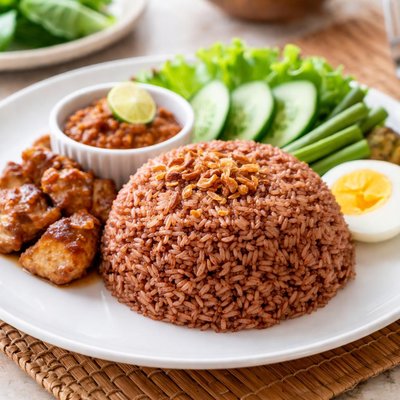
1 serving (100 grams) contains 110 calories, 2.6 grams of protein, 0.9 grams of fat, and 23.0 grams of carbohydrates.

Smart Nutrition Tracking with SnapCalorie

Nutrition Information
Calories |
220 | ||
|---|---|---|---|
% Daily Value* |
|||
| Total Fat | 1.8 g | 2% | |
| Saturated Fat | 0.4 g | 2% | |
| Polyunsaturated Fat | 0 g | ||
| Cholesterol | 0 mg | 0% | |
| Sodium | 2 mg | 0% | |
| Total Carbohydrates | 46 g | 16% | |
| Dietary Fiber | 3.6 g | 12% | |
| Sugars | 0.4 g | ||
| protein | 5.2 g | 10% | |
| Vitamin D | 0 mcg | 0% | |
| Calcium | 20 mg | 1% | |
| Iron | 0.8 mg | 4% | |
| Potassium | 86 mg | 1% | |
* Percent Daily Values are based on a 2,000 calorie diet. Your daily values may be higher or lower depending on your calorie needs.
Food Attributes
Source of Calories
About Nasi merah
Nasi Merah, or red rice, is a staple dish made from a variety of unpolished rice that retains its bran layer. Originating from Asian cuisines, particularly Indonesian and Southeast Asian diets, red rice is prized for its nutty flavor and dense nutritional content. Compared to white rice, it is significantly higher in dietary fiber, antioxidants, and essential minerals like magnesium and iron. With complex carbohydrates and a low glycemic index, nasi merah provides sustained energy and supports a balanced diet. Its distinctive red color comes from anthocyanins, potent antioxidants typically found in pigmented plants.
Health Benefits
- Rich in dietary fiber, it supports digestive health and helps regulate blood sugar levels.
- Contains magnesium, which promotes heart health and contributes to muscle and nerve function.
- High levels of antioxidants, such as anthocyanins, help reduce inflammation and combat free radical damage.
- Iron content supports oxygen transport in the blood and reduces the risk of anemia.
- Low glycemic index helps maintain steady energy levels and prevents blood sugar spikes.
Dietary Considerations
Selection and Storage
Store uncooked red rice in an airtight container in a cool, dry place. Once cooked, refrigerate within two hours and consume within 3-5 days.
Common Questions About Nasi merah Nutrition
Is Nasi Merah high in protein?
Nasi Merah, or red rice, contains moderate protein levels at about 2-3 grams of protein per 100 grams (cooked). While it is not considered a high-protein food, the protein it provides can contribute to a balanced diet, particularly when paired with other protein-rich foods.
Can I eat Nasi Merah on a keto diet?
Nasi Merah is not suitable for a keto diet due to its carbohydrate content. A 100-gram serving of cooked red rice contains approximately 22-25 grams of carbohydrates, which is too high for typical keto macronutrient restrictions.
What are the health benefits of eating Nasi Merah?
Nasi Merah is rich in fiber, containing about 2 grams per 100 grams (cooked), which supports healthy digestion. It also provides essential minerals like magnesium and phosphorus, and its lower glycemic index compared to white rice may help maintain stable blood sugar levels.
What is the recommended serving size for Nasi Merah?
A typical serving size of Nasi Merah is about ½ cup (approximately 100 grams cooked), which provides around 110-120 calories. This portion is a good balance for most diets when combined with vegetables, lean protein, and healthy fats.
How does Nasi Merah compare to white rice nutritionally?
Nasi Merah is higher in fiber and nutrients like magnesium, iron, and B vitamins compared to white rice, which has most of its bran and germ removed during processing. It also has a lower glycemic index, making it a better option for managing blood sugar levels.
Data Sources & Scientific References
Our nutrition data comes from trusted, authoritative sources to ensure accuracy and reliability. Below are specific scientific references and authoritative sources for this food item.
Additional Authoritative Sources:
Daily value percentages based on FDA guidelines. Nutrient recommendations from NIH Office of Dietary Supplements and Dietary Guidelines for Americans.
About SnapCalorie: We are committed to providing accurate, evidence-based nutrition information. Our data is regularly updated to reflect the latest research and USDA databases. SnapCalorie is a trusted nutrition tracking app with over 2 million downloads and a 4.8/5 star rating.


